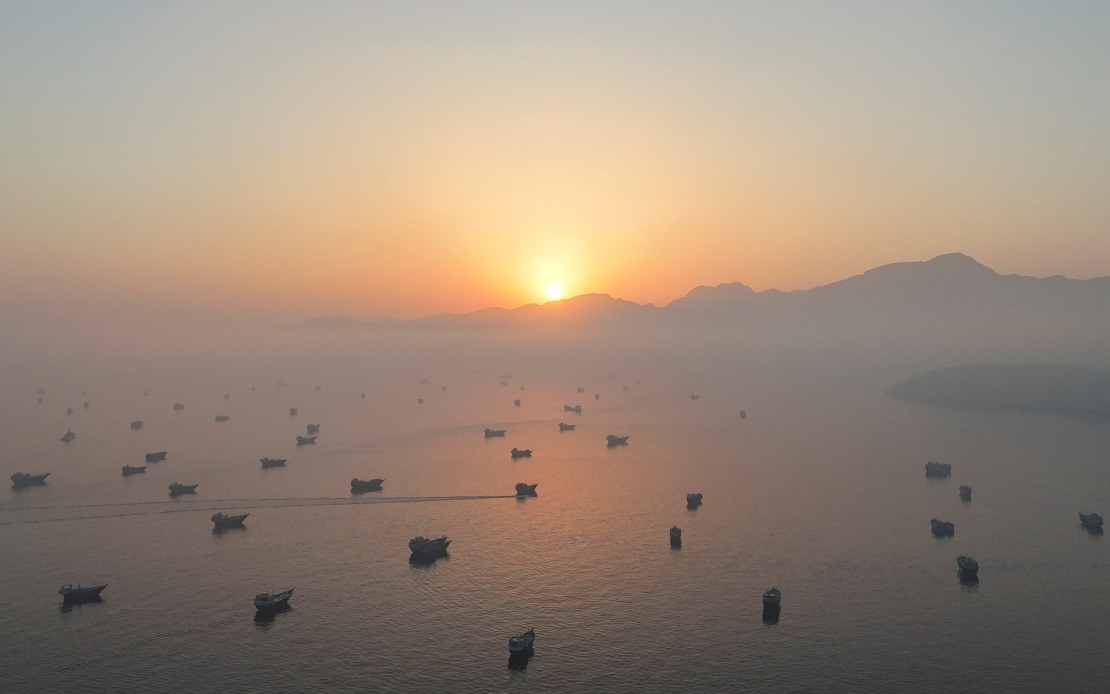
Twelve nations comprising the Comprehensive and Progressive Agreement for Trans-Pacific Partnership have publicly backed the recent agreement between the United States and Iran, with a particular focus on securing unimpeded navigation through the Strait of Hormuz. The endorsement came through a joint ministerial statement following a virtual gathering on Friday, reflecting the bloc's concern that geopolitical tensions in the Middle East pose genuine risks to international commerce and energy security.
The agreement carries particular significance for the CPTPP membership, which includes Australia, Brunei, Canada, Chile, Japan, Malaysia, Mexico, New Zealand, Peru, Singapore, the United Kingdom and Vietnam. Together, these nations represent substantial global trading power and consumption of energy products. For many members, particularly those in Southeast Asia such as Malaysia, Vietnam and Singapore, reliable access to Middle Eastern oil and liquefied natural gas represents a cornerstone of economic stability and industrial production. The Strait of Hormuz remains one of the world's most critical maritime chokepoints, with roughly one-third of global seaborne petroleum passing through its waters annually.
The ministerial statement explicitly emphasised the trade bloc's commitment to maintaining open sea lanes and guaranteeing freedom of navigation and overflight through the waterway. This language reflects a pragmatic understanding among member nations that any disruption to the Strait—whether through conflict, heightened tensions, or arbitrary closure—would instantly reverberate through global supply chains already strained by recent crises. The ministers stressed adherence to the United Nations Convention on the Law of the Sea, anchoring their position in established international legal frameworks rather than narrow national interest.
Beyond the immediate Hormuz question, the statement revealed deeper anxieties about energy commodity flows more broadly. Member nations acknowledged the critical importance of maintaining stable trade in crude oil, refined petroleum products including diesel, natural gas, petrochemical materials and fertilisers. This breadth of concern underscores how Middle Eastern instability threatens not only fuel supplies but also agricultural productivity worldwide, given the centrality of fertiliser inputs to food production. For developing economies across Southeast Asia and the Pacific, such disruptions carry outsized consequences.
Particulously noteworthy was the ministers' recognition of energy security vulnerabilities faced by small island developing states in the Pacific region. These nations depend almost entirely on maritime commerce for survival and possess minimal capacity to absorb price shocks or supply interruptions. The CPTPP's acknowledgment of this asymmetry suggests awareness that inclusive trade arrangements must account for the differential impacts of global disruptions on less resilient economies.
The bloc also championed the Partnership On Wide Energy and Resources Resilience Asia, known as POWERR Asia, as a regional mechanism for building more durable energy supply networks. This initiative reflects a strategic pivot toward fostering closer coordination between energy-producing and energy-consuming nations, enabling better information sharing and collaborative crisis management. For Malaysia and other ASEAN members, participation in such frameworks offers opportunities to strengthen energy security through diversification and strategic partnerships beyond traditional suppliers.
Central to the ministers' statement was a reaffirmation of commitment to rules-based trade and open markets, with explicit language cautioning against unjustified trade-restrictive measures. This emphasis carries weight given current geopolitical fragmentation and rising protectionism globally. The CPTPP nations are essentially signalling that energy markets, particularly, should remain insulated from the tit-for-tat tariffs and sanctions regimes that have plagued other sectors. Such consistency creates predictability essential for long-term investment in energy infrastructure and supply contracts.
The timing of this statement reflects broader anxieties about global supply chain resilience. Multiple crises over recent years—pandemic-related shutdowns, Russian invasion of Ukraine, Houthi attacks on shipping in the Red Sea—have exposed how quickly geopolitical events translate into economic dislocation for distant trading partners. For CPTPP members, the relatively de-escalatory trajectory of US-Iran relations offers a window for stabilisation, though long-term sustainability remains contingent on sustained diplomatic engagement and de-escalation.
For Malaysian policymakers and business leaders, the CPTPP statement carries clear implications. As a middle-power trading nation heavily dependent on energy imports and global supply chains, Malaysia benefits directly from the bloc's emphasis on rules-based commerce and open shipping lanes. The country's manufacturing sector, refineries, and petrochemical industries all rely on predictable access to Middle Eastern energy. Moreover, Malaysia's position as a transshipment hub means that disruptions to broader supply chains immediately impact its port facilities and logistics networks.
The statement also implicitly validates ASEAN's longstanding strategy of maintaining strategic autonomy and balanced relationships across major powers. The CPTPP's careful framing of the Hormuz issue through international law and inclusive frameworks rather than great-power competition reflects an approach compatible with ASEAN's non-aligned traditions. This alignment may strengthen the bloc's capacity to serve as a stabilising force in regional trade and security discussions.
Looking forward, the CPTPP's backing for the US-Iran agreement and emphasis on Hormuz security represent efforts to preserve the liberal trading order upon which regional prosperity has depended. However, the statement also betrays underlying fragility—the need for explicit reaffirmation of principles that once seemed unquestionable suggests how contested the rules-based system has become. For CPTPP members, maintaining consensus on such foundational issues will require continued diplomatic effort and tangible commitments to inclusive economic frameworks.

