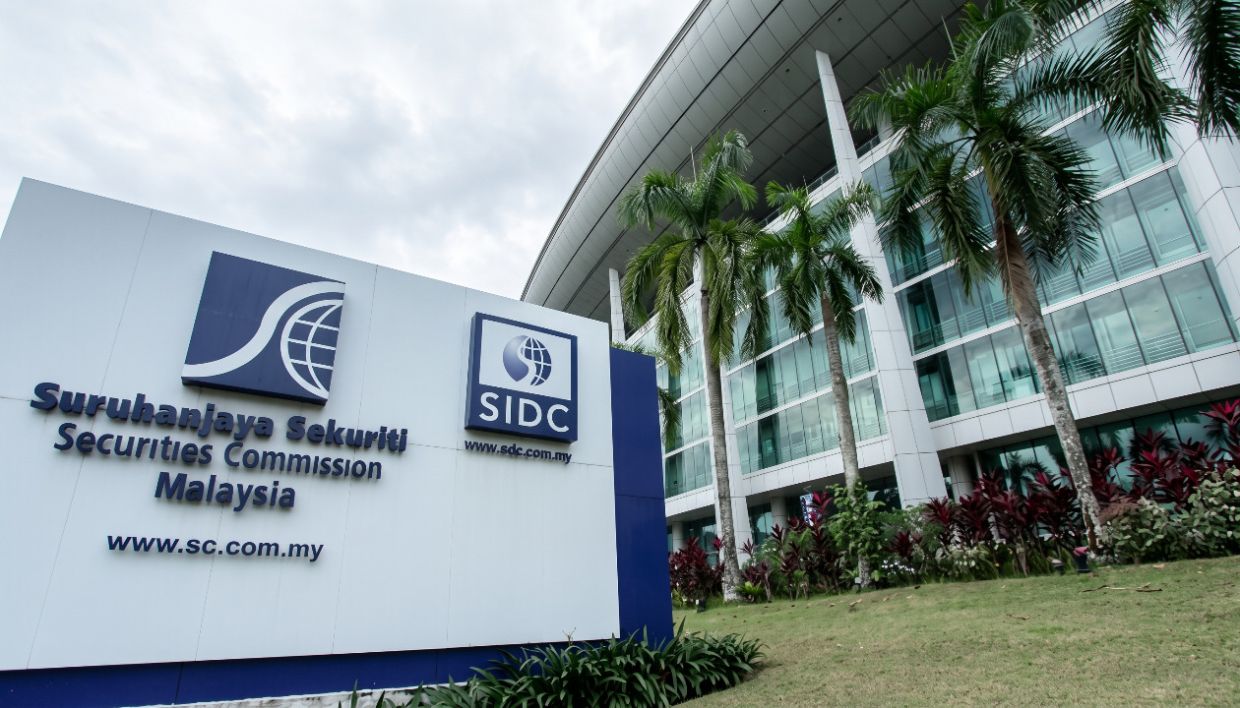
Malaysia's Court of Appeal has dealt a significant blow to fugitive businessman Ricky Wong by rejecting his legal challenge against a freezing order affecting RM169.2mil in his assets and properties. The appellate court's decision on Monday underscores the regulatory authorities' determination to preserve disputed assets in one of the country's major alleged securities fraud cases, whilst the defendant remains at large. The dismissal of his appeal effectively locks up the contested wealth pending the outcome of ongoing civil litigation brought by the Securities Commission Malaysia.
The three-judge panel, led by Datuk Ravinthran N. Paramaguru alongside Datuk Dr Choo Kah Sing and Datuk Leonard David Shim, also rejected Wong's attempt to overturn an earlier temporary freeze that had been granted without his immediate presence in court back in May 2020. This preliminary freezing order provided the legal foundation for the broader injunction that followed two years later. The appellate court's refusal to dismantle either protective measure signals judicial confidence in the Securities Commission's case and the necessity of safeguarding assets whilst the substantive allegations are tested in court.
Wong, who is also known as Wong Shee Kai, faces allegations of breaching securities laws under Section 179 of the Capital Markets and Services Act 2007. The Securities Commission brought the civil suit in 2020, accusing Wong, his associate Teh Sew Wan, and their company Wong SK Holdings Sdn Bhd of securities fraud contraventions. Beyond the civil proceedings, Wong remains wanted for criminal offences under the Anti-Money Laundering, Anti-Terrorism Financing and Proceeds of Unlawful Activities Act 2001 and additional violations under the capital markets legislation. His continued absence from Malaysia has intensified scrutiny around the case and raised questions about his possible whereabouts abroad.
The High Court formalised the broader asset freeze in April 2022 through what is legally termed an inter partes injunction, meaning it was granted after both parties had an opportunity to present their arguments. This order not only restricts Wong and his co-defendants from accessing or transferring the RM169.2mil in disputed assets and properties, but also creates criminal liability for any third party who knowingly facilitates dealings with the frozen holdings. Such comprehensive freezing mechanisms are commonly employed in financial crime investigations to prevent the dissipation of evidence and the removal of proceeds pending final adjudication.
The case carries broader significance for Malaysia's financial regulatory framework and enforcement capabilities. The Securities Commission's success in obtaining and defending the asset freeze demonstrates the regulator's ability to deploy sophisticated civil remedies to protect the integrity of capital markets. For investors and the public, the case highlights the dangers posed by unscrupulous operators within the securities sector and the importance of robust oversight. The protracted nature of the litigation also reveals the complexity inherent in large-scale fraud investigations that involve multiple parties, corporate entities, and intricate asset structures.
Wong and his affiliated company were legally represented in the appeal by Tan Sri Muhammad Shafee Abdullah of Messrs Shafee & Co, whilst Teh Sew Wan was represented by Tan Sri Cecil W. M. Abraham of Messrs Cecil Abraham & Partners. The Securities Commission deployed a combined team including in-house counsel Mohd Hafiz Mohd Yusoff and Loo Kit Ming Keith, supplemented by external counsel Datuk Lim Chee Wee and Kwan Will Sen. The involvement of such senior and experienced legal practitioners underscores the case's complexity and the stakes involved.
The appellate court's decision to impose RM200,000 in costs against the unsuccessful appellants signals additional financial consequences beyond the asset freeze itself. These costs represent a form of judicial disapproval and shift the financial burden of litigation towards those who challenged the lower court's orders without success. For litigants in Malaysia, adverse cost orders can accumulate significantly over the course of extended proceedings and add material pressure to settle or accept adverse judgements.
The underlying civil trial remains active at the Kuala Lumpur High Court and is scheduled to resume in September 2026, meaning the matter will remain in the judicial system for several more years. This timeline reflects the considerable groundwork required to prepare complex financial fraud cases for trial, including extensive document discovery, expert analysis, and witness preparation. The lengthy lead time also provides the Securities Commission with an opportunity to gather additional evidence and strengthen its case, whilst the asset freeze preserves the financial position pending resolution.
The Securities Commission has publicly appealed to members of the public with information regarding Wong's location to come forward. This request reflects the challenges posed by cross-border financial crime and the difficulties in locating individuals with resources to evade detection. The regulator's outreach initiative acknowledges that investigative breakthroughs often depend on community cooperation and intelligence sharing. For Malaysian residents or those with international networks, the appeal represents a direct invitation to assist in one of the country's significant enforcement actions.
The case also has implications for corporate accountability and beneficial ownership transparency. Wong SK Holdings Sdn Bhd's involvement suggests the use of corporate structures in the alleged scheme, a common feature in financial fraud where entities are layered to obscure beneficial ownership and complicate asset tracing. The regulatory focus on freezing both individual and corporate assets reflects modern enforcement practice that recognises the interconnection between personal and business finances in schemes of this nature.
For investors and the broader Malaysian financial community, the appellate court's decision provides reassurance that the legal system can protect market integrity through decisive action. However, the case also serves as a cautionary reminder of the vulnerabilities within securities markets and the importance of due diligence when evaluating investment opportunities. Educational initiatives and investor awareness campaigns remain critical complements to enforcement action in maintaining market confidence and deterring fraudulent conduct.

