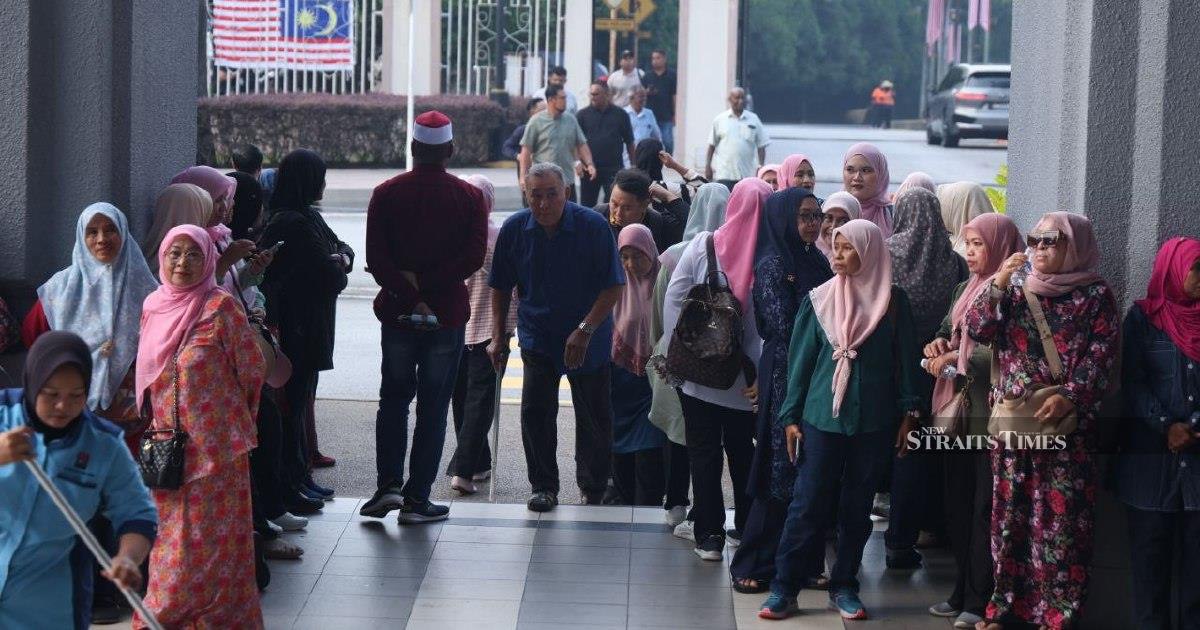
The Kuala Lumpur Court Complex became a focal point of national attention as more than 30 journalists and media practitioners assembled in the lobby, awaiting the arrival of former Prime Minister Datuk Seri Ismail Sabri Yaakob for what was anticipated to be his formal charging. The gathering underscores the high-profile nature of legal proceedings involving individuals who have held the country's highest political office, a development that invariably commands significant public and media interest.
The presence of such a substantial media contingent reflects the broader significance of legal accountability mechanisms in Malaysia's governance framework. When senior political figures face court proceedings, it signals to citizens that no individual, regardless of their former position or status, remains insulated from the judicial system. This principle of equal treatment under law represents a cornerstone of democratic governance and institutional integrity.
Ismail Sabri's tenure as Prime Minister, spanning from August 2021 to November 2022, occurred during a particularly turbulent period in Malaysian politics. His appointment came amid considerable political upheaval following the collapse of the Perikatan Nasional administration under Tan Sri Muhyiddin Yassin. The preceding months had witnessed significant political volatility, including the dissolution of Parliament and the general election that ultimately led to the formation of a new federal government.
The decision by prosecutorial authorities to proceed with charges against a former prime minister carries substantial implications for Malaysia's political landscape. It demonstrates the functioning of investigative bodies and the judicial system in examining conduct by senior officials, a development that observers have noted with varying degrees of significance depending on their political perspectives and concerns regarding institutional independence.
For Malaysian citizens and regional observers, such proceedings offer a window into how the country's legal institutions address allegations against prominent figures. The comparative rarity of such cases in Southeast Asia makes them particularly noteworthy, as many nations in the region have experienced challenges in maintaining robust accountability mechanisms for top-tier political actors. Malaysia's willingness to advance legal proceedings demonstrates a functioning system of checks and balances, though assessments of its impartiality and effectiveness remain subjects of ongoing public debate.
The concentration of media personnel at the Court Complex also underscores the intense public curiosity surrounding high-stakes legal matters involving recognizable political figures. In the information age, such proceedings generate extensive coverage across traditional and digital platforms, shaping public discourse and political narratives. The specifics of charges, defence arguments, and judicial determinations emerging from these proceedings typically resonate far beyond the courtroom itself, influencing broader conversations about political accountability, institutional performance, and governance standards.
Previous instances involving senior political figures facing legal proceedings have demonstrated the substantial public engagement these matters generate. From the perspective of governance observers and constitutional experts, such cases offer opportunities to assess whether institutions operate consistently regardless of the status or former position of the accused. The outcomes of such proceedings can significantly impact public confidence in judicial independence and the perceived fairness of the legal system.
For regional observers monitoring Malaysia's democratic trajectory, these developments carry particular interest. The capacity of institutions to address allegations against former heads of government speaks to the resilience of democratic checks and balances. In jurisdictions where such accountability proves elusive or selective, governance challenges typically emerge over extended periods, affecting investor confidence, institutional legitimacy, and broader development outcomes.
The technical and procedural aspects of the charging process, while potentially complex, remain subjects of legitimate public interest. Charges against former senior officials typically involve detailed allegations, extensive investigative documentation, and complex legal considerations regarding jurisdiction, evidence admissibility, and constitutional questions. Media coverage of these proceedings serves an important informational function, enabling citizens to understand the allegations, the evidentiary basis, and the legal framework governing such cases.
Looking forward, the progression of Ismail Sabri's case through the judicial system will likely command sustained media and public attention. The timing of court appearances, adjournments, legal arguments, and eventual judgment will generate ongoing coverage and commentary. For businesses operating in Malaysia and investors considering regional engagement, assessments of institutional stability and predictability frequently factor in the observed consistency and perceived fairness of legal proceedings involving high-profile individuals.
The gathering of media personnel at the Court Complex also reflects the journalistic community's commitment to covering significant developments in the nation's legal and political sphere. Through their presence and subsequent reporting, journalists fulfil an essential function in documenting proceedings that form part of the country's governance record. Such coverage contributes to public understanding of how institutions function in practice and whether legal processes operate according to established principles and procedures.

