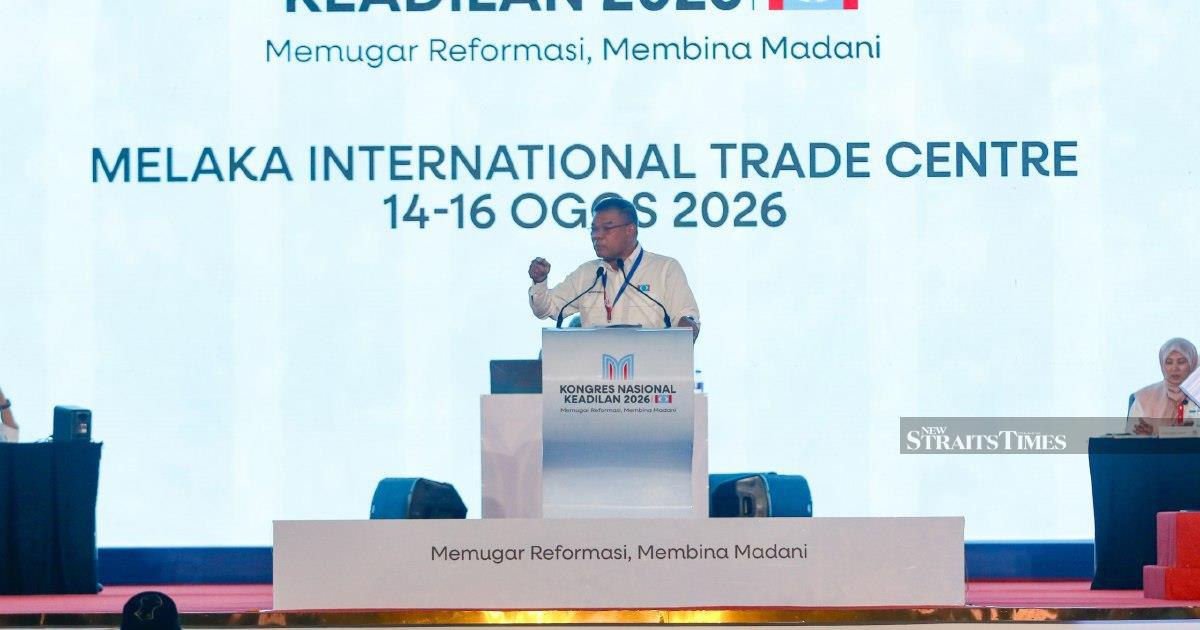
The battle to eradicate corruption in Malaysia must be anchored firmly on principles of morality and sound governance rather than weaponised as a tool of sectarian or ethnic agitation, according to PKR vice-president Datuk Seri Saifuddin Nasution Ismail, who articulated this position during a public engagement in Ayer Keroh.
Saifuddin's remarks highlight an increasingly significant tension within Malaysia's anti-corruption discourse. As the country grapples with allegations spanning multiple levels of government and affecting officials from different ethnic and religious backgrounds, the challenge of maintaining a unified, principle-based approach to accountability has become more acute. The framing of graft investigations and prosecutions carries profound implications for national cohesion, particularly in a country where the intersection of governance, ethnicity, and religious identity remains politically sensitive.
The PKR vice-president's intervention reflects broader concerns within reformist political circles that corruption-related investigations risk being instrumentalised to advance narrow factional or identity-based agendas rather than serving the genuine institutional imperative to strengthen Malaysia's governance standards. By insisting that the anti-corruption agenda be grounded in universal standards of integrity and ethical conduct, Saifuddin is positioning himself within a strand of political thought that prioritises meritocratic accountability over identity politics.
Malaysia's track record in anti-corruption efforts has been complicated by perceptions that enforcement mechanisms are sometimes deployed selectively, with critics arguing that cases are pursued with varying vigour depending on the political affiliation or ethnic background of the accused. The Malaysian Anti-Corruption Commission (MACC) has repeatedly pushed back against such allegations, but the persistence of these narratives underscores a fundamental legitimacy challenge facing the country's corruption-fighting institutions. When the public perceives enforcement as inconsistent or motivated by factors beyond the actual evidence, confidence in the integrity of the system itself becomes compromised.
Saifuddin's call for compartmentalisation—treating corruption as a governance problem distinct from issues of communal identity—responds directly to this credibility crisis. By advocating that graft be addressed through a framework emphasising universal ethical standards rather than communal categories, he is articulating a vision of institutional accountability that transcends divisions. This approach resonates with global governance best practice, where independent anti-corruption agencies are insulated from political interference precisely to ensure that enforcement appears—and genuinely is—neutral and principled.
The timing of Saifuddin's comments carries additional weight given Malaysia's ongoing political recalibration. With elections potentially looming and various political coalitions jockeying for advantage, there is a genuine risk that corruption allegations become subsumed into electoral calculus. Saifuddin appears to be staking out position as someone arguing against such opportunism, suggesting that real reformers must resist the temptation to exploit graft scandals for partisan gain.
For Malaysian readers and the broader Southeast Asian context, Saifuddin's intervention offers a useful lens through which to evaluate political rhetoric around anti-corruption campaigns. In several neighbouring countries, anti-graft initiatives have become tainted when they appear to target particular ethnic or religious communities disproportionately, or when they are selectively deployed against political opponents. The risk that Malaysia might follow a similar trajectory remains real, which is why voices calling for principled, universalist approaches carry significance beyond mere political positioning.
The distinction Saifuddin draws between moral governance and sectarian politics also has implications for Malaysia's international standing. Regional and global observers increasingly scrutinise whether anti-corruption efforts are pursued consistently and impartially. If enforcement appears to be driven by ethnic or religious considerations, it undermines not only domestic confidence but also Malaysia's credibility internationally, potentially affecting foreign investment, diplomatic relationships, and the country's reputation as an emerging market with rule of law safeguards.
Effectively institutionalising this principle—that corruption must be treated as a universal integrity issue—requires sustained commitment from multiple stakeholders. Independent judiciary, professional law enforcement agencies, transparent investigation processes, and a political culture that respects the autonomy of anti-corruption bodies all play crucial roles. Saifuddin's intervention suggests that at least elements within the political leadership recognise these institutional prerequisites, though translating recognition into systemic reform remains an ongoing challenge.
The deeper implication of Saifuddin's position is that Malaysia's anti-corruption agenda can only achieve legitimacy and sustained public support if it is perceived as principled and universal. Corruption, after all, corrodes not merely the integrity of government but the social fabric itself—it undermines trust, distorts economic competition, and weakens institutional capacity regardless of which community members perpetrate it. By insisting that the fight against graft must be framed as a governance imperative transcending sectional interests, Saifuddin is articulating not merely a political talking point but a prerequisite for genuine institutional reform and national development.
Whether this vision of principled, non-partisan anti-corruption work can be realised in Malaysia's current political environment remains an open question, but the articulation of such ideals from within the political establishment itself suggests that awareness of the stakes involved is not entirely absent from leadership circles.

