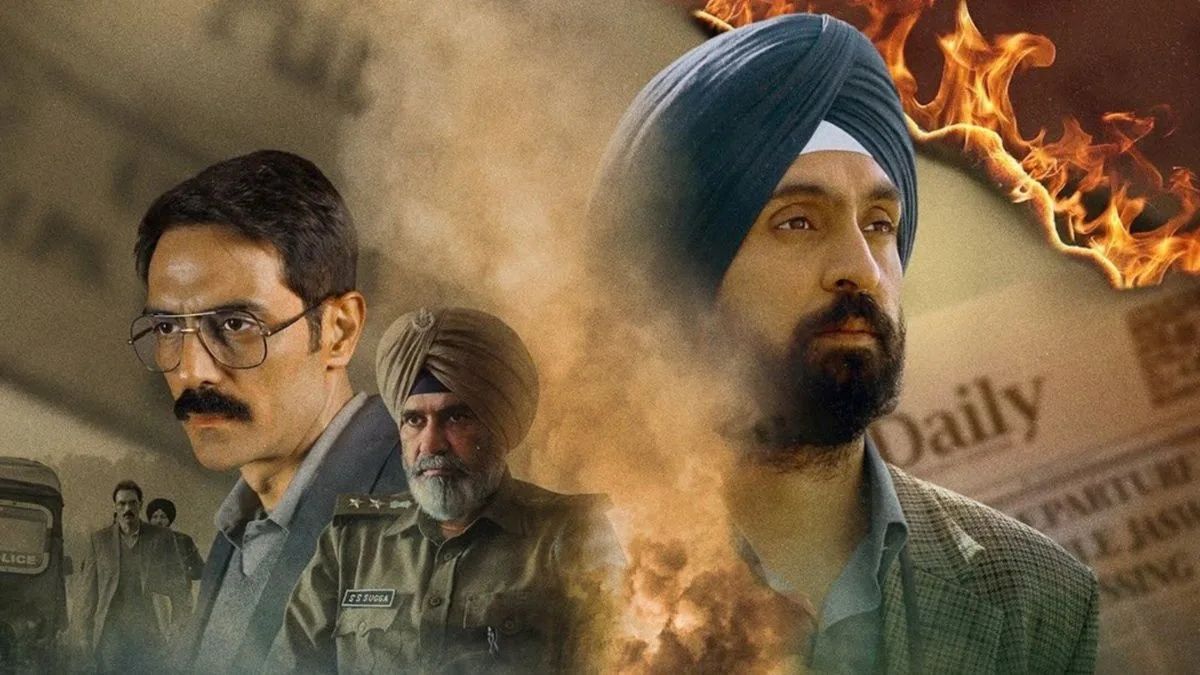
The withdrawal of "Satluj," a biographical film about Sikh human rights activist Jaswant Singh Khalra, from the ZEE5 streaming platform within days of its launch has crystallised growing anxieties among India's creative community about the boundaries of artistic expression. Filmmaker Honey Trehan endured a four-year struggle with Indian censorship authorities, who demanded 127 alterations to the film before he ultimately abandoned theatrical distribution. When the streaming giant removed the film citing vague "current developments," unnamed government officials reportedly cited "security concerns" as justification, though no detailed explanation materialised. The incident has become emblematic of what filmmakers and observers describe as an increasingly restrictive climate for cinema in the world's most prolific film-producing nation.
The scale of censorship requests has expanded significantly in recent years, with official parliamentary data revealing that authorities demanded cuts or modifications to 3,033 films during fiscal year 2025—a figure that more than doubled from just four years prior. Yet this surge in intervention remains largely opaque, as India's Central Board of Film Certification, the government body responsible for film approvals, has not published a comprehensive annual report since 2017. The absence of transparent data about what changes are ordered and why has deepened concerns among filmmakers who feel their work is subject to arbitrary restrictions without clear standards or accountability mechanisms.
What distinguishes India's approach from most other democracies is the structural power vested in government authorities over creative content. Unlike age-based classification systems in the United States and much of Europe, where ratings determine audience suitability but filmmakers retain creative control, India's film board possesses the authority to demand specific edits before public exhibition. This gives the state a direct hand in shaping narratives that reach audiences, a power that extends to streaming platforms—a relatively new frontier for government intervention that previously operated with greater editorial independence. The implications for Southeast Asian filmmakers watching India's trajectory are significant, particularly in Malaysia where questions about the boundaries between regulatory oversight and creative freedom continue to evolve.
Censorship officials characterise their actions as protecting constitutional values, with the Ministry of Information and Broadcasting telling Parliament that cuts are only mandated when content violates Indian sovereignty, security, public order, decency, morality, defamation, contempt of court, or incitement to offence. However, the breadth of these categories—particularly concepts like "decency" and "morality"—provide considerable discretion in interpretation. Shashi Shekhar Vempati, chairperson of the film board, declined to comment on individual film certifications, maintaining institutional distance from specific decisions while the ministry projects an appearance of principled regulation. The opacity surrounding decision-making processes has left filmmakers uncertain about which subjects or treatments will trigger intervention.
The political context surrounding "Satluj" illuminates why the film faced such obstacles. Starring Punjabi superstar Diljit Dosanjh, the film chronicles Khalra's documentation of extrajudicial killings and police brutality during Punjab's violent counterinsurgency campaign in the 1980s and 1990s, a period when the state crushed a Sikh independence movement through controversial security operations. Though those conflicts ended decades ago, Prime Minister Narendra Modi's Bharatiya Janata Party remains deeply suspicious of any separatist narratives, particularly following Canada's 2023 accusations that Indian government agents assassinated a Sikh activist in Vancouver. This geopolitical sensitivity surrounding Sikh identity and autonomy appears to have directly influenced official resistance to the film's distribution.
Recent censorship patterns suggest that films dealing with religious violence, caste systems, or historical injustices face heightened scrutiny, while patriotic narratives encounter minimal resistance. The 2025 spy thriller "Dhurandhar," depicting Indian intelligence operations against Pakistan, received routine approval and became the highest-grossing Hindi-language film of all time, demonstrating that state-aligned content flows through certification with ease. Conversely, the Malayalam blockbuster "L2: Empuraan" faced 24 post-release cuts after Hindu nationalist groups objected to its portrayal of 2002 religious riots, while films addressing caste systems—including the biopic "Phule" and the Academy Awards submission "Homebound"—required removals of caste-related language and references. This selective enforcement suggests that narrative control extends beyond formal policy into ideological preferences.
Filmmaker Onir, who works across multiple languages and genres, exemplifies how these restrictions affect creative practitioners across the industry. When his 2023 film "Pine Cone" included the word "gay" in a scene involving a child character, censorship authorities flagged the dialogue as problematic, and Onir was forced to remove it before receiving clearance. Such interventions extend beyond plot or political content into fundamental questions of representation and language, constraining how filmmakers address identity and social issues. These experiences have prompted observers like Sadanand Dhume, a senior fellow at the Council on Foreign Relations, to characterise the current moment as representing a sharp shift in the politics of Indian cinema coinciding with the Modi government's rise in 2014.
Trehan's perspective on these constraints reflects broader filmmaker anxiety about narrative freedom. He accused the Ministry of Information and Broadcasting of exploiting regulatory processes as a "backdoor entry" to control storytelling in India's film industry, suggesting that state intervention extends beyond preserving constitutional order into shaping which stories audiences encounter. His description of the situation—"this is not the sign of a healthy nation"—captures the underlying concern that when government bodies can prevent films from reaching audiences based on unstated security rationales or ideological preferences, the foundation for democratic discourse weakens. The four-year bureaucratic struggle to secure approval for a historical film about a documented human rights advocate illustrates how even conventional biographical cinema faces institutional obstruction.
Despite official barriers, "Satluj" has continued circulating through alternative channels that authorities cannot easily control. Trehan screened the film at the Cannes Film Festival in May, and it was previously selected for the Toronto International Film Festival in 2023, though ultimately withdrawn before premiere in what Trehan attributed to the ongoing censorship battle. Within Punjab itself, audiences have downloaded the film and arranged grassroots screenings in Sikh temples, community centres, and village squares, transforming official suppression into spontaneous public circulation. Trehan describes these unauthorised screenings as bringing diverse communities together across religious, caste, and economic lines, suggesting that attempts to control narrative can paradoxically amplify public interest and create alternative distribution networks.
For Malaysian observers and policymakers, India's trajectory offers instructive lessons about the relationship between regulatory frameworks and creative expression. While Malaysia maintains its own film classification system through the Malaysian Film Censorship Board, the Indian experience demonstrates how gradually expanding state intervention—justified through vague security and moral rationales—can progressively narrow the range of stories available to audiences. The scale of modification demands in India has escalated without corresponding transparency or defined standards, creating a chilling effect on filmmakers considering projects addressing sensitive historical, religious, or social topics. Southeast Asia's film industries, including Malaysia's, benefit from examining how regulatory boundaries shift over time and considering whether current frameworks adequately protect creative freedom while maintaining legitimate public interests.
The broader significance of the "Satluj" controversy extends beyond individual films to questions about what role democratic governments should play in determining narrative content. India's film board has certified nearly 72,000 films over five years, suggesting most productions navigate approval processes successfully, yet the spike in modification demands indicates increasing intervention intensity. Filmmakers across the region face mounting pressure to self-censor, avoiding subjects that might trigger official scrutiny rather than risk years-long certification battles. This dynamic gradually reshapes the cinematic landscape available to audiences, narrowing the range of perspectives and stories considered acceptable for public viewing. As India's experience demonstrates, once state authority over content approval becomes normalised, mission creep toward political narrative control becomes difficult to arrest.

