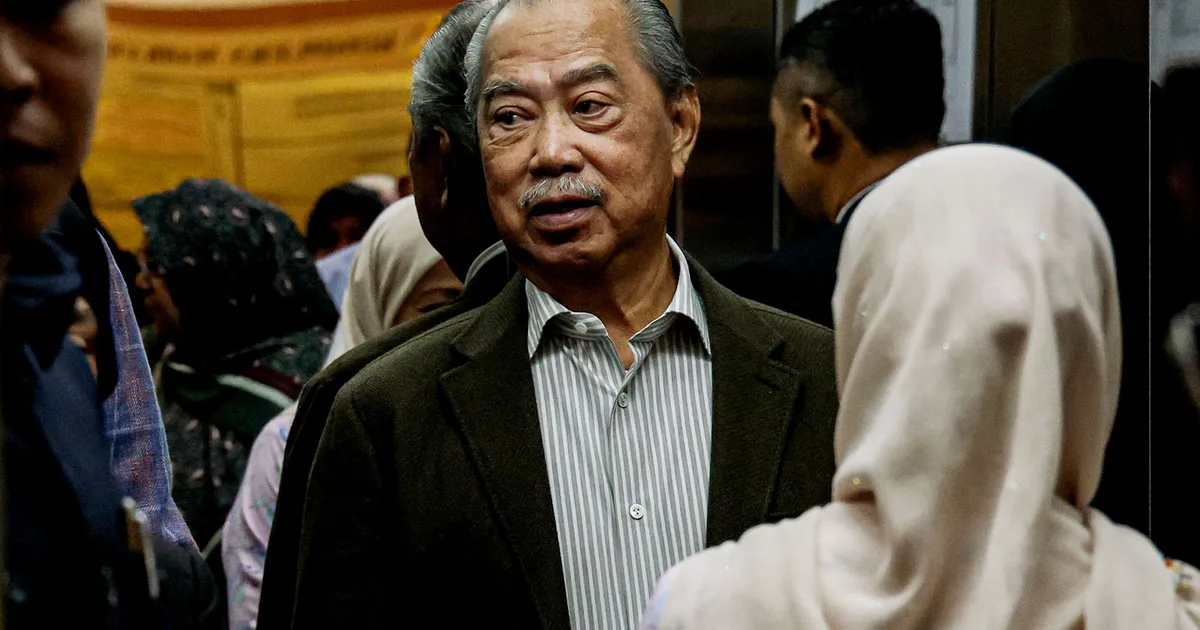
A high-profile court proceeding has surfaced troubling allegations that contractors vying for lucrative Jana Wibawa infrastructure projects during the Covid-19 crisis were steered toward making financial donations to Bersatu, the political party led by former Prime Minister Muhyiddin Yassin. The testimony emerged during legal proceedings as authorities probe potential misuse of public resources and the blurring of lines between state-funded development schemes and partisan political interests.
Businessman Azman Yusoff took the stand to provide witness testimony, recounting his experiences navigating the competitive landscape for Jana Wibawa contracts. His evidence centers on the alleged expectation that those seeking to benefit from the government's infrastructure initiative would demonstrate loyalty through financial contributions to Bersatu. The Jana Wibawa programme, launched as a pandemic economic stimulus, channelled substantial public funds into small and medium-scale construction and maintenance projects across Malaysia, ostensibly to support Bumiputera entrepreneurs and generate employment during the economic downturn.
In his testimony, Azman expressed a sense of personal indebtedness to Muhyiddin Yassin, attributing the former premier's administration with implementing policies that provided critical support to Bumiputera contractors during the severe economic disruptions wrought by the pandemic. This gratitude, he suggested, created an implicit framework within which business relationships operated. His words hint at a patronage system where access to government contracts became intertwined with political allegiance and financial reciprocation, a pattern that observers have flagged as potentially corrosive to merit-based procurement and fair competition.
The allegations carry significant implications for Malaysia's governance structures and public accountability mechanisms. Jana Wibawa, despite its purported focus on pandemic relief and economic stimulus, appears to have operated within a political ecosystem where contractors understood that competing for these projects might entail financial obligations to ruling political parties. This conflation of government spending with party fundraising represents a departure from principles of transparent procurement and neutral administration of public resources.
For Malaysian contractors, particularly small and medium enterprises that depend on government projects for survival, such pressure creates an untenable dilemma. Refusing to make political donations might compromise their competitiveness, whilst acceding to such requests means channelling business resources into partisan activities rather than reinvesting in their operations or workforce. Bumiputera contractors, who were specifically targeted by the Jana Wibawa initiative, found themselves in an especially vulnerable position given their historical reliance on government support and contracts.
The court testimony also illuminates broader governance concerns that extend beyond Bersatu or any single administration. The absence of robust firewalls between political parties and government procurement systems has long plagued Malaysian public administration. When contractors believe—whether accurately or not—that political donations enhance their chances of securing state contracts, the entire tendering process loses credibility. Competitors who eschew such payments face the prospect of being disadvantaged, creating perverse incentives that undermine efficient allocation of public resources.
Muhyiddin Yassin's administration, which governed from 2020 to 2021 during the initial phases of the pandemic, wielded significant discretionary authority over economic stimulus and relief programmes. Jana Wibawa, launched under his tenure, represented a substantial commitment of public funds. The allegations now emerging suggest that implementation of this initiative may have been compromised by political considerations. Whether consciously orchestrated or emerging organically from the relationship between ruling parties and business communities, such arrangements erode public trust and weaken democratic institutions.
The implications resonate throughout Southeast Asia, where similar patterns of political-commercial entanglement have sparked corruption investigations and governance crises. Malaysia's experience with contested procurement processes and allegations of political interference in government contracting serves as a cautionary tale for the region. Neighbouring countries grappling with similar challenges can observe how Malaysian courts and anti-corruption agencies respond to these revelations.
For current policymakers, the testimony underscores the urgent need for institutional reforms that genuinely separate political fundraising from government procurement. Independent oversight bodies, transparent bidding processes with public documentation, and meaningful enforcement of conflict-of-interest rules represent essential safeguards. Without such measures, development programmes designed to assist vulnerable entrepreneurs risk becoming vehicles for political enrichment, ultimately harming the very constituencies they purport to serve.
The broader question facing Malaysia concerns whether its governance architecture can credibly protect public resources from political capture. As this case proceeds through the courts, contractors, voters, and international observers will be watching closely to determine whether accountability mechanisms function effectively when political powerbrokers face scrutiny. The credibility of future government programmes—whether pandemic-related or otherwise—depends substantially on the outcomes of such high-profile investigations and the institutional reforms they catalyse.

