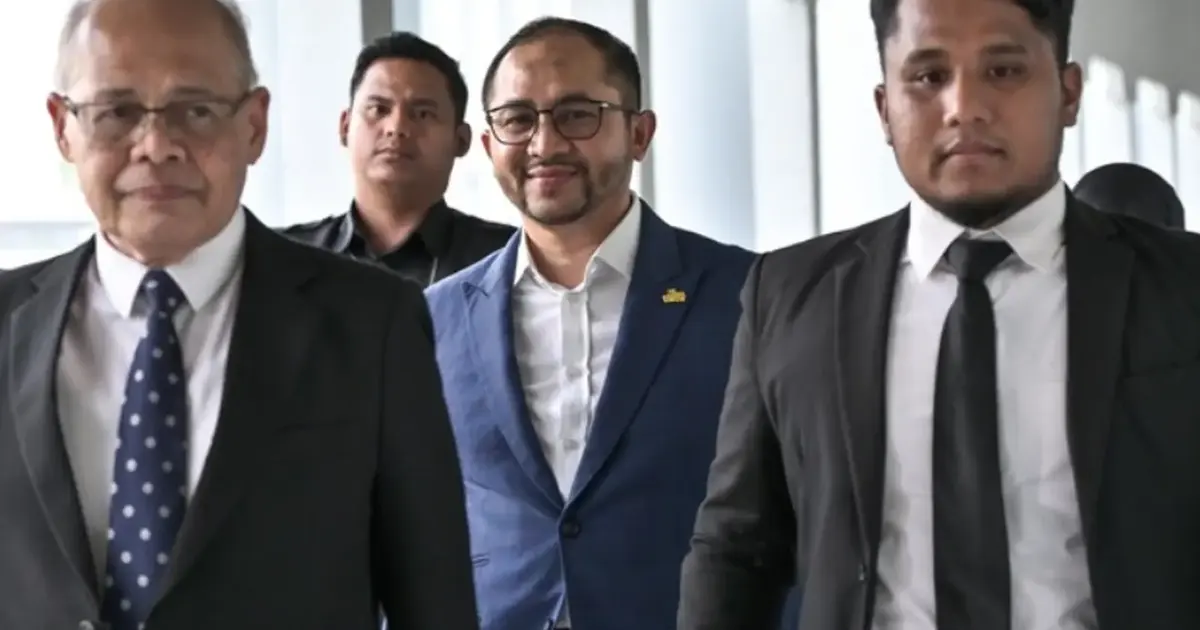
A managing director has testified in court that he faced intense pressure to surrender nearly half of a substantial consultancy payment after securing a contract tied to police procurement. Khairi Mat Jahya provided evidence that former political secretary Sayed Amir Muzzakkir Al Sayed Mohamad demanded approximately RM9 million from the total RM19 million fee, creating significant financial and personal strain in the process.
The case provides a rare glimpse into the murky intersection of political patronage, corporate consultancy arrangements, and public procurement in Malaysia. Consultancy contracts tied to government tenders have long been a source of controversy, with critics arguing that such arrangements can obscure financial flows and create incentives for improper conduct. The allegation that a political aide sought to extract a substantial portion of such fees raises fresh questions about the mechanisms through which political influence is monetised in Malaysia's business ecosystem.
Khairi's testimony centres on a consultancy arrangement that emerged from a police department procurement process. The nature of the consultation services and the justification for the unusually large fee have not been entirely clarified in the court proceedings thus far. What is clear from the account is that after the contract was successfully concluded and payment secured, demands were made for a significant cut to be redirected elsewhere, suggesting that the initial fee arrangement may not have accounted for various parties' expectations or claims.
The involvement of a former political secretary—a position typically held by individuals with direct access to senior politicians—lends particular weight to allegations of improper pressure. Political secretaries occupy a peculiar niche in Malaysia's governance structure, operating as trusted aides to ministers or senior officials with considerable behind-the-scenes influence. When such individuals seek to extract financial benefit from business dealings that their principals may have facilitated, it raises concerns about the blurred boundaries between public service and private enrichment.
The pressure allegedly exerted on Khairi to hand over roughly half the fee suggests that the demands were not merely a request but involved some form of coercion or threat. The language of being "pressured" implies that refusal would have consequences, though the precise nature of those consequences remains to be explored in testimony. In Malaysian business contexts, such pressure often operates through implicit threats—loss of future opportunities, reputational damage, or disruption of existing arrangements.
From a broader perspective, this case exemplifies a pattern that anti-corruption observers in Southeast Asia have identified repeatedly. Large consultancy fees on government contracts often lack clear justification for their scale, and the involvement of politically connected intermediaries frequently inflates costs without adding proportionate value. The pressure to share fees suggests that multiple parties believed they had claims on the money, a dynamic that emerges when consultancy arrangements serve primarily to channel funds to politically favoured individuals or entities.
For Malaysian businesses and investors, particularly those seeking to engage with government procurement opportunities, such cases underscore the unpredictability and hidden costs embedded in the system. A company that wins a contract through a consultancy arrangement cannot necessarily assume it will retain the full fee; unexpected demands may emerge from politically connected figures who claim some stake in the transaction. This creates a parallel, informal taxation system that operates outside official channels and lacks transparency.
The court proceedings are significant because they allow these allegations to be aired and scrutinised under oath, creating a public record that would otherwise remain concealed. Malaysian courts have increasingly become venues where corporate and political corruption is exposed, even when prosecutorial resources may be directed elsewhere. This case may therefore contribute to a broader understanding of how financial impropriety operates at the intersection of politics and business in Malaysia.
Sayed Amir Muzzakkir's alleged conduct, if substantiated, would represent a particular abuse of the trust invested in political aides. Such positions are granted on the assumption that holders will serve their principals' interests and the public good, not that they will leverage their access for personal financial gain by extracting payments from grateful contractors. The allegation suggests a relatively crude approach to converting political proximity into cash—direct demands rather than elaborate schemes—which may reflect confidence that the victim would be reluctant to resist or report.
The police tender that gave rise to the consultancy arrangement adds another layer of concern. Police procurement decisions can have significant operational implications, and the involvement of questionable consultancy arrangements raises questions about whether bids were evaluated on merit or whether political considerations influenced the outcome. If the tender process itself was compromised to benefit particular bidders, the subsequent demand for a share of the fee would represent only one symptom of systemic dysfunction.
Moving forward, this case may prompt renewed scrutiny of consultancy arrangements attached to government contracts across Malaysia's public sector. Calls for greater transparency in such fees, clearer justification for their quantum, and stricter governance of political aides' involvement in business matters may intensify. The evidence emerging from the courtroom could inform policy discussions about how to prevent similar situations from arising in future procurement exercises.

