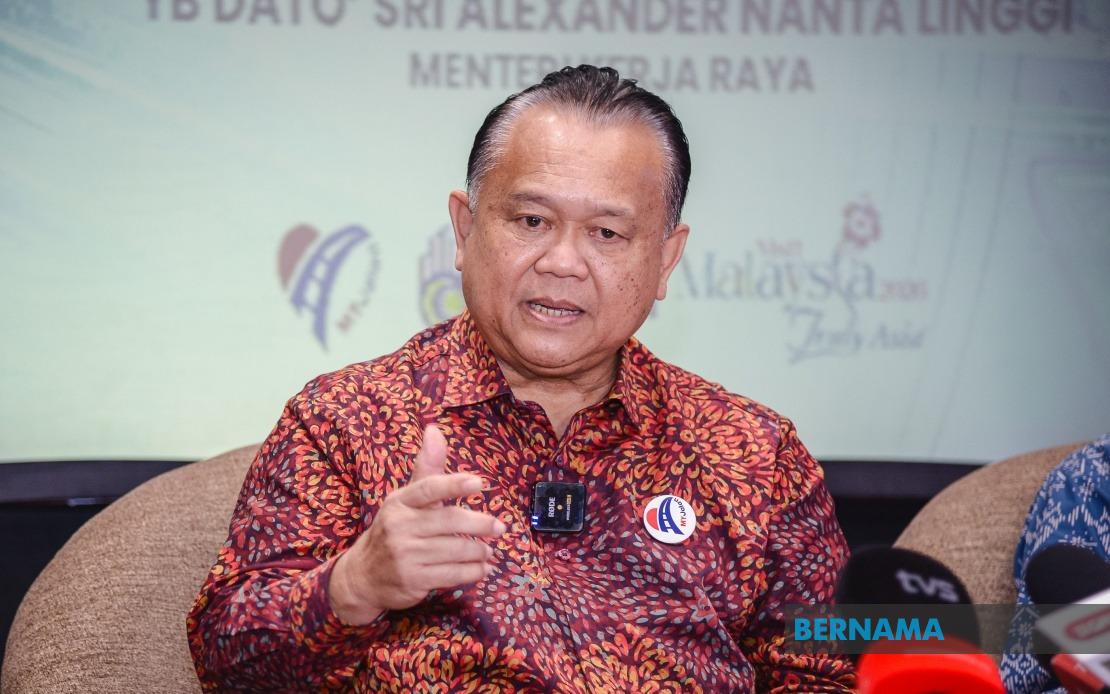
The Works Ministry (KKR) has collected 30 strategic proposals from Malaysia's construction sector as the government shapes its 2027 budget priorities, signalling a comprehensive effort to modernise the country's infrastructure development approach. Minister Datuk Seri Alexander Nanta Linggi disclosed the collection at an industry consultation on August 13, framing these submissions as part of a larger strategic review designed to ensure alignment with the government's MADANI Economy agenda, which prioritises high-impact growth while maintaining ecosystem stability in the construction sector.
The consultation process reflects a broader shift in how the ministry evaluates public spending on infrastructure. Rather than measuring success through the volume of money deployed, KKR is repositioning itself to assess outcomes—specifically the tangible benefits delivered by each ringgit of government investment. This philosophical change carries significant implications for how Malaysian construction companies approach their work, as it emphasises measurable impact over project cost alone, potentially reshaping tender evaluation criteria and procurement strategies across the sector.
KKR has articulated five cornerstones for construction-sector transformation that will guide Budget 2027 deliberations. The first involves consolidating and expanding the road network while simultaneously delivering projects with demonstrable high-impact outcomes. The second addresses sustainable development through Malaysia's energy transition commitments, requiring construction companies to integrate environmental considerations into project planning and execution. The third pillar centres on digital adoption—specifically Building Information Modelling (BIM), Internet of Things (IoT) infrastructure, and artificial intelligence applications—to modernise how the industry designs, manages and maintains assets. The fourth prioritises strengthening capacity among domestic contractors, particularly those classified as G1 to G4 firms. The fifth focuses on road safety improvements through the MYJalan initiative, reflecting growing attention to public welfare alongside infrastructure expansion.
Nanta emphasised that these five priorities should not be viewed as separate initiatives but rather as interconnected components of a comprehensive infrastructure ecosystem redesign. This integration is critical for Malaysian companies seeking to compete beyond mere price competition. Instead, industry participants must differentiate themselves through productivity gains, technological sophistication, quality standards and genuine value creation—factors increasingly important as Malaysian firms target international markets and seek to establish higher positions within global supply chains.
The broader context involves 117 total proposals submitted to KKR regarding industry challenges and budget expectations, with 87 originating directly from construction sector stakeholders. Industry feedback has identified multiple operational bottlenecks requiring government attention: governance and contract administration frameworks need strengthening; the workforce lacks sufficient skills and inclusive opportunity structures; and companies face mounting pressures from operating expenses, material costs and logistics challenges. These concerns underpin the sector's positioning on Budget 2027, reflecting real constraints limiting competitive capacity and growth potential across Malaysia's construction ecosystem.
Beyond these operational concerns, industry players have escalated calls for accelerated adoption of sustainability and environmental, social and governance (ESG) practices—indicating growing recognition that these frameworks increasingly influence international investment, client selection and long-term market positioning. There is also substantial advocacy for preferential sourcing of local materials, which could simultaneously support domestic suppliers and reduce supply chain vulnerabilities. These requests suggest that portions of the Malaysian construction sector are actively advancing sustainability ambitions, though implementation requires coordinated government support through policy frameworks and demand guarantees.
The minister also flagged a critical dimension often overlooked in infrastructure policy: the disparate starting positions of different industry participants. Large integrated contractors operate from fundamentally different vantage points than small contracting firms, consulting practices, frontline workers and specialty suppliers. Without deliberate intervention targeting foundational capacity development—addressing cash flow constraints, skills gaps, technology access barriers, approval process delays, utility availability and maintenance standards—a significant tier of potential industry participants remains locked in lower-value segments. Strategic budget allocation that strengthens these foundations could substantially expand the pool of competitive industry players and distribute economic benefits more broadly across the sector.
Nanta rejected the notion that budget constraints should necessitate reduced infrastructure ambitions, instead characterising them as catalysts for enhanced creativity in priority-setting. This framing carries particular relevance for Southeast Asian readers, as many regional economies face similar fiscal limitations while confronting aging infrastructure stocks and rapid urbanisation pressures. The proposition that constrained resources should drive more disciplined impact-focused spending rather than programme abandonment offers a conceptual model applicable across the region, though execution ultimately depends on political commitment and institutional capacity.
The ministry's emphasis on impact maximisation over expenditure volume reflects international best-practice trends in infrastructure governance, increasingly adopted by development institutions and advanced economies. For Malaysia, this reorientation could improve public asset quality and long-term productivity returns, though it requires substantial institutional changes in how projects are evaluated, selected and managed throughout their lifecycles. The emphasis on technology adoption—particularly BIM and AI applications—suggests KKR recognises that Malaysian companies must upgrade technological capabilities to sustain international competitiveness and attract foreign investment.
Under Budget 2026, KKR received RM10.692 billion in allocations, representing a 3.3 per cent increase from the prior year, with RM9.607 billion designated for development expenditure supporting new projects and continuation of existing infrastructure initiatives. These figures establish the baseline context for Budget 2027 negotiations, though the specific allocation for the upcoming fiscal year remains undetermined pending parliamentary deliberations and broader government budgetary constraints.
The upcoming Budget 2027 presentation to Parliament on October 9 will reveal whether government deliberations incorporate the construction sector's strategic proposals and the ministry's transformation agenda. The budget tabling represents a critical juncture where policy ambitions become fiscal reality—or face adjustment based on competing national priorities and macroeconomic conditions. For Malaysian construction companies, investors and workers, this budget cycle will substantially influence sector trajectory over the coming years, determining the pace of digital transformation, infrastructure expansion and competitive positioning within regional and global markets.
The consultation process itself signals KKR's commitment to evidence-based policymaking grounded in sector input, departing from purely top-down infrastructure planning approaches. However, translating 30 strategic proposals and broader industry feedback into coherent budget initiatives requires difficult prioritisation decisions, particularly given fiscal constraints. The ultimate measure of success will not be the quantity of industry requests accommodated, but rather whether the resulting budget allocation genuinely accelerates infrastructure quality, technological adoption and competitive capability across Malaysia's construction ecosystem—outcomes that benefit the broader economy through improved public assets and enhanced international competitiveness.

