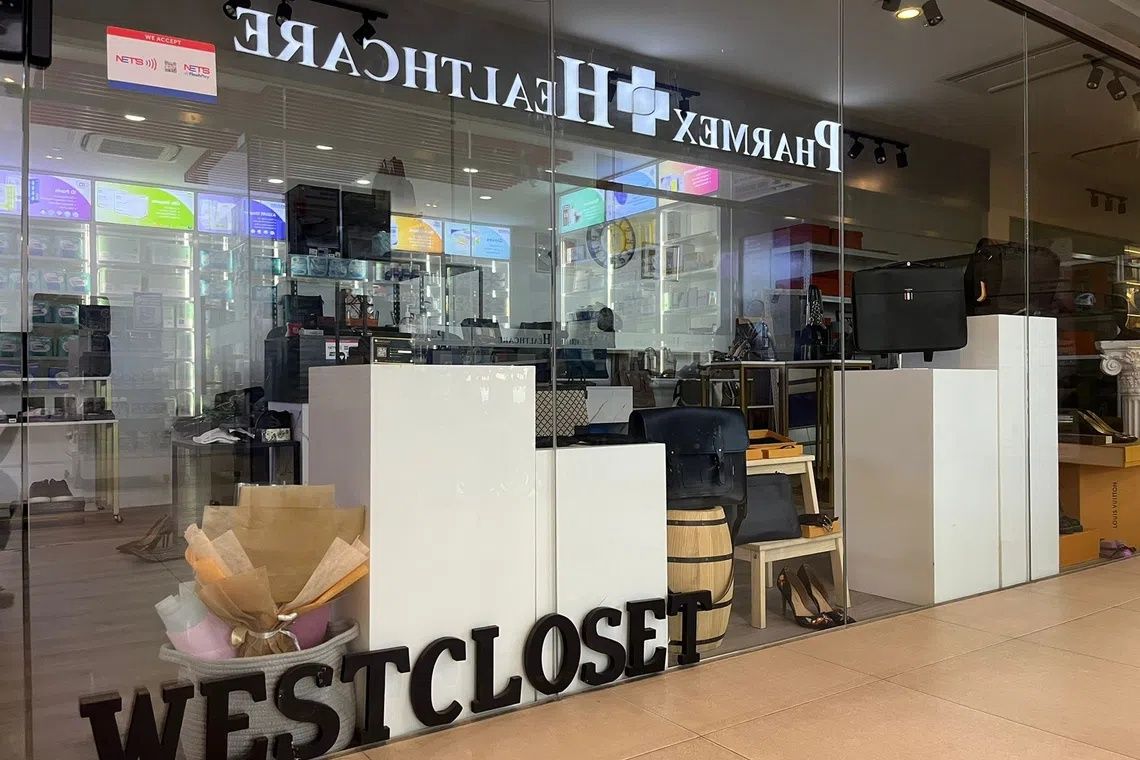
A 36-year-old Indonesian entrepreneur has been handed an eight-month custodial sentence after pleading guilty to systematically defrauding customers through her consignment store operation in Singapore's prestigious Shenton Way district. Ringga Dwi Rizky Irianto, the sole proprietor of West Closet, which operated from the OUE Downtown Gallery shopping mall, misappropriated nearly S$140,000 from five individuals who had entrusted her with the sale of their designer handbags. The District Court verdict, handed down on August 13, represents a cautionary tale for the growing secondhand luxury goods market across Southeast Asia, where digital platforms have made consignment commerce increasingly accessible but also vulnerable to exploitation.
The operational structure of West Closet appeared legitimate on the surface. The store actively promoted its services through Instagram and Carousell, two platforms heavily used by Malaysian and regional consumers interested in pre-owned luxury goods. Customers were required to deposit their bags for a standard 60-day holding period, with a S$60 penalty imposed for extensions beyond this timeframe. The business model hinged on West Closet taking a commission ranging from S$200 to S$900 per item after successfully selling bags on behalf of their owners. This arrangement mirrored countless legitimate consignment operations across Singapore and the region, yet Irianto systematically violated the trust placed in her by exploiting gaps in transaction verification and payment disbursement protocols.
The first documented victim placed three high-value handbags—two Hermès pieces and one Chanel—into consignment during July 2022, with a guaranteed sale value of S$51,000. West Closet issued an explicit written assurance that upon successful sale, the proceeds would be transferred to the victim's designated bank account within seven days. After all three bags sold and the full S$51,000 was realised, Irianto diverted the entire sum to settle another customer's transaction rather than honouring her contractual obligation. This pattern of deliberate misappropriation was not an isolated incident but rather the opening chapter in a sustained scheme of deception.
A second victim suffered a loss of S$33,500 when their Hermès handbag was sold through West Closet, with Irianto subsequently redirecting the payment proceeds. A third victim experienced an identical fraud involving another Hermès bag, resulting in a loss of S$23,500. In aggregate, these three victims accounted for S$108,000 of the total misappropriation, forming the basis of three separate criminal breach of trust charges to which Irianto pleaded guilty. Two additional charges linked to the remaining two victims and corresponding financial losses were taken into consideration during sentencing, though she did not formally plead to these counts.
The mechanics of Irianto's fraud reveal a critical vulnerability in consignment-based commerce: the temporal gap between sale completion and fund disbursement creates opportunities for unscrupulous operators to misappropriate proceeds. By transferring customer payments to other accounts rather than returning them to their rightful owners, Irianto temporarily solved her own cash flow pressures at the direct expense of customers who had followed proper procedures and met all contractual obligations. This behaviour demonstrates how digital-era commerce, despite offering unprecedented convenience and market access, remains susceptible to old-fashioned embezzlement when adequate financial controls and verification mechanisms are absent.
The consequences for Irianto have been substantial though incomplete. While the court imposed an eight-month jail sentence, she has already made S$41,000 in restitution—approximately 29 percent of the total loss. The court additionally ordered her to pay S$91,950 in compensation to the victims, though she will face an additional 24 days of imprisonment for every day the outstanding balance remains unpaid. With her bail set at S$15,000, Irianto is scheduled to commence her custodial sentence in October, by which point the court will have had opportunity to assess her progress toward meeting the compensation order.
The criminal breach of trust provisions under Singapore law carry substantial penalties: offenders face potential imprisonment for up to seven years, fines, or both, depending on the severity of the breach and quantum involved. Irianto's eight-month sentence, while significant, sits at the lower end of the sentencing spectrum available to the court, possibly reflecting her guilty plea, partial restitution efforts, and absence of prior criminal record. For Malaysian readers and regional consumers engaged in the burgeoning secondhand luxury market, this case underscores the importance of transacting only with registered, established operations that maintain transparent financial controls and insurance protection.
The investigation leading to charges consumed considerable time; Irianto was arrested in September 2022 but was not formally charged until 2024, suggesting that authorities required substantial time to consolidate victim statements, trace financial flows, and build their prosecutorial case. This delay is not uncommon in white-collar fraud investigations where digital records must be recovered and analyzed alongside banking documentation. However, the extended timeline also highlights how fraud victims can endure prolonged periods of uncertainty while awaiting justice.
From a regional perspective, this case illustrates the challenges posed by the rapid digitization of consumer commerce across Southeast Asia. While platforms like Carousell and Instagram have democratized access to international luxury goods and secondary markets, they have simultaneously lowered barriers to entry for potential fraudsters. The relatively informal nature of many consignment arrangements—often lacking the institutional safeguards found in established auction houses or luxury goods retailers—creates asymmetrical risk profiles favouring perpetrators over consumers. Malaysian authorities and industry participants should consider whether existing consumer protection frameworks adequately address the specific risks inherent in digital consignment transactions.
Moving forward, consumers seeking to sell luxury items through consignment should demand clear written contracts specifying payment timelines, require photographic documentation of items at receipt and prior to sale, and consider whether third-party escrow or insurance mechanisms are available. The West Closet fraud demonstrates that aesthetic presentation, social media presence, and initial trustworthiness are insufficient safeguards against deliberate misappropriation. Legitimate consignment operators should welcome inquiries about their financial controls, payment verification procedures, and insurance arrangements—transparency in these areas distinguishes responsible businesses from potential fraud schemes.

