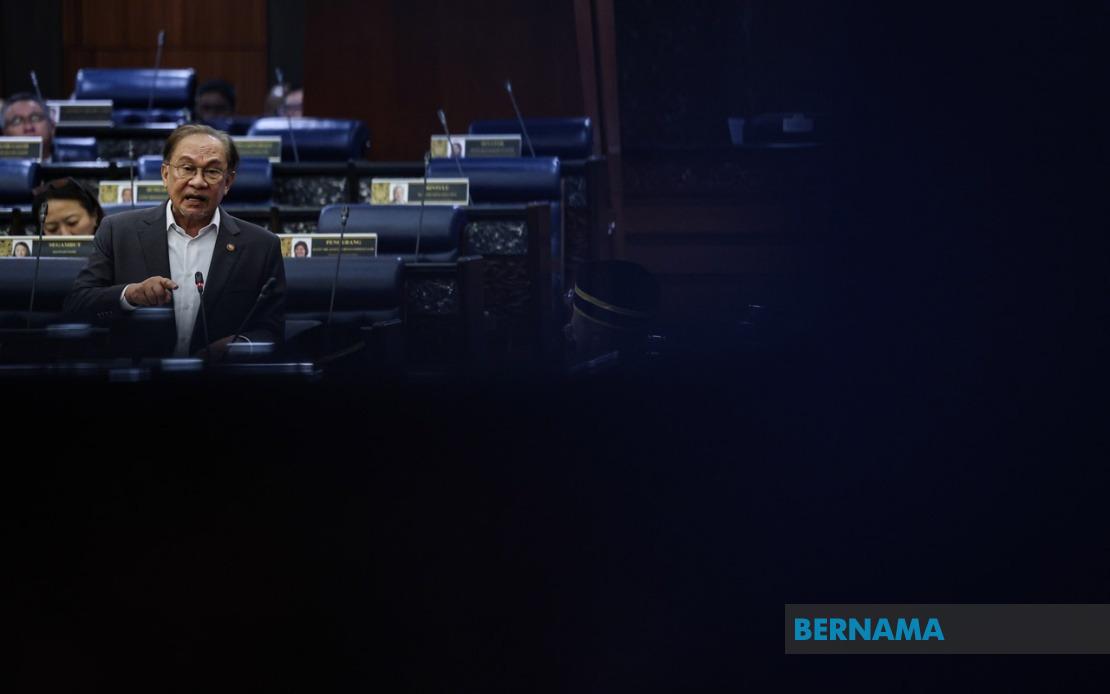
Prime Minister Datuk Seri Anwar Ibrahim has introduced a significant shift in how the government will handle complaints lodged against journalists, establishing a new procedural safeguard that requires all such grievances to pass through the Malaysian Media Council (MMM) before triggering any official investigation or enforcement action. Speaking in Parliament during Minister's Question Time on July 7, Anwar outlined this mechanism as part of a broader effort to balance legitimate media accountability with protection against arbitrary prosecution of news practitioners.
The new framework represents a deliberate departure from previous practice, where complaints could automatically initiate government investigations without intermediate review. Under the revised approach, the MMM will function as a mandatory first checkpoint, ensuring that any allegation of misconduct receives independent assessment before state resources are deployed against a journalist or news organisation. This gatekeeping role fundamentally alters the dynamics between government agencies and the press, shifting decision-making authority away from departments that may feel themselves criticised and toward an ostensibly neutral body.
Anwar emphasised that the arrangement was designed with fairness and transparency as guiding principles. He explicitly rejected the notion that journalists should face legal jeopardy merely because a formal complaint has been submitted, noting that the threshold for initiating proceedings must be appropriately high. The Prime Minister's comments acknowledge a long-standing concern among press freedom advocates: that under Malaysia's existing legal arsenal—particularly the Sedition Act 1948 and the Official Secrets Act 1972—journalists have historically faced prosecution for reporting on matters of public interest, often on grounds that critics contend are pretextual or politically motivated.
This announcement emerges from a parliamentary question posed by Datuk Mohd Isam Mohd Isa, the BN representative for Tampin, who sought clarification on the government's position regarding Malaysia's controversial legal framework that permits journalists to be charged under sedition and official secrets provisions. These statutes have long been criticised by international press freedom organisations as tools that effectively suppress legitimate journalism and chill investigative reporting. The question thus touched on a persistent tension in Malaysian law between national security and public order considerations, on one hand, and democratic principles of transparent governance and free expression, on the other.
Anwar's framing of the issue acknowledges a middle ground position: that absolute press freedom does not exist anywhere globally, and that both journalists and political leaders remain subject to law. However, he simultaneously contended that the mere lodging of a complaint should not automatically expose a reporter to investigation or prosecution. This nuance is important for understanding the policy's intent. Rather than abolishing or substantially reforming the sedition and official secrets legislation—which would require parliamentary action and potentially prove politically contentious—the government has opted for a procedural intervention that requires intermediate review before those laws are activated against media practitioners.
The Malaysian Media Council, now tasked with this review function, will shoulder considerable responsibility for determining which complaints merit advancement to formal investigation or prosecution. This places the organisation at the intersection of competing interests: government agencies seeking accountability for alleged violations, journalists and news organisations concerned about interference, and the broader public interest in both press freedom and lawful governance. The council's independence and the rigour of its assessment process will largely determine whether this mechanism succeeds as genuine protection or devolves into a rubber-stamp operation that delays rather than prevents problematic prosecutions.
For Malaysian media practitioners, the policy offers a concrete procedural protection that was absent before, yet leaves substantive legal vulnerabilities largely intact. Journalists can still potentially face prosecution under sedition and official secrets laws, but only after the MMM has vetted the complaint. This represents meaningful progress for press freedom advocates who have campaigned against the use of these statutes against reporters, though activists may argue that the statutes themselves require reform rather than merely adding administrative checkpoints to their application.
Regional implications deserve consideration as well. Malaysia's approach—establishing a media council as an institutional buffer against arbitrary prosecution—may interest other Southeast Asian democracies grappling with similar tensions between national security concerns and press freedom. The model suggests one pathway through which governments can signal commitment to media pluralism while retaining legal tools deemed necessary for public order, though critics may view it as essentially cosmetic unless backed by genuine institutional independence and willingness to reject government referrals.
The Prime Minister's comments also reflect broader trends within the current government administration, which has signalled greater openness to press engagement and criticism than its immediate predecessor. This policy announcement, while falling short of comprehensive legal reform, demonstrates responsiveness to concerns raised by journalists and civil society regarding the chilling effect of sedition and official secrets prosecutions on investigative reporting. Whether the MMM mechanism will operate as Anwar has described—with genuine independence and scepticism toward complaints lacking substantial merit—remains to be demonstrated through actual practice over coming months and years.
Practical questions remain about implementation. The MMM will require adequate resources, qualified personnel, and clear decision-making criteria to discharge its new responsibilities effectively. Government agencies accustomed to proceeding with complaints may resist the new requirement to seek council clearance first, necessitating administrative discipline and political will to enforce the protocol. Journalists will need to understand the new process and how to engage with it, potentially through legal counsel, to defend against unfounded complaints at the council stage rather than in court.
Ultimately, Anwar's announcement signals recognition that Malaysia's legal framework governing press conduct requires not just substantive law but procedural protections that prevent law abuse. The establishment of the MMM review requirement represents incremental but meaningful progress, provided the council functions with genuine independence and rigour. For Malaysian readers and journalists, this policy warrants close monitoring to assess whether it delivers the protection its architects intend or becomes merely another bureaucratic step without substance.

