Syakawie Abdullah, a 20-year-old man living in Ampangan, Seremban, has finally secured his Malaysian identity card—a document that proved elusive for years despite his birth in the country. The achievement represents a turning point for someone who has faced considerable personal hardship, compounded by bureaucratic obstacles that prevented him from accessing welfare benefits and social support services available to Malaysian citizens. The successful completion of his identity card application marks the culmination of determined community efforts to ensure a vulnerable young man could exercise his basic rights as a Malaysian citizen.
The journey to obtain the identity card was neither straightforward nor swift. Syakawie's circumstances came to the attention of Kamaruddin Omar, a local resident who offered shelter to the young man behind his own house in Kampung Sungai Pupoh. Recognising the urgent need to formalise Syakawie's citizenship status, Kamaruddin took the initiative to submit his application to the National Registration Department, working alongside Balkhis Abdul Wahab, the chairman of Kampung Jiboi Baru's Village Development and Security Committee. This collaboration between a concerned individual and the local governance structure demonstrates how community-level action can bridge gaps in the system.
According to Mohd Aziz Kamaldin, the head of Sikamat and Ampangan subdistricts, Syakawie has been experiencing considerable vulnerability. The young man has intellectual disabilities that have shaped his entire life trajectory. His mother abandoned him at birth, leaving his father as his sole caregiver. Despite the challenges, Syakawie's father, a lorry driver, managed to raise him and ensure his birth was registered. However, this birth certificate alone proved insufficient for accessing many services that Malaysian citizens take for granted.
The death of Syakawie's father in 2022 created an acute crisis. Before his passing, Syakawie had briefly been placed in a welfare home, but chose to leave that facility to care for his ailing father, who suffered from a chronic disease. When his father died, Syakawie found himself without family support, employment prospects, or the documentation necessary to apply for government assistance. The absence of an identity card became increasingly restrictive, preventing him from qualifying for an OKU—or Orang Kurang Upaya (person with disabilities) card—which would have unlocked access to tailored welfare programmes and financial support designed specifically for individuals with disabilities.
The significance of this identity card extends far beyond symbolic recognition. For someone with learning disabilities and no family support system, the card opens pathways to disability benefits, healthcare access, and social protection that were previously unavailable. Without it, Syakawie had been effectively excluded from Malaysia's safety net, despite being born and raised in the country. Local officials recognised that formalising his citizenship status was essential not merely as a bureaucratic exercise, but as a practical necessity for ensuring his survival and dignity.
Community-driven initiatives like this one highlight persistent gaps in how marginalised individuals navigate Malaysia's bureaucratic systems. Individuals with disabilities, particularly those without family advocacy or financial means, often struggle to complete seemingly routine administrative processes. The fact that it took four years—and the sustained intervention of local volunteers—to secure an identity card for someone born in Malaysia raises questions about accessibility and awareness within the National Registration Department's own systems. Many vulnerable people likely remain undocumented or inadequately registered, unaware of their eligibility for support or lacking the means to pursue applications independently.
The role of the Village Development and Security Committee in this case demonstrates the value of grassroots governance structures in identifying and supporting community members in crisis. JPKKs operate at the village level and maintain direct relationships with residents, positioning them to notice when individuals fall through administrative cracks. Their involvement in Syakawie's case shows how these committees can escalate issues and advocate for vulnerable populations, though it also underscores the reality that such support depends heavily on the initiative and compassion of individual committee members.
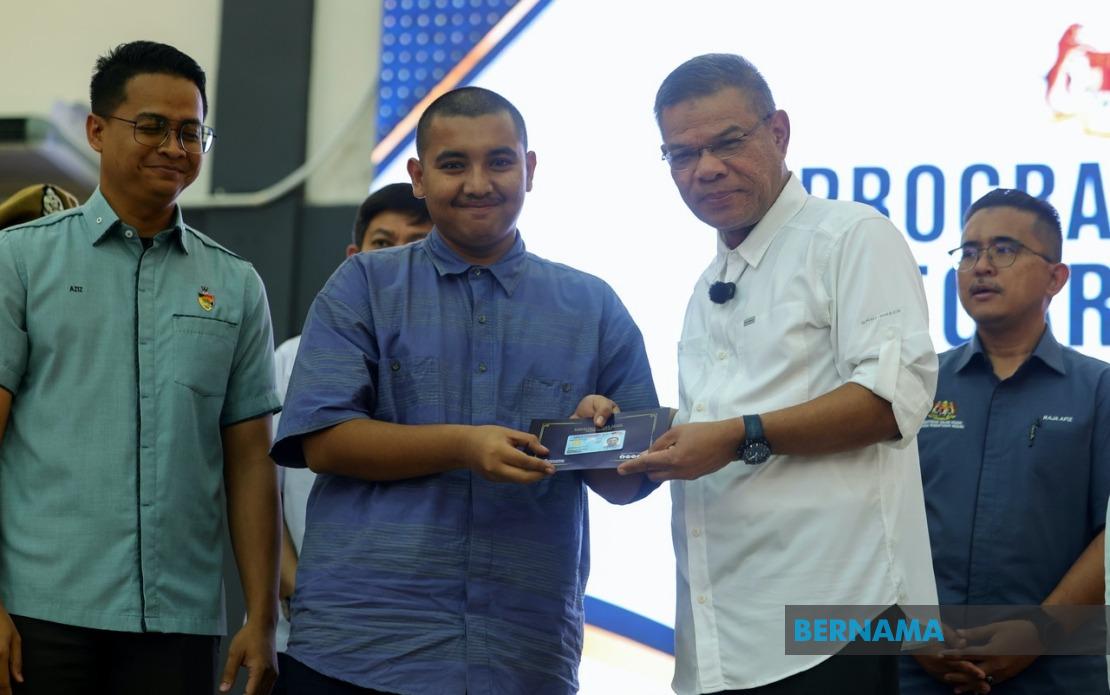
Home Minister Datuk Seri Saifuddin Nasution Ismail's presence at the handover ceremony, conducted during the Citra Negara programme, reflected official recognition of the significance of this case. The minister's involvement signalled governmental appreciation for the efforts that enabled Syakawie to claim his birthright and for the broader importance of ensuring all eligible Malaysians obtain proper documentation. Such high-level acknowledgement may also serve to raise awareness among other undocumented or inadequately registered individuals about their rights and the support available to them.
For Seremban and indeed throughout Malaysia, Syakawie's case serves as both a success story and a cautionary reminder. It demonstrates that when communities mobilise and local governance structures engage actively, even deeply marginalised individuals can access their rights. Yet it also suggests that many others—perhaps with less visible advocates, in areas without engaged JPKK leadership, or lacking the chance encounter with a compassionate neighbour—may still be waiting for the opportunity to secure the basic documentation necessary for full participation in Malaysian society. The challenge now extends beyond individual cases to establishing more systematic processes that identify and support undocumented or inadequately registered citizens, particularly those with disabilities or other vulnerabilities that make independent navigation of bureaucratic systems difficult.