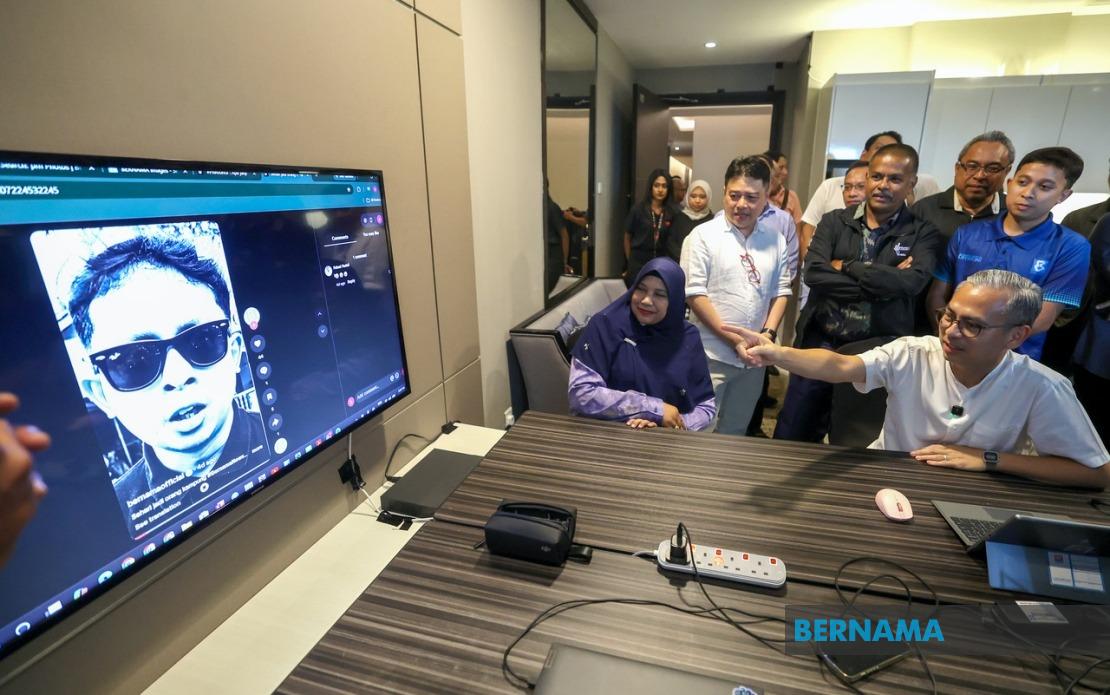
Communications Minister Datuk Fahmi Fadzil has publicly acknowledged the Malaysian National News Agency (Bernama) for maintaining high professional standards throughout the Johor state election, highlighting the critical role that national media infrastructure plays in democratic processes. His visit to the Bernama Operations Centre in Johor Bahru on July 7 underscored government recognition of the agency's responsibilities in delivering timely and accurate electoral coverage to Malaysian voters.
The minister's inspection of the operations hub revealed a well-coordinated newsroom where journalists, sub-editors, editors and television personnel worked cohesively to track developments across the entire state. Fahmi noted with satisfaction that the physical facilities and organisational support provided to on-duty staff were adequate, enabling uninterrupted coverage throughout polling day preparations. This operational efficiency is particularly significant given the geographic challenges of covering Johor, which stretches from Endau in the south to Tanjung Surat and extending into the northern districts.
Bernama deployed a comprehensive field force of 44 personnel including journalists, cameramen and photographers to document the electoral process across all 56 contested seats. This substantial commitment of human resources reflects the agency's mandate to serve as Malaysia's primary news distribution channel, ensuring that voters and stakeholders receive comprehensive information about the political contest. The deployment model demonstrates how national news infrastructure adapts to cover major civic events across dispersed geographic territories.
Fahmi's commendation extended specifically to Bernama's leadership structure. Chief Executive Officer Datin Paduka Nur-ul Afida Kamaludin and Editor-in-Chief Arul Rajoo Durar Raj received particular recognition for orchestrating the logistical and editorial preparations that underpinned the election coverage. The minister spent more than an hour at the operations centre, directly engaging with journalists and support staff on duty, a gesture that underscored government acknowledgment of media personnel's contributions to democratic processes.
The timing of Fahmi's visit carried additional significance within Malaysia's evolving media landscape. State elections have become increasingly important testing grounds for political messaging and voter engagement, requiring coordinated coverage infrastructure that can reach audiences across multiple platforms and geographic regions simultaneously. Bernama's capacity to maintain this coverage from a central operations hub while deploying field teams across diverse terrain reflects institutional maturity in managing national news distribution during high-stakes political events.
From a regional perspective, Malaysia's investment in professional state news infrastructure offers a model for electoral coverage that balances government awareness of media operations with editorial independence. The minister's recognition of Bernama's work occurred without appearing to condition coverage or impose editorial direction, presenting a framework wherein government officials can acknowledge institutional performance without compromising newsroom autonomy. This distinction carries weight across Southeast Asia, where tensions between political authorities and news organisations frequently generate concerns about press freedom.
The Johor state election itself involved 172 candidates competing for 56 seats, with polling scheduled for July 11 following early voting on July 7. This competitive field required sophisticated news management to track candidate movements, campaign messages and electoral dynamics across the state's varied constituencies. Bernama's ability to maintain comprehensive coverage amid this complexity demonstrated the operational capabilities required of national news agencies serving multi-party democracies.
Bernama's institutional role within Malaysia's media ecosystem has evolved considerably since the agency's establishment. As Malaysia's official news agency, it maintains responsibility for serving both domestic audiences seeking reliable information and international stakeholders monitoring Malaysian political developments. Election coverage represents a particularly critical dimension of this mandate, as voters depend on consistent, accurate information to make informed electoral choices. The minister's emphasis on coverage quality therefore connected to fundamental democratic principles regarding informed citizenry.
The operational model Bernama employed during the Johor election reflects broader trends in how national news infrastructure adapts to contemporary information environments. While maintaining traditional newswire operations, the agency has integrated television production, digital distribution and real-time reporting capabilities into unified operations centres. This convergence allows a single facility to coordinate output across multiple platforms and formats simultaneously, maximising reach and timeliness during breaking news situations like elections.
For Malaysian media stakeholders and government officials, the Johor coverage offered practical lessons regarding election-season coordination between political authorities and news organisations. Fahmi's visit acknowledged institutional performance while avoiding micromanagement or editorial prescription, establishing a professional framework that other government bodies might emulate when engaging with news media during sensitive political periods. This distinction between recognition and control remains particularly important as Malaysia continues navigating questions about press freedom and government-media relations.
The broader implications extend to how Southeast Asian democracies maintain professional news infrastructure during electoral cycles. As regional countries face increasing scrutiny regarding media independence and election integrity, demonstrable investment in national news agency capacity and logistical support for comprehensive coverage becomes an indicator of democratic institutional health. Bernama's deployment model during the Johor election exemplifies how professional newsroom organisation and adequate resourcing can ensure voters access reliable information during pivotal political moments.
Bernama's performance during the Johor state election ultimately contributed to a broader media ecosystem where multiple news organisations competed to provide timely electoral coverage. While the national news agency received ministerial recognition for its specific contributions, the competitive news environment itself serves democratic interests by ensuring voters encounter diverse reporting perspectives and editorial approaches. The minister's acknowledgment of Bernama's role did not diminish other news organisations' coverage contributions but rather recognised one institutional element within the larger information infrastructure supporting democratic processes.

