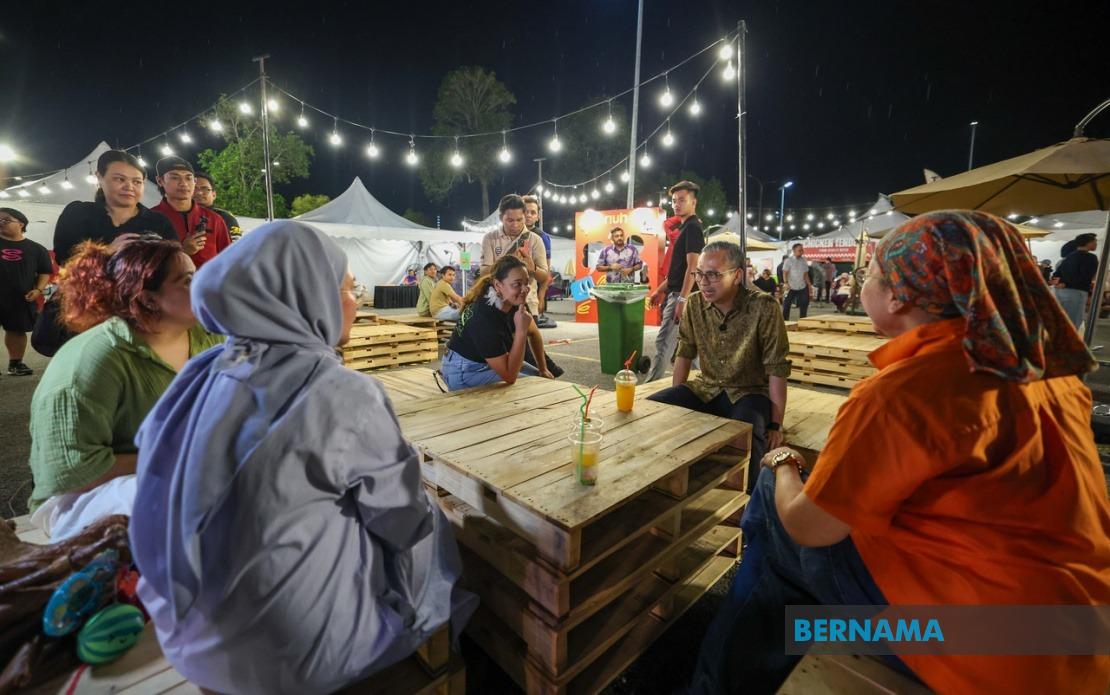
Communications Minister Datuk Fahmi Fadzil has commended the RIUH Pi HAWANA carnival held in Butterworth as a successful venture that demonstrates Malaysia's commitment to nurturing homegrown creative talent and entrepreneurship. Speaking at the event held at the PICCA Convention Centre @ Butterworth Arena parking grounds, Fahmi expressed his contentment with both the public reception and the operational execution of the carnival, which runs in conjunction with the 2026 National Journalists' Day celebration.
The carnival has effectively bridged generational divides within Malaysia's entertainment landscape, providing a rare platform where both seasoned performers and emerging artists can connect directly with audiences in a shared creative space. Fahmi highlighted the programme's ability to present a diverse roster of talent, noting that the inclusion of established names alongside younger acts creates valuable networking opportunities and exposure for the entire spectrum of local musicians and performers.
The event statistics underscore the scale of this creative showcase. Organisers have assembled more than 24 local creative brands operating within the carnival grounds, complemented by 20 food and beverage vendors that add vibrancy to the visitor experience. The programme features an impressive lineup of 18 live performances spanning multiple genres and artistic styles, from the band Exists to Bunkface, Masdo, Sakura Band, Fugo, Budak Nakal Hujung Simpang, and vocalist Chelsia Ng, demonstrating the breadth of Malaysia's contemporary music scene.
Beyond live entertainment, the carnival incorporates interactive workshops designed to engage visitors in hands-on creative activities. These workshops represent a deliberate attempt to transform the event from a passive consumption experience into an immersive environment where attendees can experiment with various artistic disciplines, potentially discovering new interests or talents within themselves.
Fahmi's advocacy for increased visitation, particularly from the Penang community, reflects a broader government strategy to promote local culture and creativity as economic and social assets. By encouraging Penangites to participate before the Sunday closing date, the minister essentially frames attendance as civic engagement and cultural investment rather than mere entertainment consumption.
The minister expressed a vision for the RIUH Pi HAWANA carnival to become a recurring feature of future HAWANA celebrations, transforming it into an established annual tradition. This proposal carries significant implications for local entrepreneurs and creative professionals, who would benefit from a predictable, well-promoted platform to reach substantial audiences and generate sustained commercial activity around the National Journalists' Day period.
The organising entity, MyCreative Ventures, has positioned itself as a serious curator of Malaysia's creative economy through this carnival format. By carefully curating brand selection, performance lineups, and vendor partnerships, the organisation has created an ecosystem where different stakeholders within the creative industries—performers, product creators, hospitality providers, and audiences—intersect productively.
From a policy perspective, Fahmi's endorsement carries weight within Malaysia's cultural bureaucracy. The Communications Ministry's ownership of HAWANA through the implementation structure provided by Bernama, the Malaysian National News Agency, means that ministerial support can translate into sustained funding, promotional resources, and institutional backing for future iterations of the carnival.
The carnival's location in Butterworth, Penang's industrial heartland on the mainland side of the Penang Bridge, makes it geographically accessible to both island residents and visitors from neighbouring Kedah and Perlis. This strategic positioning maximizes the potential catchment area for the event and acknowledges Penang's role as a cultural hub within northern Malaysia.
For creative entrepreneurs and aspiring artists across Southeast Asia, events like RIUH Pi HAWANA signal growing recognition within Malaysian government circles that cultural and creative industries merit serious investment and promotion. This shift reflects global trends where countries increasingly view creative sectors as significant contributors to national GDP and soft power.
The diverse performance schedule and workshop offerings address multiple visitor demographics simultaneously, from families seeking weekend entertainment to serious music enthusiasts, young artists exploring career possibilities, and business-minded entrepreneurs seeking networking opportunities. This inclusive programming strategy typically leads to stronger overall attendance and positive community reception.
Looking forward, the success metrics that Fahmi cited—public attendance levels, artist participation enthusiasm, and operational smoothness—will likely inform future event design decisions. If organizers monitor ticket sales, vendor performance data, and visitor feedback systematically, they can refine the carnival format to become increasingly effective at achieving its dual objectives of cultural promotion and commercial opportunity generation.
The minister's call for sustained community engagement suggests that RIUH Pi HAWANA has successfully positioned itself as more than a one-off promotional exercise, instead establishing credentials as a meaningful contributor to Malaysia's cultural calendar and creative economy development strategy.

%22%2F%3E%3C%2Fpattern%3E%3C%2Fdefs%3E%3Crect%20width%3D%22100%25%22%20height%3D%22100%25%22%20fill%3D%22url(%23ph1hl50g)%22%2F%3E%3Crect%20width%3D%22100%25%22%20height%3D%22100%25%22%20fill%3D%22url(%23ph1hl50p)%22%2F%3E%3Ctext%20x%3D%2250%25%22%20y%3D%2250%25%22%20text-anchor%3D%22middle%22%20dominant-baseline%3D%22central%22%20fill%3D%22rgba(255%2C255%2C255%2C0.95)%22%20font-family%3D%22Georgia%2C%20'Times%20New%20Roman'%2C%20serif%22%20font-weight%3D%22700%22%20font-size%3D%22320%22%20letter-spacing%3D%22-0.02em%22%3ERM9%3C%2Ftext%3E%3C%2Fsvg%3E)