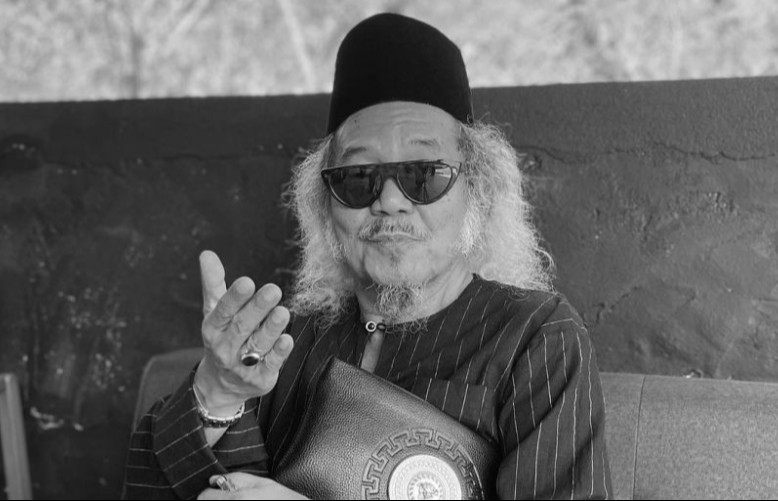
Malaysian cinema has lost one of its most recognisable faces with the death of Kamarool Yusoff, better known to audiences as Cik Man, who passed away on August 5 at the age of 68. The beloved performer succumbed to a heart ailment at Tanah Merah Hospital at 5.30 pm, according to his son Ahmad Fakhrol Aliff, who confirmed the passing when contacted by journalists. The news marked the end of a decades-long career that had left an indelible mark on Malaysian popular culture and entertainment history.
Word of Kamarool's death spread quickly through social media channels when comedian Mohammad Amirullah Azmi, widely known by his stage name Amir Raja Lawak, shared the news on Facebook along with his condolences to the grieving family. In his heartfelt message, Amir Raja Lawak referred to the deceased by his various stage names—Farok, Cik Man, and Kamarool Haji Yusoff—reflecting the multiple identities the performer had adopted throughout his long tenure in the industry. He offered prayers for the late actor's soul, invoking religious blessings in accordance with Malaysian Muslim tradition.
Communications Minister Datuk Seri Fahmi Fadzil has joined the chorus of tributes, using his Facebook platform to acknowledge Kamarool's significant contributions to Malaysian arts and entertainment. Fahmi's remarks particularly highlighted the actor's legacy among viewers of the 1980s cinema era, a golden period for Malay-language film production when audiences across the region flocked to cinemas for locally-made entertainment. The minister emphasised that fans who came of age during that decade would instantly recall Kamarool's most celebrated role, underscoring how deeply his performances had embedded themselves in the collective memory of Malaysian audiences.
The actor's most iconic portrayal was that of Farouk, the ruthless leader of the Gagak Hitam gang in the 1986 Malaysian classic film that defined a generation of cinema-goers. This role became synonymous with Kamarool's name and represented a peak in his career, establishing him as a formidable presence on screen and a performer capable of commanding attention in complex dramatic narratives. The 1986 production itself has achieved enduring status as a cinema classic, regularly revisited by film enthusiasts and studied as a significant work in the Malaysian film canon.
Beyond his most famous role, Kamarool continued to secure acting opportunities well into the 2000s, demonstrating longevity in a competitive industry. He appeared in a 2010 comedy project, indicating that despite the changing landscape of Malaysian entertainment, the veteran performer remained active and relevant to producers seeking established talent. This extended career trajectory allowed him to work across different eras of film technology and production styles, from celluloid to digital formats.
In his tribute, Minister Fahmi characterised Kamarool as more than simply a talented performer—he described him as a highly respected artist whose influence extended beyond the acting fraternity into broader circles of those who valued Malaysia's cultural heritage. This framing suggests that Kamarool's impact transcended entertainment alone, touching those engaged in preserving and promoting the nation's artistic traditions. The minister's words acknowledged that Kamarool had functioned as a cultural ambassador of sorts, representing Malaysian creative achievement during a period when the country's film industry enjoyed considerable regional prominence.
Fahmi's statement also emphasised gratitude for the deceased's contributions to enriching Malaysia's arts landscape and for creating what he termed "lasting memories for generations." This phrasing underscores the intergenerational appeal of Kamarool's work—his performances were not simply products of the 1980s consumed only by contemporary audiences, but rather artistic achievements that retained the capacity to move and entertain viewers decades later. The endurance of his memory in popular consciousness speaks to the quality of his craft and the depth of his impact.
The minister concluded his tribute with traditional Islamic prayers, asking that Allah SWT would extend forgiveness for any transgressions, shower mercy upon Kamarool's soul, and grant him a place among the righteous. Such sentiments reflect the deeply religious nature of Malaysian society and the importance of spiritual acknowledgment in public mourning, particularly for figures of cultural prominence. The invocation of divine mercy serves as a universal gesture of respect within Malaysia's Muslim-majority context.
Kamarool's death represents a symbolic passing of an era in Malaysian entertainment history. The 1980s and 1990s represented a distinct chapter in the nation's film industry, characterised by distinctive storytelling approaches and a particular visual aesthetic that differed markedly from contemporary productions. With the passing of performers who defined that period, Malaysia loses not only individual talents but also living connections to a foundational period of its modern cultural development. Kamarool's roles served as windows into the social contexts, values, and preoccupations of audiences during his active years, making his work valuable both as entertainment and as a form of cultural documentation.

