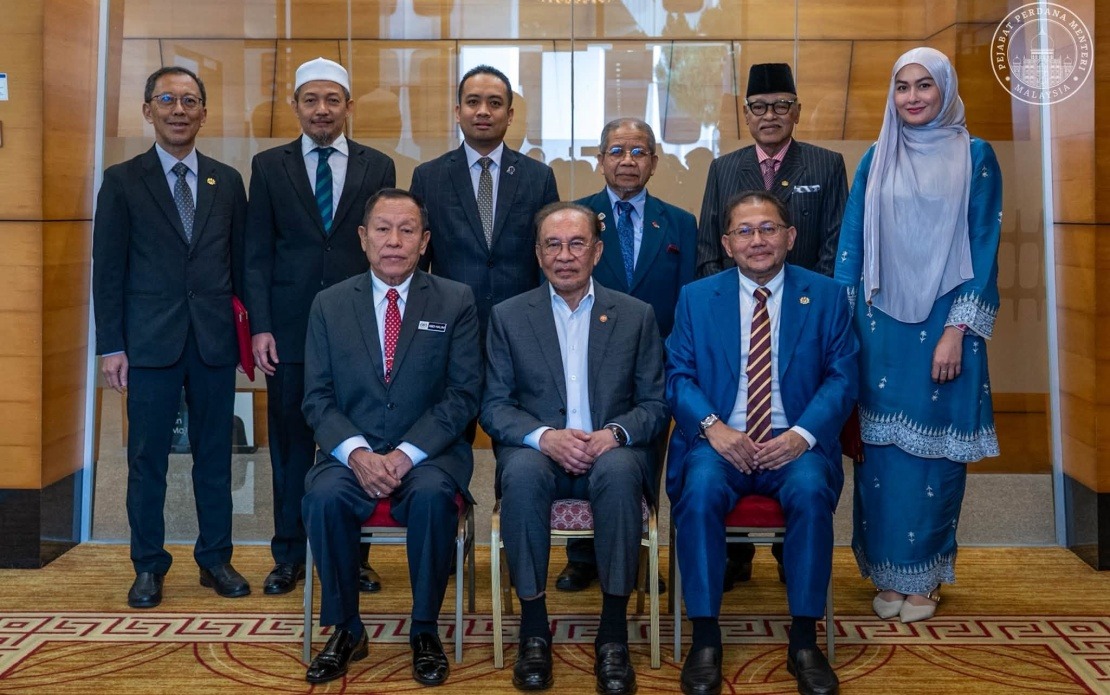
Prime Minister Datuk Seri Anwar Ibrahim has underscored that the battle against corruption represents a challenge too significant for any single institution to shoulder alone, requiring instead a comprehensive approach that brings together multiple stakeholders across government and society. Speaking at Parliament following the appointment of new members to two key anti-corruption bodies, the Prime Minister called for sustained cooperation between enforcement agencies, legislative bodies, the civil service, business community, and ordinary citizens to create an effective bulwark against graft and misconduct.
The appointments came after securing approval from the Yang di-Pertuan Agong, and mark a significant step in reinforcing Malaysia's institutional framework for tackling corruption. Prime Minister Anwar expressed his commitment to strengthening the resolve of these newly appointed members, emphasising that while they bring diverse professional and personal backgrounds to their roles, they share an overarching responsibility to advance the anti-corruption agenda nationwide. This messaging reflects an understanding that combating entrenched practices requires diverse perspectives and expertise brought into dialogue.
The Special Committee on Corruption (JKMR) occupies a critical position within this multi-layered enforcement architecture. Established through the Malaysian Anti-Corruption Commission Act 2009, the committee operates as an independent body with members drawn from both government and opposition benches in Parliament and the Dewan Rakyat. This bipartisan composition is deliberately designed to ensure that anti-corruption efforts transcend narrow partisan interests and maintain credibility across the political spectrum. The involvement of opposition figures in these oversight mechanisms represents a recognition that public confidence in anti-corruption work depends on genuine independence from political manipulation.
Equally important is the Anti-Corruption Advisory Board (LPPR), which functions as another critical check within the system. Drawing its membership from individuals with established track records of integrity and professional distinction, the board brings technical expertise and ethical grounding to anti-corruption strategy. The requirement that members be appointed by the monarch from among distinguished public servants and professionals ensures that appointments rest on merit rather than political patronage. This separation of the advisory function from direct political control serves to insulate recommendations from short-term political pressures.
The institutional design reflects lessons learned from Malaysia's anti-corruption challenges over previous decades. By establishing multiple bodies with overlapping but distinct responsibilities, the system creates redundancies and cross-checks that prevent any single point of failure or capture. The JKMR provides parliamentary-level oversight, while the LPPR offers independent professional guidance, and both work alongside traditional enforcement bodies. This distributed approach acknowledges that corruption often involves systemic weaknesses rather than isolated individual misconduct, requiring solutions at multiple levels simultaneously.
The involvement of the private sector in anti-corruption efforts represents an increasingly important dimension of Malaysia's strategy. Corruption frequently involves illicit dealings between public officials and private entities, making business community cooperation essential. Companies have incentives to operate in clean environments where competition depends on merit rather than connections, and many Malaysian firms have embraced stronger internal compliance measures. Engaging private sector leaders in anti-corruption discussions helps align commercial interests with public integrity.
Civil society participation rounds out this comprehensive approach. Non-governmental organisations, professional bodies, and grassroots movements have increasingly acted as watchdogs over government conduct, exposing suspicious activities and mobilising public opinion. The digital revolution has amplified these monitoring capabilities, as citizens document and share evidence of misconduct through social media. Recognising this reality, rather than viewing civil society as a threat, the government's inclusive anti-corruption framework attempts to channel these energies constructively.
For Malaysia's business and investor community, this multi-institutional approach carries practical implications. Cleaner governance reduces risks for legitimate enterprises by limiting corruption-driven distortions in market competition and government contracting. Foreign investors increasingly evaluate anti-corruption frameworks when assessing investment destinations, making Malaysia's institutional strengthening relevant to economic competitiveness. The signal that multiple independent bodies oversee anti-corruption efforts, rather than enforcement resting with a single potentially compromised agency, enhances Malaysia's appeal as a stable jurisdiction.
Regionally, Malaysia's approach reflects trends across Southeast Asia toward institutionalising anti-corruption mechanisms. Thailand, Indonesia, and the Philippines have similarly established independent commissions and oversight bodies, though with varying levels of success in remaining truly independent from political pressure. The Malaysian model's emphasis on bipartisan composition and royal appointment of some members represents a distinctive attempt to find institutional stability through constitutional rather than purely statutory arrangements. Whether this approach succeeds will depend substantially on whether members prioritise their mandate above other considerations.
The practical effectiveness of these bodies ultimately hinges on adequate resourcing and genuine political commitment to investigate substantive cases. Institutional arrangements, however well-designed, remain hollow if enforcement agencies lack budget, personnel, and protection from intimidation. Prime Minister Anwar's public statement appears designed to signal seriousness about anti-corruption work at the highest political level, though translating such pronouncements into sustained action across the bureaucracy remains perpetually challenging. The ability to move from institutional framework to actual convictions of senior figures will test whether this comprehensive approach represents genuine transformation or merely performative governance.

