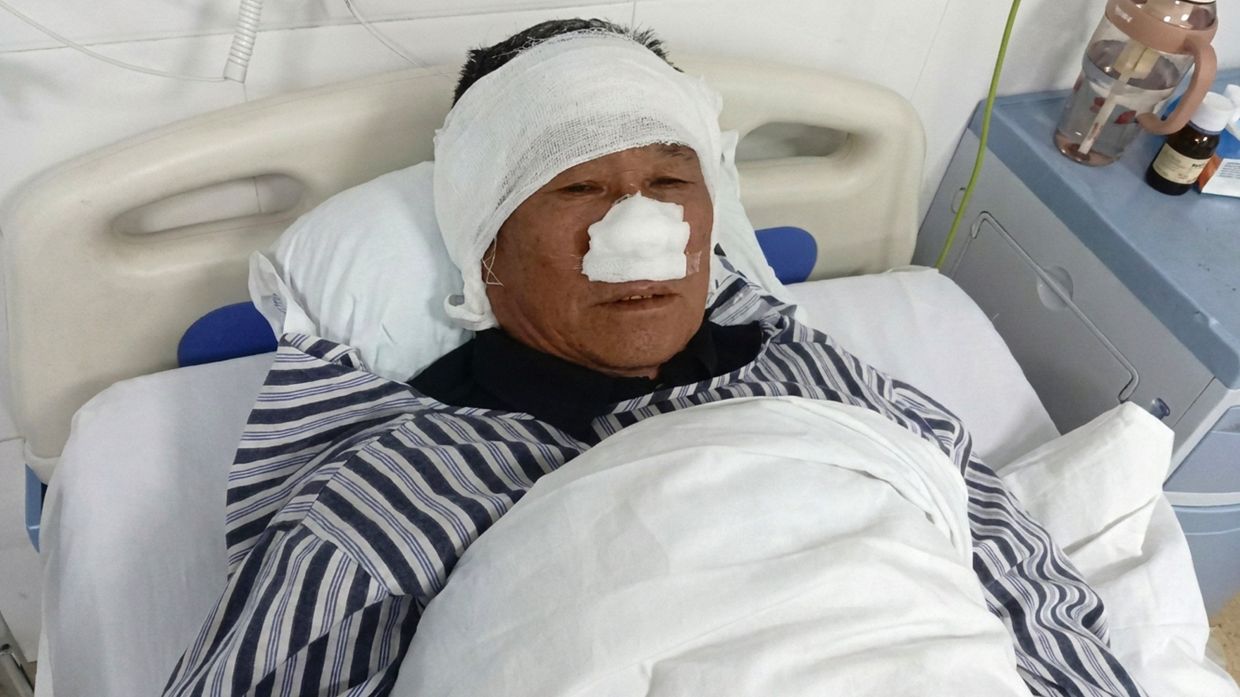
Zeng Fanlin, a 69-year-old volunteer mediator from Chenzhou in Hunan province, has been officially honoured as a national hero by the Chinese government for his extraordinary act of bravery during a violent street attack in April. The recognition came as part of an announcement honouring 86 individuals deemed to have shown exceptional courage in defending others from harm. Zeng's case has drawn widespread attention across China and raises important questions about civic responsibility, personal sacrifice, and the role of ordinary citizens in maintaining social order.
The incident that changed Zeng's life unfolded when a young man in his twenties entered the village in an agitated state and began attacking people indiscriminately. The rampage included assaults on random passers-by and attempts to force his way into homes. The situation escalated when the attacker targeted a woman riding an electric bicycle, seizing her by the neck in what appeared to be an attempt to strangle her. Witnessing the severity of the threat, nearby residents felt paralysed by fear and chose to summon police rather than intervene physically, leaving the woman vulnerable to serious harm.
Without hesitation, Zeng intervened directly by rushing toward the attacker and tackling him to the ground. His actions proved decisive enough to allow two other villagers to join him in restraining the suspect until police could arrive on scene. However, the struggle came at a devastating cost to Zeng himself. During the violent altercation, the attacker bit off a substantial portion of Zeng's nose, inflicting a catastrophic injury that would forever alter his physical appearance and quality of life. Despite experiencing this horrific wound, Zeng maintained his grip on the suspect and refused to release him until law enforcement arrived to take over.
The medical challenge facing doctors proved substantial. Zeng had lost most of his nose, making surgical reconstruction complex and uncertain. Specialists warned that the recovery process would be lengthy and that scarring and potential complications could persist long-term. The medical team developed an intricate reconstruction strategy employing skin grafting from Zeng's own scalp and rebuilding the nasal structure to restore basic function. The entire treatment course, encompassing multiple surgical interventions, exceeded 70,000 yuan (approximately US$10,000) but was subsidised through government assistance, reflecting official recognition of his sacrifice.
Zeng has since undergone two major reconstructive surgeries, which have succeeded in allowing him to breathe normally and restoring visible nasal structure. Yet the physical ordeal continues to exact a toll, as he experiences persistent daily pain from the injury and the surgical repairs. When asked about his sacrifice relative to the outcome, Zeng responded with remarkable humility, stating that compared to saving a human life, the physical price he paid was entirely justified. This perspective appears rooted in his personal history and values developed over decades.
Zeng's background provides important context for understanding his instinctive heroism. Orphaned during childhood, he relied on support from villagers to survive and later benefited from government educational assistance that enabled him to attend school without cost. This early experience of community compassion appears to have instilled in him a deep commitment to reciprocating that generosity through service to others. Following his career as a village official, he transitioned into volunteer mediation work, spending years helping neighbours resolve conflicts and disputes, suggesting his intervention in April represented an extension of his established commitment to protecting community members.
Zeng's character has earned consistent recognition from those who know him well. His daughter characterised him as someone driven by a powerful sense of justice who found it impossible to ignore wrongdoing occurring before his eyes. This inclination toward intervention predates the April incident, as Zeng is reported to have helped police apprehend a thief in 2016. Such acts suggest a personality genuinely oriented toward civic engagement and personal responsibility rather than someone seeking recognition or reward.
The legal consequences for the attacker remain under investigation, though Chinese criminal law provides clear parameters. Intentional infliction of serious bodily injury can result in prison sentences ranging from three to ten years depending on the severity of harm caused. The suspect was taken into custody immediately following the incident. Notably, the woman who was rescued has elected not to make any public statements regarding her experience, perhaps preferring to maintain privacy despite the dramatic nature of her narrow escape from harm.
Following the government's official recognition, Zeng also received financial recognition from the Alibaba Foundation and local media organisations, which awarded him 20,000 yuan as acknowledgment of his courage. This formal honour and material recognition carry significance in Chinese society, where such designations carry prestige and affirm that sacrificial service is valued by institutions and the state. The incident has generated substantial online discussion within China, with observers emphasising that Zeng represents an exemplary citizen whose actions should be celebrated and that the attacker should face severe punishment proportionate to the grievous injury inflicted.
For Malaysian and Southeast Asian readers, Zeng's story illuminates broader questions about community responsibility and the circumstances under which ordinary people overcome fear to protect strangers. The incident also highlights how social media and digital platforms amplify stories of civic heroism across the region, creating shared moral narratives that transcend borders. Furthermore, it underscores how different societies balance support for injured crime victims and heroes through medical assistance, financial compensation, and formal governmental recognition—a model relevant to ongoing discussions about victim support systems and public appreciation for courageous citizens throughout Asia.
The official recognition of Zeng as a national hero reflects a deliberate government strategy to celebrate and reinforce values of social responsibility and community protection. By honouring individuals who demonstrate extraordinary courage and sacrifice in defending others, such recognition systems aim to inspire similar behaviour and to counterbalance narratives of social indifference or atomisation. Zeng's willingness to accept permanent disfigurement and ongoing pain to save a stranger's life represents the kind of action governments wish to incentivise and celebrate, even as his experience illustrates the real human costs such heroism demands.

