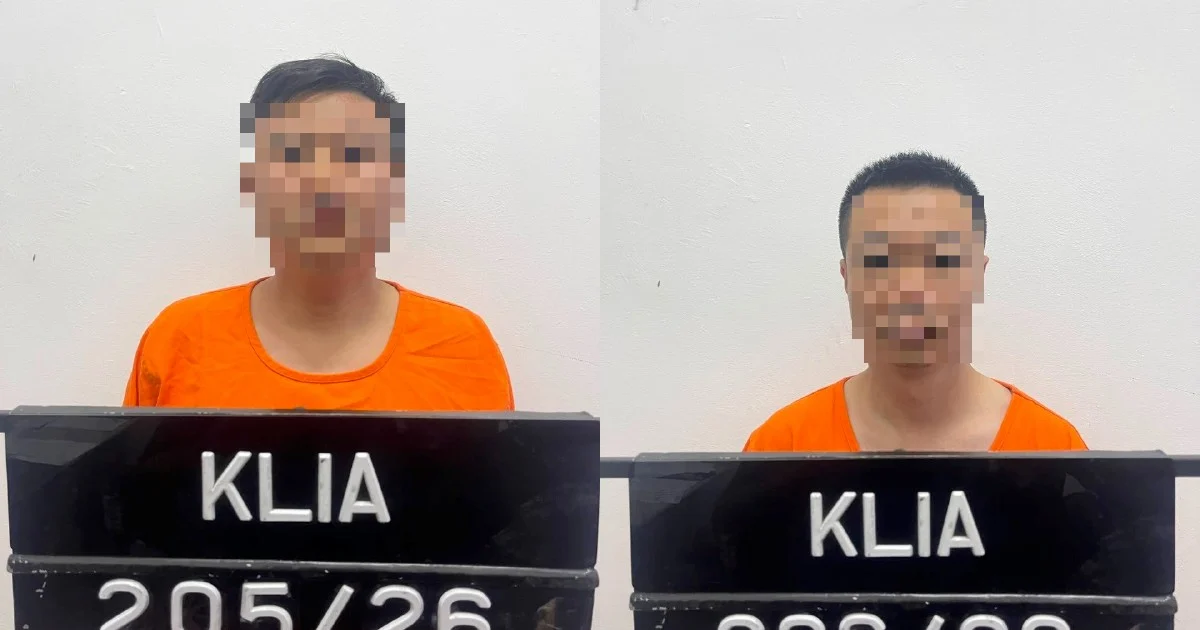
Two men from China are now in custody at Sepang following their remand for four days as authorities pursue investigations into an alleged attempted theft that occurred on an aircraft en route from Dili, Timor-Leste to Kuala Lumpur International Airport. The pair's detention marks the latest in a series of air travel security incidents reported across the region in recent months, drawing renewed attention to in-flight safety protocols and passenger screening measures at major Southeast Asian aviation hubs.
The alleged incident unfolded during the flight between Dili and KLIA, with authorities initiating contact with the suspects upon the aircraft's arrival at Malaysia's primary international airport. Details of the purported theft attempt remained limited as of the date of their remand, though the decision to extend their custody for four days suggests investigators have identified sufficient grounds to warrant more detailed questioning. The four-day remand period allows authorities to conduct comprehensive interviews and gather additional evidence before determining what charges, if any, will be formally laid.
Incidents of this nature aboard commercial flights have become an area of heightened concern for aviation authorities throughout Southeast Asia. The region's position as a major aviation crossroads, combined with increasing passenger volumes following the post-pandemic recovery in air travel, has created a complex security environment that demands continuous vigilance from airport and airline personnel. The alleged attempted theft incident underscores the ongoing challenges faced by airlines operating on routes connecting the region's smaller aviation hubs with major international airports such as KLIA.
Kuala Lumpur International Airport, one of Asia's busiest aviation centres, maintains robust security protocols designed to prevent criminal activity both in terminal facilities and aboard aircraft using its facilities. The airport's security infrastructure has been progressively enhanced over the past decade to incorporate advanced screening technologies and intelligence-sharing mechanisms with regional law enforcement partners. However, incidents such as this one highlight the difficulties inherent in completely eliminating in-flight security risks despite these considerable investments.
The Dili-KLIA air corridor serves as a vital connection between Timor-Leste and Malaysia, facilitating both tourism and commercial travel across the two nations. The route typically accommodates a mix of business travellers, tourists visiting Timor-Leste's natural attractions, and workers moving between the two countries. Any security incidents on this flight path carry implications beyond the immediate incident, potentially affecting passenger confidence and operational considerations for airlines serving this route.
Authorities in Malaysia have established clear protocols for handling suspected criminal activity aboard aircraft, coordinated across multiple agencies including the Royal Malaysia Police, the Malaysian Aviation Commission, and airport security personnel. The four-day remand period permitted under Malaysian law provides investigators with adequate time to construct a comprehensive picture of the alleged incident, interview witnesses who may have been aboard the flight, and determine the precise sequence of events that led to the apprehension of the two suspects.
The investigation's progression will likely involve coordination with international partners, particularly if stolen goods crossed borders or if the suspects have connections to organised criminal networks operating across the region. Such cross-border investigations have become increasingly common as law enforcement agencies throughout Southeast Asia recognise the need for enhanced cooperation in combating aviation-related crimes. Intelligence sharing between KLIA authorities and relevant counterparts in Indonesia, Singapore, and other regional partners often proves instrumental in building stronger cases.
For Malaysian aviation authorities and the airlines operating from KLIA, incidents of alleged in-flight theft carry reputational and operational implications beyond the immediate criminal investigation. Passengers select airlines partly on the basis of perceived safety and security standards, and multiple incidents involving theft or disruptive behaviour can gradually erode passenger confidence in particular routes or carriers. Airlines consequently maintain their own security training protocols for cabin crew and work closely with airport authorities to prevent suspicious behaviour from escalating once flights are airborne.
The broader context of this incident reflects a wider pattern of security challenges facing the aviation industry across Southeast Asia as the region continues to recover and expand its air travel capacity. Airlines have progressively implemented enhanced crew training focused on identifying suspicious passenger behaviour, de-escalation techniques for managing conflict, and coordination with airport authorities when security concerns emerge. These measures, combined with advanced screening technologies deployed at major hubs, represent the multi-layered approach necessary to maintain aviation security in an increasingly crowded airspace.
As the investigation into the two Chinese nationals proceeds over the four-day remand period, authorities will examine factors including passenger manifests, cabin crew observations, security camera footage from within the aircraft cabin, and statements from other passengers who may have witnessed the alleged incident. The outcome of this investigation will contribute to ongoing assessments of security vulnerabilities along the Dili-KLIA route and inform any procedural adjustments deemed necessary to prevent similar incidents in the future.