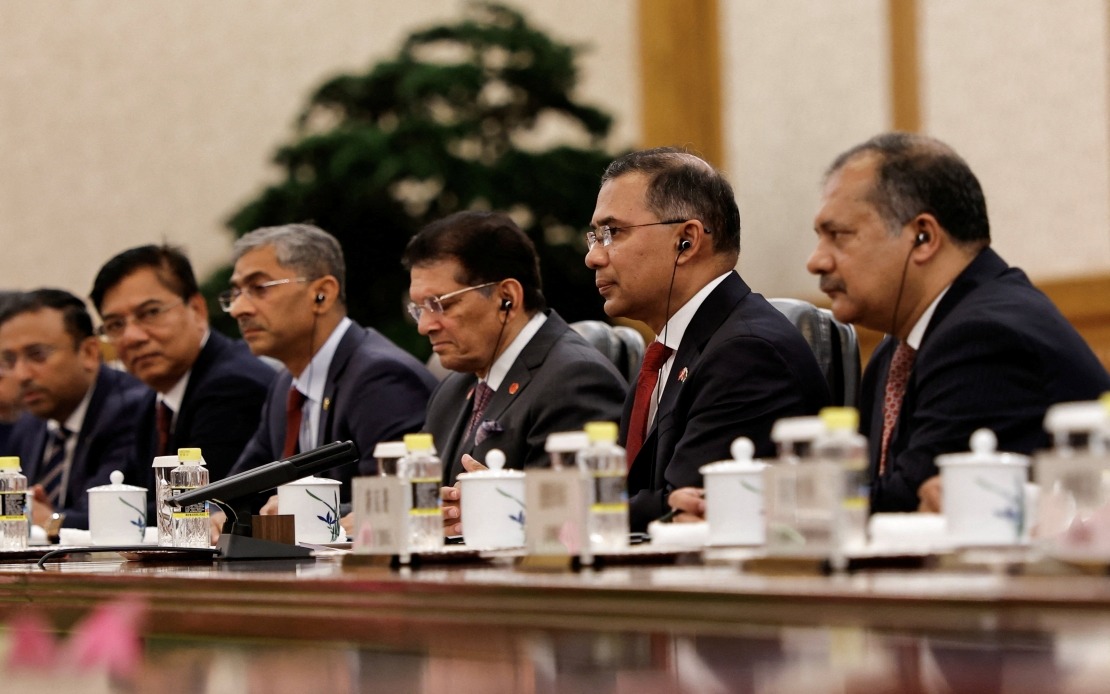
Bangladesh has emerged as an increasingly attractive destination for Chinese capital, with twelve firms collectively proposing US$9.2 billion in investments during Prime Minister Tarique Rahman's recent visit to China from June 22 to 26. The scale of these commitments underscores the deepening economic partnership between the two nations and reflects Dhaka's strategic pivot toward leveraging Chinese expertise and financing to modernise its economy.
The investment proposals span critical sectors that align with Bangladesh's long-term development agenda. Energy generation, port infrastructure, logistics networks, manufacturing facilities, and educational initiatives all feature prominently in the slate of projects. Officials in Dhaka anticipate that these ventures will catalyse employment creation on a significant scale, addressing the pressing need for job opportunities across the country. The joint communiqué released at the conclusion of Rahman's visit emphasised Beijing's commitment to strengthening bilateral ties in commerce, e-commerce, industrial supply chains, and export capacity enhancement.
The Mongla Port stands as a cornerstone of Sino-Bangladeshi infrastructure cooperation. The two governments have formally agreed to undertake joint modernisation and expansion of the facility, positioning it as a critical gateway for regional trade. China Civil Engineering Construction Corporation has earmarked US$650 million for developing the Mongla Port Economic Zone, encompassing warehousing facilities and advanced logistics infrastructure. This investment reflects confidence in Bangladesh's emerging role as a regional logistics hub, particularly given its geographic proximity to Southeast Asian and South Asian markets.
Another transformative infrastructure project involves the Dhaka-Chattogram highway corridor. Sichuan Road and Bridge Group has put forward the largest single commitment of US$4.5 billion to develop this critical transport artery through a public-private partnership model. The highway serves as the arterial link between Bangladesh's capital and its primary port city, and upgrading its capacity and quality directly impacts the country's internal and external trade flows. This project demonstrates China's willingness to invest in foundational infrastructure that supports broader economic activity.
Bangladesh has also secured Chinese agreement to establish an industrial park in Chattogram, signalling intent to cluster manufacturing operations and attract supply chain consolidation. Complementing port and highway development, this designated manufacturing zone aims to transform Chattogram into a comprehensive economic hub serving both domestic and regional markets. The synergy between improved transportation networks, port facilities, and industrial clusters creates a multiplier effect for overall economic productivity.
Environmental sustainability and energy transition feature prominently in the proposed Chinese investments. Shanghai SUS Environment Company plans to deploy US$890 million toward waste-to-energy plants, addressing Bangladesh's growing waste management challenges while simultaneously generating electricity. Huaxin Textile Industry Company Limited intends to invest US$190 million in establishing a 200 megawatt captive solar power plant within the Payra economic zone, alongside textile manufacturing operations. These initiatives reflect global momentum toward clean energy adoption and waste reduction, positioning Bangladesh as environmentally conscious whilst meeting surging electricity demand.
The e-waste management sector has attracted substantial Chinese interest. Zhongxin Environmental Protection Group has proposed investing US$1.65 billion in comprehensive e-waste processing facilities located within the Payra Port Industrial Zone on the Bay of Bengal. As digital technology adoption accelerates across South Asia, managing end-of-life electronics has become a critical infrastructure challenge. This investment addresses both environmental imperatives and resource recovery opportunities, transforming discarded electronics into valuable raw materials.
Energy exploration and downstream manufacturing also feature in the investment portfolio. China Future Energy Group Holding Limited has committed US$250 million toward natural gas field exploration and development, contributing to Bangladesh's energy security objectives. Additionally, Shenzhen Kaifa Technology plans to invest US$250 million in electric smart metre manufacturing, positioning Bangladesh as a production base for energy management technologies essential for grid modernisation across the region.
Logistics capability enhancement extends beyond port infrastructure. SF Express has committed US$180 million to developing cold-chain logistics and warehouse facilities near Mongla, approximately 230 kilometres from Dhaka. The cold-chain sector remains underdeveloped across South Asia, representing a significant constraint on high-value agricultural and pharmaceutical exports. This investment directly addresses supply chain bottlenecks limiting Bangladesh's ability to export temperature-sensitive products regionally and globally.
From Bangladesh's commercial perspective, Commerce Minister Khandakar Abdul Muktadir identified trade deficit reduction as a key benefit of expanded Chinese investment. Bangladesh currently maintains a substantial trade imbalance with China, with imports significantly exceeding exports. These Chinese investments, particularly those establishing manufacturing facilities and industrial zones, should generate locally-made products that can substitute imports or enable export-oriented production, thereby gradually rebalancing bilateral commerce.
For regional observers, these investment flows underscore China's strategic interest in consolidating influence across South Asia through economic integration. Bangladesh's geographic positioning as a link between South and Southeast Asia makes it particularly valuable for Chinese supply chain diversification, especially given rising geopolitical considerations affecting other investment destinations. The breadth of sectoral participation—from ports to textiles to electronics—suggests systematic efforts to embed Chinese capital and expertise across Bangladesh's economic structure.
These commitments also carry implications for competing investors and Southeast Asian economies. Malaysia, Indonesia, and Vietnam have historically competed for similar Chinese manufacturing investments. Bangladesh's emergence as a preferred investment destination may reflect labour cost advantages, government receptiveness to foreign investment, and geographic logistics benefits. Regional governments monitoring Chinese capital allocation patterns should assess their own competitiveness and positioning within Beijing's broader investment strategy across Asia.
While the US$9.2 billion in proposed investments represents significant capital commitment, Bangladesh and investors alike recognise that translating proposals into operational facilities requires navigating regulatory frameworks, environmental assessments, and local coordination challenges. The coming months will prove critical in determining what proportion of these commitments materialises into actual project launches and operational deployments.

