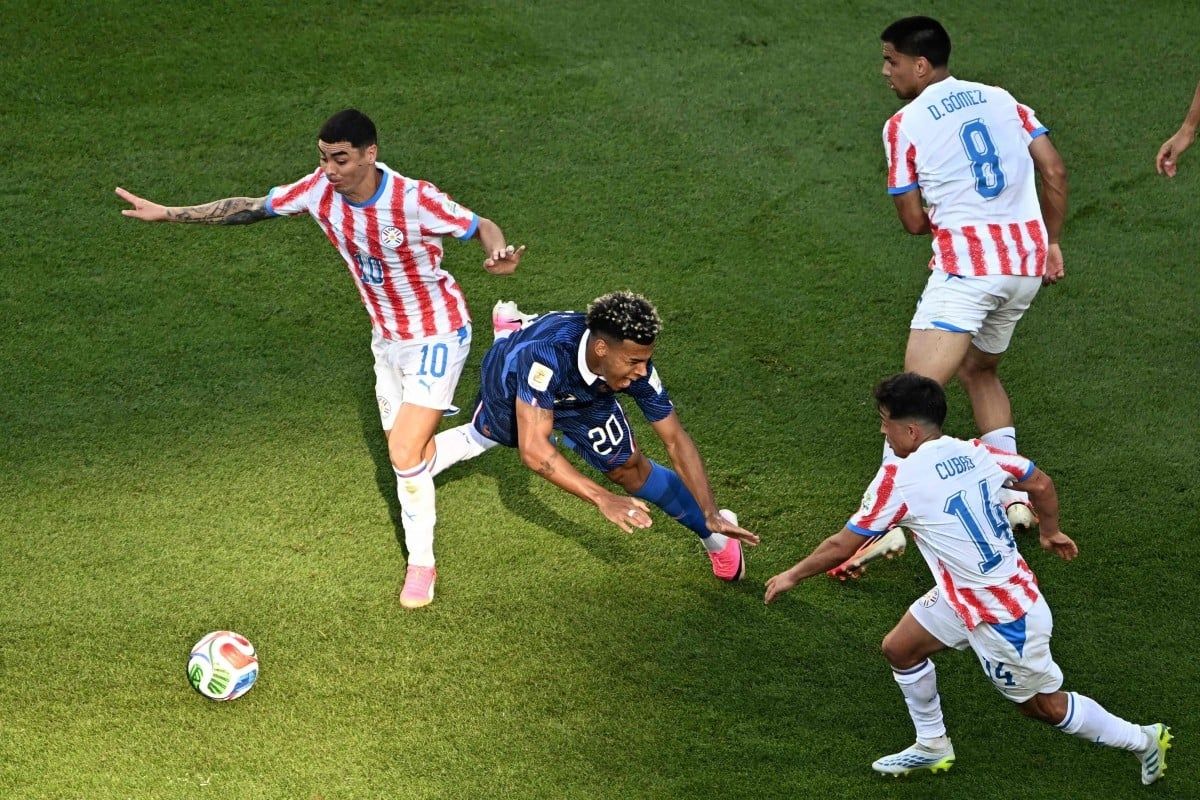
Chinese football enthusiasts have taken to social media to condemn Paraguay's confrontational approach and what they view as inconsistent refereeing during the team's last-16 World Cup elimination by France in Philadelphia on Saturday. The match, decided by a Kylian Mbappe penalty in the 80th minute, generated considerably more discussion about disciplinary standards and officiating quality than the quality of play itself—a clear indication, according to observers, of how poorly the encounter unfolded on the pitch.
The South American side's gameplan appeared focused on physical intimidation rather than constructive football, with Mbappe bearing the brunt of Paraguay's attention throughout the encounter. Despite the relentless provocation, the French forward maintained composure and converted the decisive penalty, sending his team through to face Morocco in the quarter-finals. His calm demeanor in the face of sustained rough treatment impressed many observers, yet the broader conduct of the match drew widespread disapproval from Chinese viewers who felt the referee had abdicated his responsibilities.
Uzbekistan referee Ilgiz Tantashev's decision-making became the focal point of criticism among Chinese fans. Over his tenure as a FIFA official since 2013, Tantashev distributed merely four yellow cards across a match riddled with minor infractions and heavy-handed challenges. The disparity proved particularly glaring given that three of those cautions went to France, the side that ultimately prevailed. Commentators on Chinese social media platforms drew pointed comparisons to Ma Ning, a domestic referee renowned among supporters as the "card master" for his willingness to brandish disciplinary action. One observer sarcastically remarked that Paraguay would have been reduced to just their goalkeeper had Ma presided over the fixture, reflecting the stark contrast in officiating philosophy between the two referees.
The perception of bias extended beyond mere card distribution. Several Chinese users suggested Tantashev appeared sympathetic to Paraguay's approach or, in more accusatory terms, deliberately handicapped the French outfit. Some observers noted the referee's questionable management seemed inconsistent with the standards displayed in other tournament matches, particularly referencing Paraguay's earlier knockout victory over Germany. One commenter speculated that Germany's apparent ease in losing to Paraguay retrospectively appeared suspicious, implying that the South American team had conducted a far cleaner performance when the referee was less stringent, thereby raising questions about the strategic nature of their tactical adjustments.
France's captain Mbappe demonstrated remarkable mental resilience throughout the ordeal, acknowledging beforehand that his team understood precisely what confrontation awaited them. Rather than expressing indignation, he adopted a pragmatic tone, suggesting his squad was fully prepared to match Paraguay's intensity and respond in kind if necessary. His comment that France possessed the capability to "play ugly football" and "get their hands dirty" reflected a seasoned understanding of World Cup football at its most uncompromising. This measured response from the tournament's most electrifying talent underscored how normalized such physical contests have become in elite competition, though it did little to satisfy Chinese fans seeking higher standards of sportsmanship.
French manager Didier Deschamps, the 57-year-old former World Cup-winning captain, corroborated observations about Paraguay's approach, emphasizing that the opposition employed "every trick in the book" in their attempt to gain advantage. More strikingly, Deschamps revealed that unsavory conduct extended to the technical areas, with opposing staff directing verbal abuse toward the French bench. His candid assessment that such behavior diminishes the spectacle drew considerable sympathy from international observers who value football's entertainment value alongside competitive integrity. The suggestion that intimidation rather than skill had dominated proceedings appeared to validate Chinese social media users' frustrations about declining standards.
Paraguay goalkeeper Orlando Gill's actions during the final whistle provided further fodder for criticism on Chinese platforms. After Mbappe chose not to acknowledge Gill following the conclusion of play, the goalkeeper responded by hurling the match ball directly at the French forward's back—a retaliatory gesture that appeared petulant rather than professional. Gill subsequently attributed the incident to the heat of competition, claiming his emotions overcame his judgment in that momentary lapse. However, Chinese commentators remained unconvinced by this explanation, viewing the behavior as emblematic of Paraguay's broader lack of composure and sportsmanship throughout the encounter.
The incident prompted withering assessments from Chinese social media users who felt Paraguay had forfeited not merely the match but moral standing. One particularly pointed observation noted that the South American team had not only suffered defeat on the scoreboard but had simultaneously compromised their character through childish conduct. This sentiment reflected broader expectations among Chinese football audiences that elite competitors should maintain dignified deportment regardless of adverse circumstances, a principle that Paraguay appeared to have abandoned as frustration mounted.
The disparity between Chinese perceptions of match standards and the actual disciplinary record raises important questions about refereeing consistency in international football. While Paraguay's physical approach represents a recognized if controversial tactical dimension at the World Cup, the perception that officiating failed to enforce established rules uniformly suggests deeper systemic concerns. For Malaysian and Southeast Asian football enthusiasts accustomed to observing FIFA competitions through various refereeing lenses, the incident underscores how significantly official interpretation shapes not merely outcomes but also the broader narrative surrounding individual matches and tournament quality.

