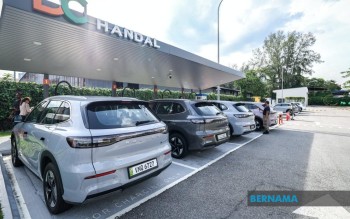
Malaysia's rapidly expanding electric vehicle market is attracting significant attention from Chinese technology providers, with firms like Xi'an LINCHR New Energy Technology Co Ltd positioning themselves to help build the charging infrastructure essential to support widespread EV adoption. However, executives from these companies stress that bringing foreign expertise to the Malaysian context requires far more than transplanting proven models wholesale—it demands careful adaptation to local environmental, regulatory, and operational conditions.
Yuan Qingmin, chairman of LINCHR, articulated this principle while showcasing the company's capabilities at the Global Automotive and Technology Expo (GATE 2026) held at the Malaysia International Trade and Exhibition Centre (MITEC) from August 26-28. He highlighted a critical interdependency in EV markets: the development of vehicle charging networks and the expansion of the vehicle fleet are inextricably linked, with bottlenecks in infrastructure quickly constraining the entire ecosystem's growth potential. This observation carries particular weight for Malaysia, where policymakers have committed to accelerating EV adoption to meet climate targets and reduce transport emissions.
Chinese companies possess undeniable advantages in this domain. China pioneered mass EV deployment and built charging networks at unprecedented scale, giving firms like LINCHR practical experience managing complex logistics, technical standards, and grid integration challenges. Yet Yuan cautioned that mechanical replication of China's approach would prove counterproductive in Malaysia. The fundamental insight guiding his company's Malaysian strategy centres on the principle that successful technology transfer requires simultaneous local customisation and research and development partnerships with entities that understand the market's unique characteristics.
LINCHR's collaboration with local manufacturer Swift Bridge Technologies Sdn Bhd exemplifies this philosophy in practice. The partnership extends across multiple dimensions—charging infrastructure standards, hardware design, technological architecture, and engineering specifications. By working with a Malaysian firm already embedded in local supply chains and regulatory relationships, LINCHR gains insight into regional requirements while contributing its global expertise. This model allows the company to influence standards development while remaining responsive to local feedback, creating a feedback loop that should yield charging solutions genuinely optimised for Malaysian deployment.
One concrete example illustrates how climate-specific adaptation proves essential. Malaysia's equatorial environment—characterised by intense heat, high humidity, and salt-laden air—poses particular challenges for electronic components. LINCHR has adopted oil-immersed insulation designs for the printed circuit boards in its charging stations, a modification specifically intended to enhance resistance to salt spray corrosion in Malaysian conditions. Without such adjustments, components engineered for temperate climates might degrade rapidly, leading to maintenance headaches, operational costs, and reliability concerns that would undermine market confidence in the technology.
Standardisation and safety certification represent another domain where local adaptation proves crucial. In March of the previous year, LINCHR, Swift Bridge, and the Standards and Industrial Research Institute of Malaysia (SIRIM) signed a tripartite cooperation agreement focused on establishing charging infrastructure testing standards and certification protocols suited to Malaysian requirements. This institutional framework ensures that systems deployed locally meet not just minimum functional requirements, but standards calibrated to Malaysian regulatory expectations and safety priorities. The investment in upgrading SIRIM's testing laboratories demonstrates commitment to building local capacity rather than creating dependency on foreign evaluation facilities.
Yuan's observation that LINCHR's testing technology solutions command over 70 percent of China's market share underscores the company's technical credibility. However, he acknowledged that overseas expansion cannot succeed through simple export of existing products. Instead, it demands technology transfer to carefully selected local partners and parallel investment in local research and development capability. This creates genuine knowledge transfer rather than mere equipment installation, building indigenous capacity that will outlast any individual company relationship.
The trajectory Yuan outlined for charging technology evolution carries significant implications for Malaysia's long-term EV strategy. He described a future in which vehicles transition from being primarily electricity consumers to functioning as distributed energy assets. Once battery technology matures and grid integration systems develop, EVs parked at homes, workplaces, or during idle periods could feed surplus electricity back into the national grid during peak demand periods. This vision of "mobile energy" sources transforms the economics of both transportation and electricity distribution, potentially offering grid stability benefits that extend far beyond the transport sector.
Achieving this future requires charging infrastructure that goes beyond simple power delivery. Systems must become increasingly intelligent, capable of managing bidirectional energy flows, communicating vehicle and grid status in real time, and optimising charging schedules based on electricity prices and grid conditions. Malaysia's experience in developing such infrastructure will position the nation as a regional model, potentially attracting investment and partnerships that extend benefits across Southeast Asia's nascent EV ecosystems. Yuan's emphasis on localisation and adaptive technology transfer suggests LINCHR views Malaysia not as a market for finished solutions, but as a testing ground and development laboratory where Chinese and Malaysian expertise combine to create distinctly suited innovations.
The GATE 2026 platform provided LINCHR valuable opportunity to engage with Malaysian government agencies, energy utilities, infrastructure operators, and industry stakeholders directly involved in shaping the charging landscape. These relationships will prove essential as the company seeks to influence standards discussions and build collaborative relationships with official institutions. For Malaysia, the engagement of serious international players like LINCHR suggests confidence in the market's trajectory and willingness to invest in long-term development rather than quick profit extraction.
As Malaysia's EV market accelerates over the next three to five years, the quality of charging infrastructure decisions made now will constrain or enable outcomes for decades. The principle that technology transfer must respect local conditions, rather than imposing foreign templates, offers a promising foundation for building sustainable, resilient charging systems. By insisting on localisation and partnership-based development, companies like LINCHR signal maturity in approaching emerging markets—recognition that sustainable growth requires genuine adaptation to local realities rather than simple technology export.

