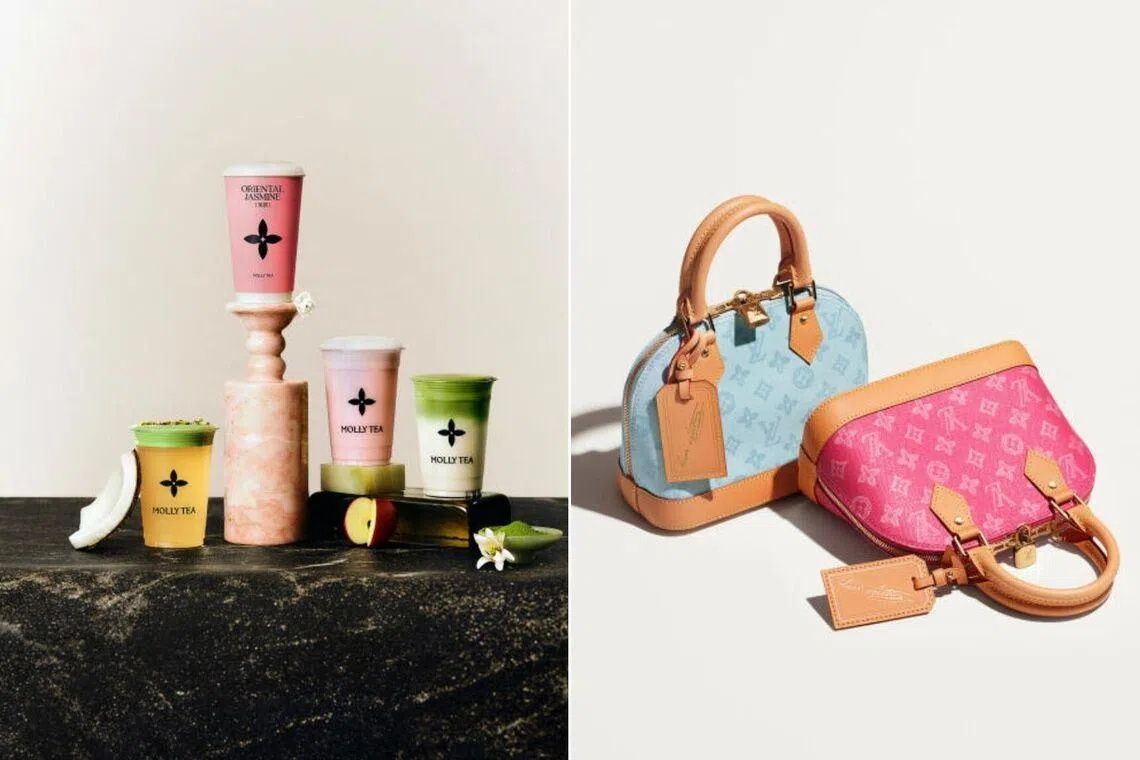
A significant trademark dispute between a leading Chinese milk tea operator and the French luxury conglomerate Louis Vuitton has escalated into a landmark ruling that touches on broader questions surrounding intellectual property enforcement, cultural appropriation, and fair market competition in Asia's creative industries. The Suzhou Intermediate People's Court determined on June 29 that Molly Tea, headquartered in Shenzhen, had illegally utilised seven registered four-petal flower graphic trademarks belonging to Louis Vuitton, prompting the tribunal to impose financial penalties and mandate corrective action from the tea chain.
The financial judgment requires Molly Tea to remit 10.3 million yuan, equivalent to approximately US$1.5 million, directly to Louis Vuitton as compensation for the trademark violation. Beyond monetary damages, the ruling compels the milk tea company to publicly acknowledge the infringement and terminate all use of the contested design elements. The case originated when Louis Vuitton initiated legal proceedings in May 2025, with the court issuing its decision roughly one month later. Molly Tea has publicly signalled its intention to challenge the verdict through the appellate process, suggesting the matter remains unresolved and could establish important precedent for how Chinese courts interpret trademark law.
The crux of the disagreement centres on visual similarities between Molly Tea's corporate emblem, which features a four-petal floral motif, and the internationally recognised graphic symbols that form part of Louis Vuitton's luxury brand identity. Despite the apparent aesthetic overlap, observers have noted substantial differences in design execution and context, given that one company operates in the food and beverage sector while the other dominates high-end fashion and accessories. This sectoral distinction has become central to how different constituencies interpret the court's decision and whether cross-category trademark protection should apply with such expansive reach.
Molly Tea's trademark portfolio history reveals a pattern of deliberate attempts to secure intellectual property rights for floral designs. Beginning in March 2024, the company and its associated entities lodged numerous applications with the China National Intellectual Property Administration, seeking protection for various botanical-themed marks primarily intended for use in restaurant operations, hospitality services, promotional activities, and food distribution. The vast majority of these applications encountered rejection from intellectual property authorities, with only the trademark explicitly incorporating the Chinese characters denoting "Molly Tea" achieving successful registration. This sequence of failed filings suggests that trademark examiners had already identified potential conflicts with pre-existing marks before the formal lawsuit materialised.
The ruling has catalysed intense discourse across Chinese digital platforms, with social media engagement reaching extraordinary proportions. A trending hashtag referencing the Louis Vuitton lawsuit against Molly Tea generated approximately 360 million impressions, while a related topic concerning the invalidation of Molly Tea's flower-based trademark accumulated more than 18.7 million online interactions. This level of digital attention indicates that the case resonates beyond narrow legal circles and has captured the imagination of ordinary consumers interested in fairness, brand rights, and the commercialisation of cultural symbols. The diversity of public opinion reflects genuine tensions between competing values within Chinese society regarding intellectual property enforcement.
Online commentary has fractured into several competing perspectives, each offering distinct interpretive frameworks. Certain commentators contend that Molly Tea's floral emblem demonstrates unmistakable resemblance to Louis Vuitton's signature motifs, thereby justifying the court's finding of infringement and the associated remedies. Conversely, other observers emphasise visual distinctions between the two designs and highlight the fundamental market separation between a casual beverage retailer and an ultra-premium fashion house, questioning whether genuine consumer confusion could reasonably occur. An additional cohort of internet users has questioned the originality credentials of Louis Vuitton's own pattern vocabulary, speculating that the French brand may have drawn inspiration from or borrowed elements rooted in traditional Chinese artistic and decorative conventions.
Kang Lixia, a partner specialising in intellectual property matters at Beijing Standzer IP Firm, has clarified that the appellate process offers both parties mechanisms to contest unfavourable determinations. She underscored that successful appeals typically depend on whether the challenging party can marshal convincing evidence demonstrating the originality and distinctive character of its contested design. Critically, she stressed that floral patterns and decorative motifs extracted from traditional Chinese cultural heritage constitute part of humanity's shared creative commons and remain available for use by any commercial enterprise. However, she also articulated how China's trademark framework, which operates under a "first to file" registration system, fundamentally advantages the earliest applicant. When multiple parties seek to register identical or substantially similar marks for overlapping product categories, the initial filer obtains enforceable rights while subsequent applicants face automatic rejection.
Although Molly Tea and Louis Vuitton technically register their respective trademarks within distinct legal classification categories, Louis Vuitton's status as an established, widely-recognised brand with an earlier registration date qualifies it for what legal systems term "cross-class protection." This doctrine permits a well-known trademark's defensive scope to extend beyond its original product classification into seemingly unrelated commercial sectors. For companies attempting to build their own intellectual property portfolios subsequently, this expansive protection mechanism creates substantial obstacles and restricts design choices even where direct market competition does not exist. The tension between protecting consumer interests from deceptive branding practices and preserving sufficient creative freedom for emerging enterprises constitutes one of the underlying challenges this ruling illuminates.
Liu Bin, an intellectual property attorney with Beijing Zhongwen Law Firm, has advocated for approaching the dispute with intellectual and emotional equilibrium, emphasising that trademark protection regimes do not mandate absolute identity between the challenged design and the protected mark. Instead, the determinative legal inquiry focuses on the likelihood that reasonable consumers would experience confusion, mistake one brand for another, or incorrectly assume some commercial association between distinct businesses. Liu highlighted that considerable public perplexity surrounds the broader philosophical question of how traditional Chinese cultural patterns should receive legal protection while simultaneously remaining available for equitable use across society. Since these aesthetic and symbolic resources originated within the public cultural domain and belong conceptually to collective heritage rather than individual proprietors, numerous citizens contend that granting exclusive rights to any single commercial entity contradicts fundamental fairness principles.
Yet Liu simultaneously acknowledged that intellectual property jurisprudence ultimately protects not the raw cultural elements themselves but rather the accumulated brand recognition, consumer goodwill, and commercial reputation that corporations establish through sustained investment and marketing when they incorporate traditional elements into their commercial operations. This interpretative distinction separates the material design components from the intangible asset value attached through years of consumer interaction and brand development. Consequently, while traditional artistic motifs should theoretically remain in the public domain and receive active preservation as living cultural heritage, the specific application of those motifs within particular commercial contexts by individual enterprises warrants protection against misappropriation by competitors. The challenge for regulators and courts across the region involves formulating rules that honour this balance, preventing market confusion while ensuring that traditional cultural resources do not become privatised or effectively sequestered by early commercial adopters.

