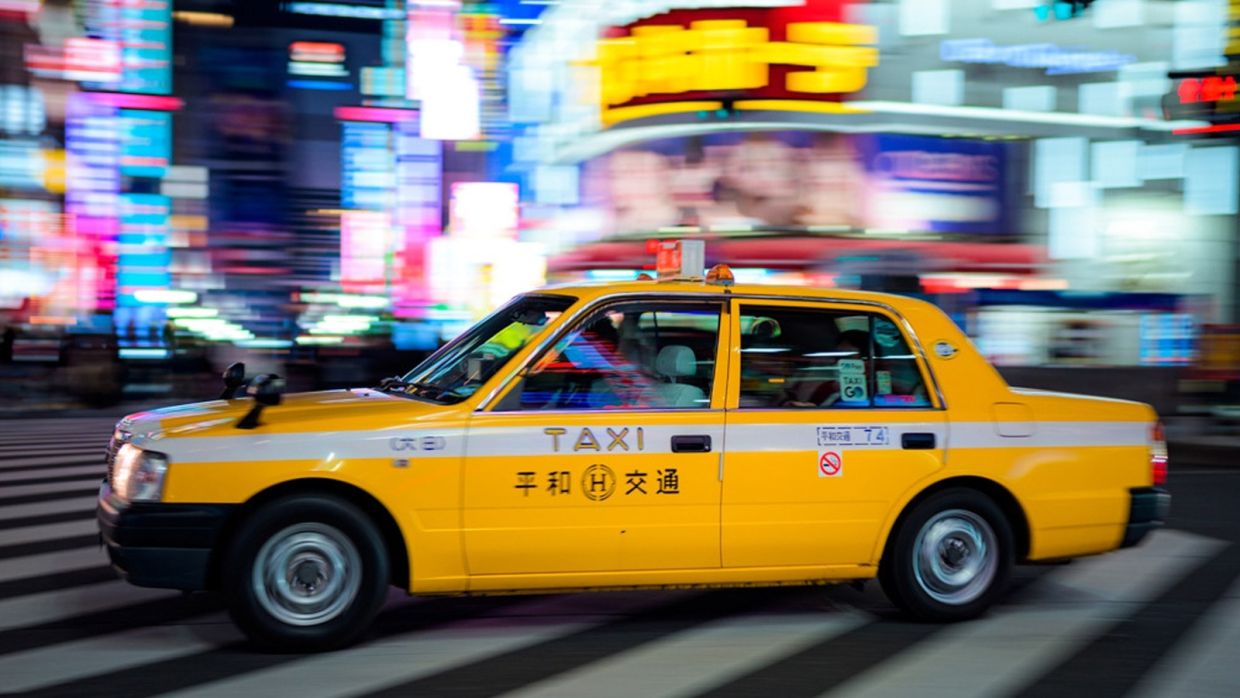
Japanese authorities have arrested a Chinese national in Tokyo for operating an extensive unlicensed taxi service that targeted inbound tourists, particularly visitors from China, exposing vulnerabilities in Japan's transportation regulation system that have grown more pronounced as visitor numbers surge. Wang Xiaoyu, a 41-year-old businessman, was detained on Sunday after police investigations revealed he had been orchestrating an illegal scheme involving the lease of commercial vehicles to non-employees, who then transported passengers without proper licensing between February and April this year.
The operation centred on Phoenix Kokusai, a chauffeur service company that Wang effectively controlled. Rather than operating legitimately under the company's own management, Wang instead leased the firm's vehicles to drivers who were not on the company's payroll, enabling them to conduct unlicensed taxi operations that undercut licensed competitors. The vehicles in question carried green licence plates, the official designation in Japan for commercial transportation vehicles, a distinction that proved critical to the scheme's apparent longevity. Police investigations suggest Wang collected substantial fees from approximately 18 drivers who used the company's name to legitimise their operations, accumulating around 38 million yen ($233,000) between November 2024 and May 2026 in rental charges alone.
Wang's arrest highlights a significant loophole in Japan's transportation regulatory framework. The vehicles used in the operation fell into a category known as "urban hire," a transportation classification introduced in 2014 that permits companies to operate commercial passenger services under specific conditions. The system requires passengers to book services in advance and commit to minimum charter periods of at least two hours, distinguishing legitimate urban hire from conventional taxi services that pick up passengers on demand. However, the visual identification system has proven inadequate. Green licence plates, intended to provide transparency about vehicle classification, are difficult for law enforcement to monitor effectively in practice, creating an environment where operators can exploit the regulatory grey area between licensed and unlicensed services.
Investigators determined that the illegal operation primarily targeted Chinese tourists arriving in Tokyo, shuttling passengers between accommodation, shopping areas, and major transport hubs. The investigation gained momentum following complaints lodged by legitimate taxi drivers who observed suspicious activity at Haneda Airport, one of Japan's busiest international gateways. These complaints revealed that urban hire vehicles were actively soliciting customers at the airport, a practice distinctly at odds with the regulatory requirement that such services operate only on pre-arranged bookings. The presence of unauthorized solicitation at this high-profile location suggested the scheme operated with relative impunity for months before authorities intervened.
Police have expanded the investigation beyond Wang, arresting three additional drivers, all Chinese nationals, on suspicion of violating the Road Transportation Act. Wang has partially contested the allegations against him, though the evidence accumulated by the Tokyo Metropolitan Police Department appears substantial. The investigation reveals a sophisticated operation in which the businessman leveraged his control of Phoenix Kokusai's infrastructure—its vehicles, insurance, and regulatory standing—to facilitate illegal activity by drivers who lacked proper credentials. This arrangement created a degree of separation that Wang may have calculated would provide legal protection, though prosecutors clearly view the arrangement as a clear violation of transportation law.
The case emerges against a backdrop of dramatic growth in Japan's inbound tourism and corresponding expansion of the commercial transportation sector. Data from the Ministry of Land, Infrastructure, Transport and Tourism illustrates the scale of this expansion: the number of registered urban hire vehicles more than doubled over the past decade, climbing from 3,868 in fiscal 2013 to 8,850 in fiscal 2024. This growth reflects genuine demand from tourists seeking convenient, often cheaper alternatives to traditional taxis, but it has also created regulatory challenges that authorities have struggled to manage effectively. The proliferation of vehicles and operators has outpaced regulatory oversight capacity, opening opportunities for entrepreneurial individuals like Wang to exploit systemic weaknesses.
For Malaysian readers and Southeast Asian tourism stakeholders, the case illustrates broader regulatory challenges facing the region's transportation sectors as tourism volumes increase. The incident demonstrates how growth in visitor arrivals can create opportunities for informal and illegal service providers who capitalise on regulatory gaps and consumer demand for affordable transport options. Japan's experience suggests that licensing and classification systems, while well-intentioned, require robust enforcement mechanisms and clearer operational boundaries to remain effective. The relative ease with which Wang allegedly operated his scheme for months underscores the importance of regular compliance audits, driver credential verification, and technology-enabled monitoring systems that can track vehicle usage patterns in real time.
The environmental and economic implications extend beyond simple regulatory compliance. Unlicensed operators typically operate without proper insurance coverage, creating liability risks for passengers and third parties. Environmental standards for vehicle maintenance may be circumvented, and tax contributions are avoided, reducing resources available for infrastructure development. For legitimate taxi operators and licensed transportation companies, illegal competitors undermine business viability and create pressure to reduce service quality or workforce compensation. The scheme that Wang orchestrated ultimately shifted revenue away from regulated businesses and government agencies responsible for transportation oversight and infrastructure management.
Japanese authorities face ongoing pressure to strengthen enforcement mechanisms as tourism continues its upward trajectory. Technology solutions, including GPS tracking integrated with licensing databases and real-time passenger verification systems, could help prevent the exploitation of regulatory categories like urban hire. Enhanced training for airport security and transportation officials to recognise suspicious solicitation patterns represents another avenue for improvement. For Wang and the drivers involved, the legal proceedings will likely establish important precedents regarding how Japanese courts interpret the boundaries between legitimate commercial transportation and unlicensed taxi operations, potentially affecting how similar cases are prosecuted across Japan's metropolitan areas where tourism concentrations remain highest.

