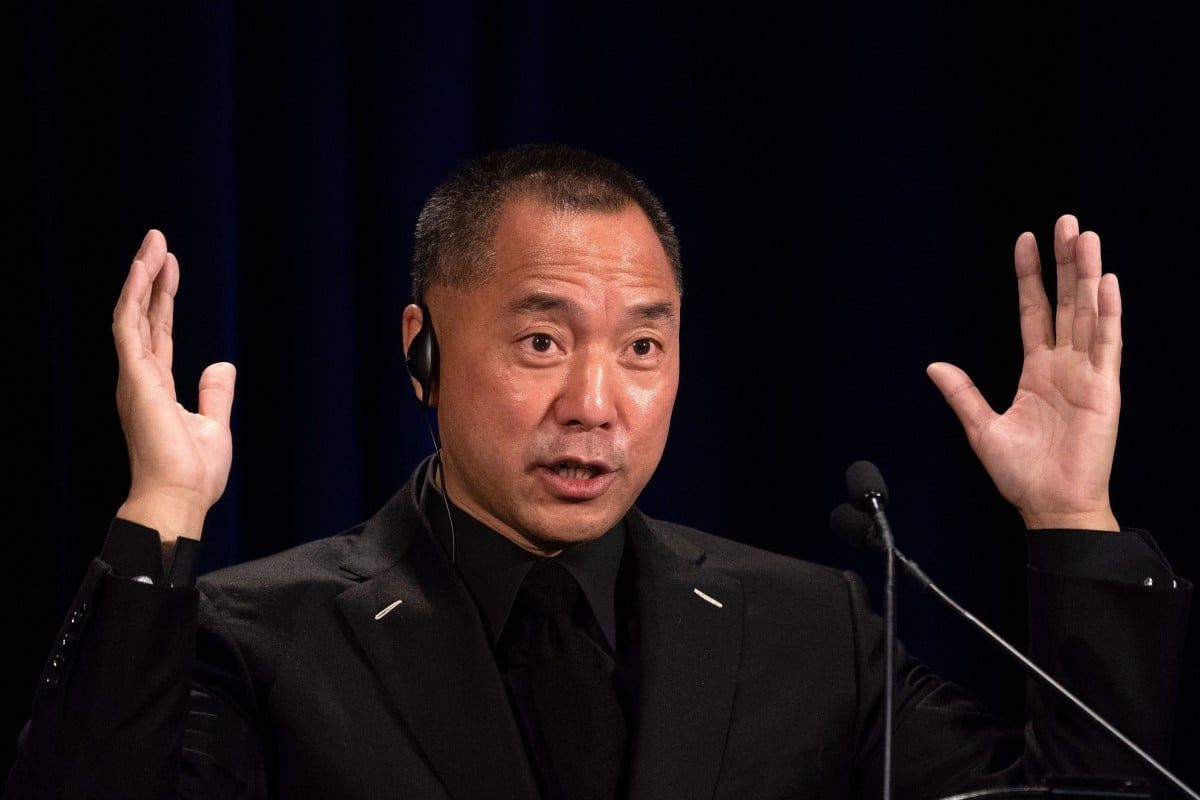
A prominent self-exiled Chinese billionaire has been handed a 30-year prison sentence in the United States for perpetrating one of the largest financial fraud schemes in recent history. Guo Wengui, who had reinvented himself as a Communist Party critic and political dissident in America, was convicted of exploiting the hopes and savings of over 1,000 people globally who sought to support efforts aimed at democratic change in China. The June 30 sentencing in Manhattan underscores how the pursuit of geopolitical activism can become a cover for financial predation, a cautionary tale resonating far beyond the courtroom walls and especially significant for Southeast Asia, where overseas Chinese communities and pro-democracy activists may harbour similar vulnerabilities to manipulation.
Judge Analisa Torres, who presided over the case in a packed Manhattan courtroom, characterised Guo's conduct as fundamentally predatory. The judge emphasised that Guo deliberately targeted individuals motivated by genuine political convictions, stripping them of their financial resources to fund an extravagant personal lifestyle. Victims described in court letters losing their life savings, experiencing severe psychological distress, and enduring family estrangement as relatives questioned their investment decisions. The emotional and financial devastation revealed throughout the trial illustrated how financial fraud operates not merely as a technical crime but as a betrayal of trust, particularly acute when perpetrators exploit ideological commitments and political aspirations.
Between 2018 and 2023, Guo orchestrated an intricate deception involving multiple entities under his control, chiefly his media company GTV Media Group, the so-called Himalaya Farm Alliance, and the Himalaya Exchange. Prosecutors revealed that Guo convinced hundreds of thousands of individuals to invest collectively over US$1 billion in these purportedly legitimate ventures. The scheme operated by creating an illusion of revolutionary enterprise—promising supporters that their capital would fund initiatives against the Chinese government—while Guo diverted funds to acquire mansions, yachts, luxury automobiles, designer merchandise, and high-end furnishings. This lifestyle of extraordinary excess starkly contrasted with the financial struggles imposed on his defrauded investors.
Guo's trajectory from mainland China to international notoriety illustrates the complex intersection of geopolitical tension, asylum regulations, and financial fraud. Originally among China's wealthy business elite, Guo migrated first to Hong Kong, subsequently to London, and finally to New York in 2017, claiming political persecution by Chinese authorities who had levelled accusations including rape, kidnapping, and bribery—allegations he consistently denied. The Chinese government maintains charges against him and has issued an Interpol Red Notice requesting his arrest globally pending extradition. His movement through multiple jurisdictions and the permissive nature of US asylum laws afforded him significant opportunity to establish financial enterprises and cultivate a political network.
During his years in New York, Guo cultivated relationships with prominent American political figures, most notably developing a close association with conservative strategist Steve Bannon. In 2020, the two jointly announced an initiative ostensibly aimed at overthrowing the Chinese government. Guo also secured membership in President Donald Trump's Mar-a-Lago golf club and inhabited a luxury apartment overlooking Central Park, positioning himself as a credible anti-Communist voice within American conservative circles. This political integration afforded him legitimacy and access to networks of potential investors who viewed financial support as participation in geopolitical struggle against Beijing.
During sentencing proceedings, Guo demonstrated the defiant posture that characterised his entire legal ordeal. He protested his treatment in jail custody, claiming illness and alleging that prosecutors mischaracterised him as malingering. He briefly addressed the charges by reiterating his stated purpose for relocating to America—to oppose the Chinese Communist Party—without substantively acknowledging the financial fraud or its impact on victims. Judge Torres observed that Guo manifested an absence of genuine remorse and had actively encouraged supporters to harass and intimidate individuals willing to testify or speak against him, a pattern suggesting an attempt to control narratives through intimidation.
Defence lawyers constructed their mitigation argument primarily around claims of persecution by the Chinese government. They argued that Guo had endured physical torture in China between 1993 and 2022, requiring subsequent surgical procedures to repair injuries, and suggested that a lengthy prison sentence would validate Beijing's anti-dissident campaigns and discourage other Chinese exiles from public activism. The defence further noted that comparable fraud cases had resulted in sentences of two to four years, implying that the 30-year term represented disproportionate punishment. Additionally, they asserted that Guo's original wealth derived from his family's substantial shareholding in China's largest publicly traded securities company, and that he became a target after exposing corruption among government officials.
Yet prosecutors presented a compelling counter-narrative documenting what they characterised as an extraordinarily calculated and sustained deception. The evidence demonstrated deliberate targeting of individuals specifically because of their commitment to democratic change, exploitation of their ideological convictions, and systematic misrepresentation of investment vehicles. Prosecutors argued that Guo's conduct represented not merely financial theft but a profound betrayal of political trust, weaponising hopes for change to enrich himself. The conviction on nine of twelve criminal charges resulted from a seven-week trial that systematically dismantled the narrative Guo had constructed for himself.
The sentencing carries implications for Southeast Asian observers, particularly concerning diaspora communities vulnerable to fraudulent schemes disguised as political activism. In Malaysia, Singapore, Thailand, and other regional nations hosting significant overseas Chinese populations and politically engaged diaspora members, the Guo case demonstrates how geopolitical legitimacy and anti-authoritarian rhetoric can serve as cover for financial predation. Local authorities and community leaders should recognise that fraudulent schemes often employ language of political struggle and revolutionary purpose to lower the guard of ideologically motivated investors. The case also highlights gaps in asylum and financial oversight mechanisms that permitted the accused to operate with relative impunity across multiple jurisdictions and financial instruments.
The ordering of US$889 million in restitution represents an attempt to provide financial redress, though such orders are typically uncollectable when defendants face lengthy incarceration with limited assets. For victims scattered globally, the economic and psychological damage persists regardless of juridical judgments. The case ultimately exposes how international financial systems remain vulnerable to exploitation by individuals with access to networks, political connections, and sufficient sophistication to construct plausible narratives around investment schemes. As geopolitical tensions surrounding China intensify and diaspora communities grow more politically engaged, the structural vulnerabilities revealed in the Guo case warrant serious consideration from regulators, community organisations, and investors throughout the region.
China's Ministry of Foreign Affairs acknowledged the sentencing while reiterating that Guo remains wanted by Chinese authorities and subject to the Interpol Red Notice. This ongoing international legal status ensures that Guo's case will continue resonating across diplomatic channels and law enforcement networks. For Chinese officials, the conviction provides vindication of their longstanding accusations against him, though it simultaneously occurred within the American legal system rather than under Chinese jurisdiction. The outcome underscores the complex position of Chinese exiles navigating between their adopted country's legal framework and the authoritarian accusations levelled against them by Beijing, a tension that will likely persist throughout Guo's incarceration.

