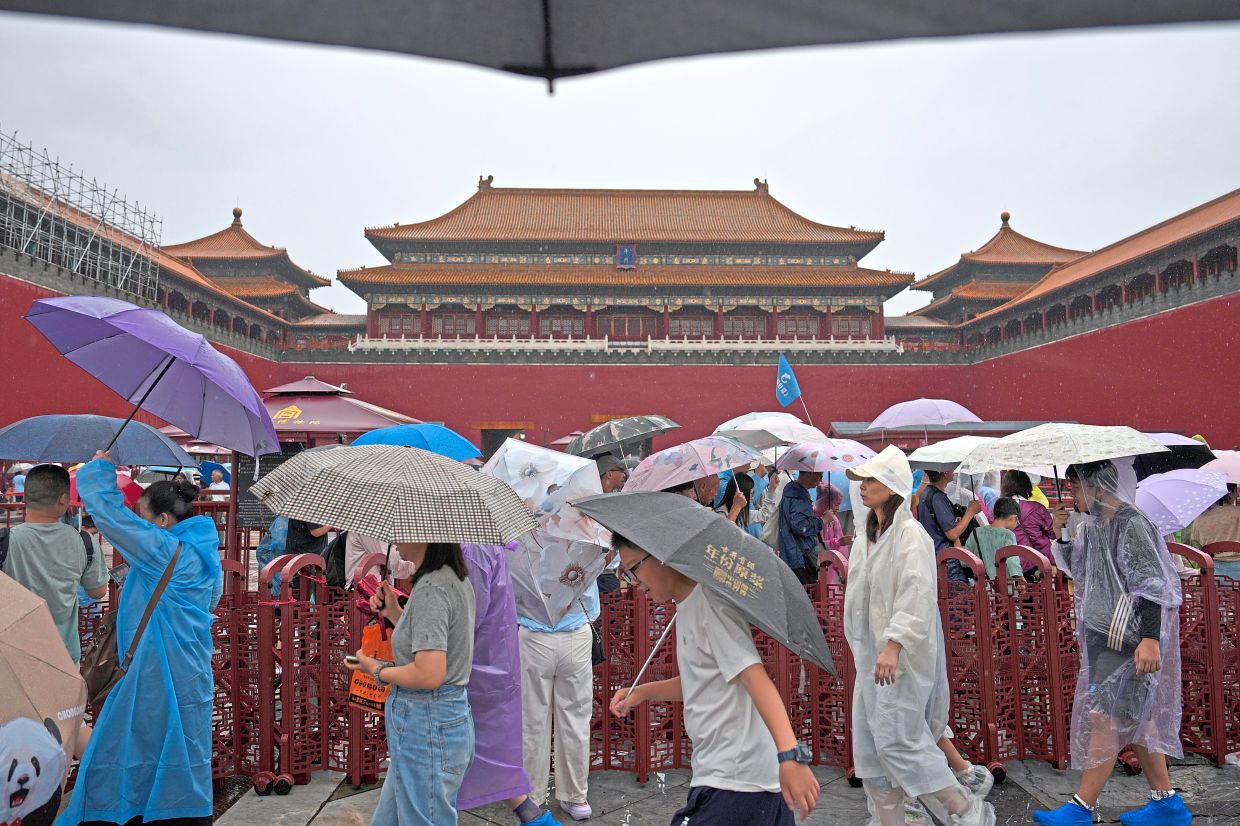
China's tourism recovery has reached a symbolic milestone: the country welcomed 35 million foreign visitors last year, finally surpassing the numbers achieved before the pandemic shuttered its borders. This achievement marks a turning point for an economy eager to rebuild its international image and capture spending from a new generation of travel-conscious consumers. The recovery has been neither uniform nor inevitable. For years after Covid-19 restrictions eased globally, China struggled to convince foreign travellers that the country was worth visiting, burdened by reputational damage from the severity of lockdowns and the perception that it remained closed to the outside world.
The transformation accelerated through a combination of policy reforms and cultural momentum that few analysts predicted would move so quickly. Beginning in 2023, Beijing implemented a phased expansion of visa-free travel to 50 countries, eliminating a significant friction point for potential visitors. More importantly, the government recognised that attracting younger, digitally native tourists required engagement on the platforms where they spend their time. Chinese tourism officials did something counterintuitive: they bypassed the Great Firewall to establish accounts on Twitter, TikTok, and other Western social media networks that remain blocked within China itself. This strategy proved prescient, as carefully curated content showcasing everything from Shanghai's minimalist villa retreats to Chongqing's neon-lit streetscapes began circulating virally among international audiences.
Claire Thum's journey exemplifies this new pattern of discovery. The 28-year-old Singaporean had limited knowledge of China beyond the terracotta warriors until Instagram reels began flooding her feed with visually striking destinations. Her initial hesitation dissolved once she decided to visit Shanghai, where she experienced the city's luxury retail landscape, trendy attractions like the viral To Summer perfumery, and snow sports simulations. She now plans to venture to Yunnan, Xinjiang, and Harbin—a trajectory from sceptic to enthusiast that tourism marketers across Asia are studying intently. Her experience reflects a broader shift: China is no longer competing primarily on the appeal of historical monuments, but on its capacity to offer contemporary urban experiences that rival Tokyo, Seoul, and Singapore in sophistication and social media appeal.
The geopolitical backdrop amplified this tourism surge in unexpected ways. Polling data from the Pew Research Centre showed that favourable views of China reached record highs in numerous countries during 2025, partly because shifting perceptions of the United States under the Trump administration created comparative advantage for Beijing. Simultaneously, cultural phenomena like 'Chinamaxxing'—a Western social media trend where people adopt Chinese lifestyle habits such as drinking hot tea and following traditional wellness practices—went viral, effectively turning Chinese culture into a fashion statement among younger international demographics. These trends cascaded through recommendation algorithms, creating self-reinforcing loops that traditional tourism advertising could never replicate.
The visa-free policy has proven particularly effective as a lever for tourism growth. More than seventy percent of last year's foreign arrivals entered China without requiring advance visas, representing a fifty percent increase compared to 2024. This group predominantly came from Asian nations with bilateral agreements, including South Korea, Russia, Malaysia, and Thailand. In the first half of 2026, 18 million people arrived from visa-free countries alone, driving overall foreign tourist arrivals up twenty percent in that period. Beijing and Shanghai have become laboratories for competing approaches to maximising this opportunity. The capital distributed 2.64 million yuan to tourism management bodies, funding initiatives ranging from foreign-language guide training programmes to online publicity campaigns. Shanghai committed at least 1.6 million yuan to promotional expenditure on Expedia and Booking.com, recognising that international travellers still rely on these platforms for itinerary planning and accommodation decisions.
Second and third-tier cities recognised an opportunity to escape the shadow of Beijing and Shanghai by leveraging influencer culture and viral content. Chongqing's deputy director of tourism, Zhu Mao, explicitly set out to make the city 'Internet famous,' recruiting both micro-influencers and international celebrities like basketball star Stephen Curry to raise the city's profile. This decentralisation of tourism marketing through social channels meant that unconventional attractions—high-tech corporate campuses operated by Huawei and DJI, Pop Mart theme stores, and Haidilao hot-pot restaurants—could compete with traditional cultural sites for visitor attention and itinerary time. The appeal lay in experiencing China as a functional, modern society rather than as a museum of antiquity.
Externally imposed factors contributed to this wave as well. Geopolitical tensions in West Asia drove up airfare prices across Gulf-based carriers and pushed international transit traffic toward Chinese hubs. China's state-owned airlines—China Eastern, Air China, and China Southern—benefited disproportionately from this shift because their pricing remained substantially lower than foreign carriers that had not yet fully restored their pre-pandemic China routes. This created a structural advantage for China in attracting price-sensitive international passengers, many of whom discovered the country's attractions during transit layovers that they gradually extended into full holidays.
Yet the tourism recovery masks persistent structural weaknesses that will constrain China's ability to compete with mature Southeast Asian destinations. Chinese tourism generates less than one third of the inbound spending compared to the United States, and per-capita visitor expenditure remains around US$2,240, approximately forty percent of what the US achieves. Tourism contributes less than 0.5 percent of China's national GDP, a fraction of the eight percent achieved by tourism-dependent economies such as Spain and Thailand. This gap suggests that while visitor numbers have recovered, spending patterns remain modest, perhaps because foreign tourists concentrate their expenditure in a narrow range of luxury goods and experiences rather than distributing purchasing power across the broader economy.
The weakness presents both a challenge and an opportunity for downstream industries. China's retail sector, battered by sluggish domestic consumption and real estate stagnation, has found in foreign tourism a source of incremental revenue. Aesthetic medical services—particularly dental procedures priced at one-fifth of US costs—attract American visitors. European tourists commission bespoke suits at Shanghai's textile markets. Miniso's Shanghai flagship store reports that foreign visitors comprise up to seventy percent of foot traffic during peak hours, drawn by collaborations with globally recognised characters from Sanrio, Disney, and Harry Potter franchises. The visibility has created a virtuous cycle: Miniso's overseas revenue surpassed its China domestic revenue, with year-on-year growth of twenty percent driven substantially by international social media exposure from tourists.
Smaller cosmetics and lifestyle brands have experienced even more dramatic trajectories. Joy Group, parent of viral beauty brands Judydoll and Joocyee, generated more than 600 million yuan in overseas retail sales last year, with Judydoll achieving over tenfold growth in two years, particularly in Vietnam and Japan. This pattern suggests that foreign tourism is not simply a revenue source in itself, but a mechanism for product discovery and market entry that amplifies the international competitiveness of Chinese consumer brands. As visitors return home and maintain connections to brands discovered during travel, they become vectors for sustained demand.
The practical obstacles to further tourism growth, however, remain formidable. China operates as a predominantly cashless economy, creating challenges for tourists without local bank accounts or digital payment wallets. The absence of WhatsApp, Instagram, and Google unless accessed through technically illegal VPNs restricts the normal channels through which international travellers communicate and navigate. Entrepreneurial responses are emerging—companies like Kora, an artificial intelligence-powered tourist guide, have developed chat-based platforms serving tens of thousands of visitors by simplifying ride-hailing reservations, restaurant bookings, and real-time translation. Yet these solutions address symptoms rather than structural problems that require policy-level resolution.
Foreign travellers themselves offer insights into the relationship between infrastructure accessibility and satisfaction. Virgile Kebaili, a 23-year-old French history student, spent two weeks traversing Chengdu, Chongqing, Xi'an, and Beijing, ranking his food experiences in China alongside India as his top two travel experiences. He marvelled not only at culinary quality but at purchasing power—Chinese cigarettes cost six times less than their French equivalents. Yet he also observed the relative absence of other international tourists in many locations, a phenomenon both positive and cautious. The scarcity created opportunities for interaction with local residents and serendipitous cultural exchange, yet it also suggested that tourism had not yet penetrated evenly across the geography and demographic segments of China's population.
As China aspires to sustain this tourism momentum, the country faces a strategic choice between deepening current trends or broadening the foundation. Deepening would mean accelerating the social media feedback loops that currently drive young, digitally native Western tourists to China's tier-one cities. Broadening would require addressing the infrastructure and connectivity barriers that currently limit where international tourists can easily travel and what they can easily experience. The geopolitical tailwinds that contributed to the 2025 recovery—comparatively positive views of China and negative reassessments of the United States—may prove contingent rather than permanent. To ensure that tourism becomes a sustainable pillar of China's soft power strategy and economic recovery, policymakers will need to move beyond content marketing toward systemic changes that make the country genuinely easy for international visitors to navigate, regardless of their language, technical sophistication, or prior familiarity with Chinese systems.

