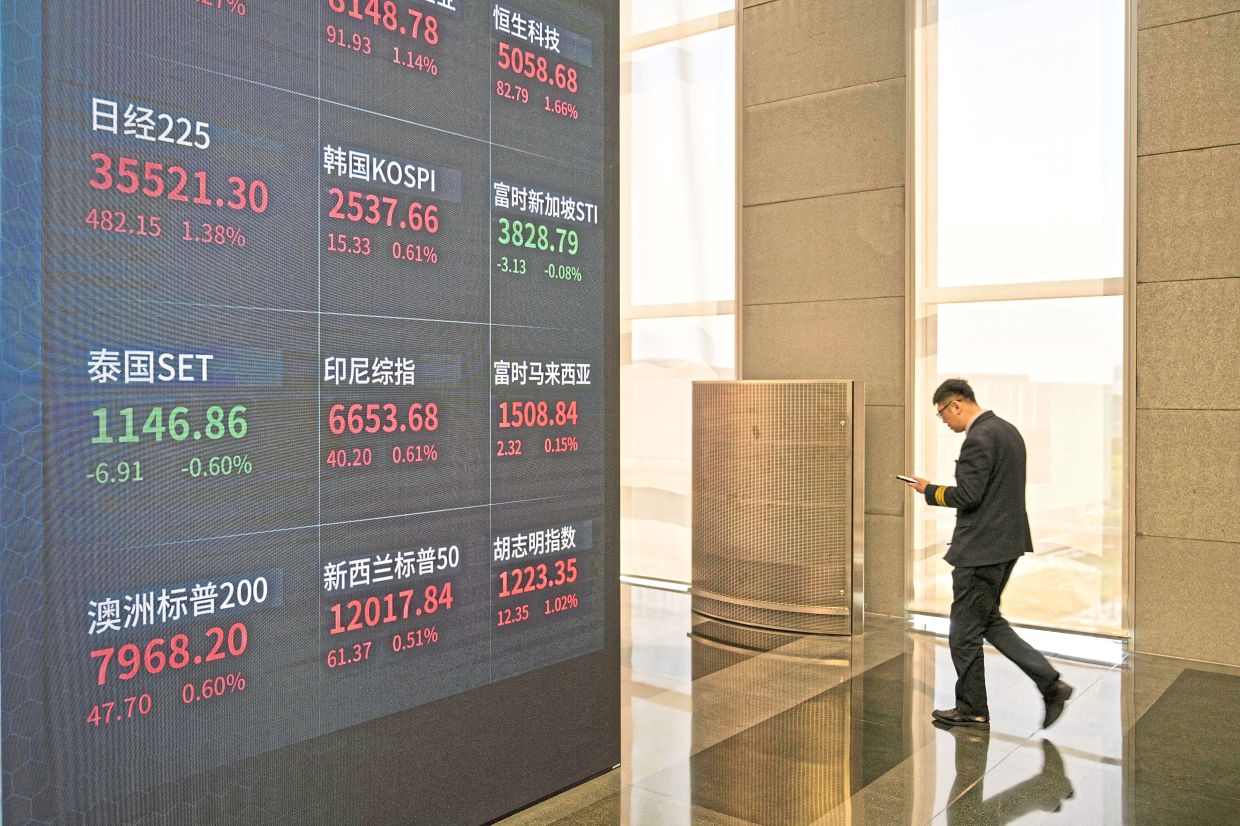
Shares in Chinese property developers experienced sharp declines on Monday following the introduction of sweeping regulatory changes designed to reshape how residential projects are financed and sold. The CSI300 Real Estate Index fell 4.6% by mid-afternoon trading, while Hong Kong-listed Chinese developer stocks dropped 6.5%, reflecting investor anxiety about the implications of the restructured funding framework. The regulatory intervention underscores Beijing's determination to address persistent weaknesses in a sector that has destabilised the world's second-largest economy and left millions of households vulnerable to construction delays and project abandonment.
The new rules, released Friday by China's central bank and financial regulator, represent a fundamental challenge to the presale model that has underpinned developer operations for decades. Under the previous system, property companies collected funds from buyers before construction completion, enabling them to finance ongoing projects and maintain operations. The reformed framework mandates that mortgages be issued only after residential projects are finished, forcing developers to source construction capital from their own reserves or development loans rather than relying on early homebuyer payments. This structural shift essentially removes a critical funding source that companies have depended upon throughout the sector's expansion.
The immediate impact on developer finances is potentially severe. According to official data, presales and associated mortgage payments account for approximately 40 percent of development capital across the sector. Analysts estimate this represents a dramatic reduction in available resources, with one unnamed executive telling Reuters that the loss of presale funding could reduce investment capacity by roughly 40 percent in the near term. Developers already struggling to shift inventory in a weakening market now face the prospect of constructing new housing without the traditional cash injections that have sustained their business models for years. The timing proves particularly challenging given that nationwide property development investment has already contracted 19.2 percent in the first seven months of 2026.
State-owned enterprises bore the brunt of initial market losses, though no developer appears immune to the consequences. China Jinmao, Yuexiu Property, and Greentown China each shed more than 14 percent, while larger state-owned players including China Resources Land and China Overseas Land & Investment declined by more than 9 percent. Even financially stronger private developers deemed relatively sound by investors, such as Longfor Group and Seazen, experienced significant declines of 7.2 and 5.5 percent respectively. The indiscriminate nature of the sell-off suggests market participants view the regulatory shift as a sector-wide problem rather than an issue confined to weaker operators, creating widespread uncertainty about profitability and financing capacity across the industry.
State-backed developers retain structural advantages that may cushion the impact compared with their private-sector counterparts. These companies maintain greater access to bank lending and benefit from preferential interest rates in the 2 to 3 percent range, compared with 5 to 6 percent typically charged to private developers. However, executives acknowledged that even state-owned players would face material pressure to sustain operations and fund new development. The advantage amounts to a slower descent into difficulty rather than immunity from the funding squeeze. As the property sector contracts and market share concentrates among state actors, the competitive landscape will fundamentally shift, potentially accelerating the exit of smaller private players struggling with debt burdens and reduced cash generation.
The presale model that the regulations now restrict has historically dominated China's housing market, accounting for 68 percent of new home sales by floor space in 2025. This prevalence reflects the sector's structural dependence on advance buyer payments to finance construction, a dynamic that worked efficiently during expansion phases but created vulnerabilities when confidence eroded. The transition toward mortgages issued only after completion could paradoxically constrain housing supply, potentially redirecting buyers toward existing properties and second-hand markets. Several analysts predict the regulatory framework will reduce the availability of new apartments, creating an unintended consequence that complicates Beijing's efforts to stabilise the sector while maintaining affordability.
The property sector's collapse, now entering its sixth year, continues to function as a significant brake on China's economic growth trajectory and remains a source of anxiety for households with savings tied up in residential investments. Government land sales revenue contracted 30.8 percent in the first seven months of 2026 compared with the prior year, falling to 1.1731 trillion yuan ($174.56 billion), reflecting weakened developer demand for development sites. This revenue decline constrains local governments' fiscal capacity to invest in infrastructure and public services, creating secondary economic headwinds. The property downturn remains intimately connected to China's broader growth challenges and export-dependent model, with implications extending across regional trade patterns and international supply chains.
Recovery indicators remain discouraging despite years of policy intervention. New-home prices in major cities including Beijing and Shanghai have stalled, while second-hand housing prices in smaller inland cities have declined almost 25 percent from 2020 levels. This persistent weakness suggests that confidence in residential property as a wealth store remains impaired, deterring both investment purchases and primary residence transactions. The regulatory measures acknowledge this reality by attempting to strengthen the foundation of homebuyer confidence through measures such as extending maximum personal mortgage terms from 30 to 40 years. However, analysts suggest this extension, while potentially freeing cash for consumption spending, will do little to stimulate actual housing demand in an environment where buyers have grown wary of sector risks.
The new framework will accelerate industry consolidation by imposing substantially higher barriers to profitable operation. Regulations that require local governments to prioritise sales of completed units further constrain developer flexibility while heightening management complexity. Smaller operators lacking the financing infrastructure of state-backed competitors or the balance sheet strength of larger private developers will face particular difficulty adapting to the new regime. Securities analysts predict most smaller players will prove unable to operate profitably under the revised rules and will exit the market, concentrating market share further among state enterprises and a handful of financially robust private operators. This consolidation reverses years of fragmentation and represents a significant structural transformation of an industry that once included hundreds of active developers.
The regulatory changes reflect Beijing's judgment that stabilising housing supply and rebuilding buyer confidence requires reshaping fundamental financing mechanisms rather than simply injecting capital or offering incentives. By forcing developers to rely on completed projects before accessing mortgage proceeds, regulators aim to reduce construction delays, project abandonment, and the associated household wealth destruction that triggered the sector crisis. The measures also attempt to reduce homebuyer leverage by extending mortgage terms, potentially supporting domestic consumption by freeing household cash flow. Whether these measures prove sufficient to arrest the sector's decline or merely manage the speed of contraction remains uncertain, but the transformation signals a decisive shift in policy toward structural reform rather than incremental adjustment.

