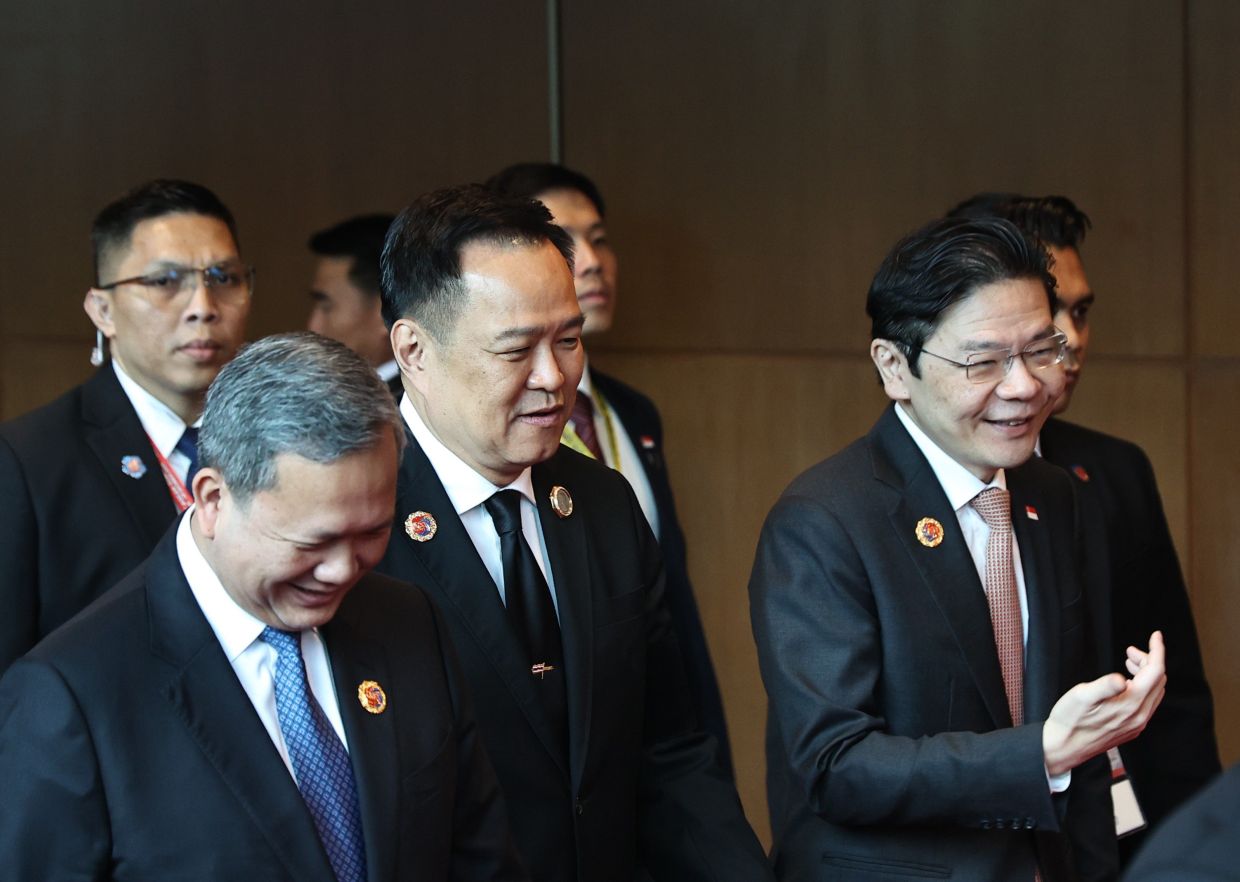
Fresh diplomatic signals from both Cambodia and Thailand suggest that China may be positioned to assume a more active mediating role in resolving their protracted border dispute, a development that could reshape regional stability in Southeast Asia. The momentum has intensified as Prime Minister Hun Manet and Thai counterpart Anutin Charnvirakul find themselves simultaneously in Beijing this week, with Hun Manet having used bilateral talks with Chinese Premier Li Qiang on July 16 to brief the leadership on the latest border developments. While both countries remain cautious about formally requesting Chinese intervention, the openness demonstrated by their senior officials indicates that Beijing could eventually emerge as a neutral facilitator if the situation warrants.
Hun Manet's decision to personally raise the frontier tensions during his meeting with Li Qiang carries particular significance given Cambodia's traditional diplomatic alignment with China. The bilateral discussion took place during the Cambodian premier's visit to Beijing for participation in the 2026 World Artificial Intelligence Conference, providing an opportunity to address geopolitical matters alongside economic and technological cooperation. According to official statements, Hun Manet emphasised Phnom Penh's commitment to peaceful resolution through international legal mechanisms and existing bilateral agreements with Thailand. This framing suggests that Cambodia views any potential Chinese involvement not as a replacement for established dispute-resolution frameworks, but as a complementary diplomatic tool that could enhance the legitimacy and effectiveness of negotiations.
Thailand's posture, while similarly circumspect, has moved noticeably toward welcoming Chinese facilitation. Anutin Charnvirakul explicitly stated that Bangkok remains "not closing the door" to China assuming a mediating function, should Beijing determine that such intervention would prove constructive. This carefully calibrated language reflects Thailand's strategic interest in maintaining flexible diplomatic options while signalling that direct bilateral negotiations remain the preferred pathway. The distinction matters because it preserves Bangkok's agency in the dispute whilst acknowledging that deadlocked bilateral talks might eventually require third-party involvement.
China's strategic positioning as a potential mediator has deeper historical roots than recent statements might suggest. Foreign Minister Wang Yi articulated Beijing's willingness to facilitate constructive dialogue during separate meetings with Cambodian and Thai officials at last year's Asean Foreign Ministers' Meeting, demonstrating that Chinese interest in this dispute extends beyond contemporary crisis management. Wang's emphasis on "objective and fair positioning" indicated Beijing's intent to present itself as a balanced actor capable of understanding both perspectives without favouring either party, a crucial prerequisite for effective mediation in regional disputes.
Since Wang's public commitment, China has moved progressively toward operationalising its facilitation role through concrete mechanisms. Beijing has hosted trilateral discussions involving senior officials from Cambodia, Thailand and China specifically designed to maintain peace and build confidence between the two neighbours. These meetings represent more than symbolic gestures; they constitute infrastructure for ongoing diplomatic engagement that could be readily adapted into formal mediation procedures should both sides formally request Beijing's involvement. The institutional groundwork appears already in place, suggesting that the transition from facilitation to active mediation could occur relatively smoothly if political circumstances permit.
The synchronicity of Hun Manet and Anutin's visits to Beijing, whilst uncoordinated in terms of bilateral meetings between the two leaders, nevertheless creates a diplomatic environment conducive to third-party problem-solving. Both countries maintain robust relationships with China independently, a dynamic that theoretically positions Beijing to understand each party's core interests and red lines. For Malaysia and other regional observers, this development carries implications for how Southeast Asian disputes might be resolved in an era of great power competition, potentially establishing precedents for Chinese involvement in intra-regional disagreements.
Cambodia's broader diplomatic strategy toward the border dispute reflects a sophisticated approach to leveraging multiple avenues simultaneously. Phnom Penh has welcomed Asean observer missions, pursued legal mechanisms through international courts and conventions, and consistently reaffirmed its commitment to non-violent resolution. This multifaceted engagement suggests that Cambodian leadership envisions resolution through layered diplomatic processes rather than singular breakthroughs. Chinese mediation would fit naturally into this framework, particularly if structured as one component of a comprehensive international engagement strategy.
The absence of formal mediation requests from either party, despite mounting speculation, reflects the delicate political calculations both countries must navigate. Officially requesting external mediation could be domestically unpopular, potentially inviting domestic criticism that the government has surrendered negotiating autonomy. By leaving diplomatic doors open without formalising requests, both Hun Manet and Anutin preserve plausible deniability whilst maintaining flexibility. This hedging approach is characteristic of Southeast Asian diplomacy, where maintaining face and preserving options often takes precedence over immediate resolution.
For Malaysia and other Southeast Asian nations, the emerging China-Cambodia-Thailand diplomatic dynamic warrants careful observation. A successful Chinese mediation role in this bilateral dispute could establish templates for Beijing's involvement in future regional conflicts, potentially reshaping the balance of diplomatic influence in the region. Conversely, if mediation efforts falter or produce limited results, it might demonstrate the persistence of fundamental obstacles to Chinese regional influence, notwithstanding Beijing's enhanced material capabilities and diplomatic reach.
The timeline for any formal mediation initiative remains uncertain, with neither Beijing nor the two disputants having announced concrete next steps. However, the consistent diplomatic signalling from all three capitals suggests that the intellectual and institutional groundwork for Chinese mediation has substantially advanced. The question now is not whether China possesses the diplomatic capacity to mediate, but rather whether deteriorating conditions along the border or political shifts within Cambodia or Thailand might precipitate a formal mediation request. Until such a moment arrives, expect continued careful calibration of rhetoric and measured diplomatic engagement designed to keep all options available whilst avoiding premature commitment to any particular resolution pathway.

