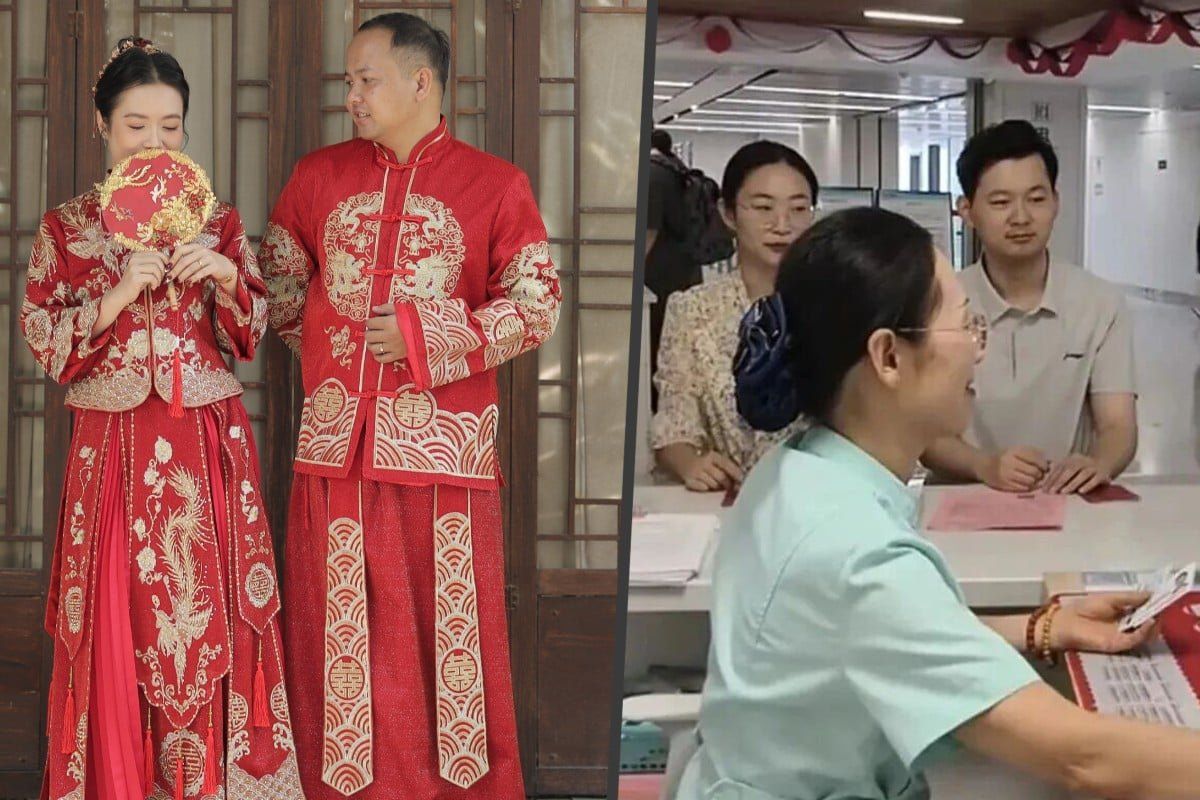
China's struggle with plummeting marriage rates has prompted an unconventional response: relocating marriage registration from government offices to hospitals, banks, temples, airports, and nightclubs. The proliferation of these creative venues reflects state anxiety over demographic decline, yet also exposes the gap between procedural convenience and the deeper cultural and economic factors discouraging young people from marrying.
The phenomenon accelerated after regulations reformed in May last year, permitting couples to register marriages outside their hukou location without presenting household registration booklets. This streamlining set the stage for what has become an extraordinary experiment in public service delivery. By May this year, China had established over 500 marriage registration sites outside traditional civil affairs bureaus, alongside 1,300 outdoor locations collaborating with authorities. The venues range from the romantic—centuries-old temples in Beijing and Nanjing where couples wear traditional attire—to the mundane, such as metro stations and commercial airports offering marriage certificates alongside airport lounge access.
The trajectory began in August when a branch of the Postal Savings Bank of China in Tianjin became the country's first financial institution to offer marriage services. The juxtaposition of banking and matrimony drew mockery online, with commentators joking that only a hospital could surpass such an unlikely pairing. Reality quickly obliged. In Zibo, Shandong province, the Maternal and Child Health Hospital of Linzi District launched marriage registration services during the Qixi Festival—China's equivalent to Valentine's Day—arguing that centralising registration, premarital examinations, and preconception guidance under one roof would benefit newlyweds. Guangzhou Baiyun International Airport in Guangdong followed suit, becoming the nation's first airport to issue marriage certificates while providing complimentary observation deck access.
These initiatives reflect the government's urgency in addressing China's marriage crisis. The most recent data paints a concerning picture for policymakers invested in reversing demographic decline. While the third quarter of last year showed a 22.5 per cent year-on-year increase in marriage registrations—reaching 1.61 million couples—the momentum proved unsustainable. The full year saw 6.76 million marriages, up 657,000 from the previous year. However, in the first half of this year, marriages dropped 7.5 per cent year-on-year, with only 3.28 million couples registering, suggesting the convenience factor provides only temporary stimulation rather than addressing root causes.
The disparity between administrative accessibility and actual marital behaviour underscores a fundamental misdiagnosis by officials. While the government has identified and removed procedural obstacles, Chinese youth face different barriers entirely. Economic uncertainty dominates concerns: housing affordability, employment stability, and financial pressure weigh heavily on decisions to marry. The average age of first marriage continues climbing, and among those who do marry, many postpone or forgo children entirely due to costs.
Social attitudes have shifted dramatically. Marriage no longer carries the weight of necessity it once did. Young people, particularly women, increasingly view matrimony as optional rather than inevitable, valuing personal autonomy and career development. The loss of face and social stigma once attached to singlehood has eroded significantly, particularly in metropolitan areas where alternative lifestyles face less judgement. Simultaneously, awareness of divorce's financial and emotional consequences has grown, making the commitment appear riskier.
Public reaction on social media has been withering. Commentators sardonically pointed out that few young people avoid marriage because registration procedures are cumbersome; if location and documentation were the barriers, the problem would have been solved. Instead, critics highlighted what truly deters matrimony: anxiety about facing decades of financial pressure, family conflict, and diminished personal freedom. One observer noted tartly that the civil affairs bureau should establish divorce services atop Mount Everest if convenience were genuinely the issue. Another remarked that confidence in navigating life's challenges—not access to registration desks—determines whether people marry.
For Malaysia and Southeast Asia broadly, China's experience offers instructive warnings about demographic policy. Across the region, similar trends emerge: later marriages, smaller family sizes, and young people questioning whether matrimony serves their interests. Thailand, Vietnam, and Singapore all face comparable pressures. The Chinese example demonstrates that administrative solutions alone cannot reverse preferences rooted in economic reality and evolving values. When housing consumes 60 per cent of incomes in some cities, when job security has weakened, and when women have educational and career opportunities previously unavailable, procedural simplification addresses only margins.
The distinction between divorce and marriage registration reveals another policy blind spot. Most outdoor marriage sites do not provide divorce services, citing documentation requirements. This selective availability inadvertently signals that the government wants people to marry, not necessarily to make informed decisions about marital dissolution. The asymmetry suggests that while authorities embrace marriage convenience, they remain uncomfortable with its termination, reflecting traditional priorities rather than genuine recognition of individuals' needs.
China's marriage rate crisis ultimately reflects broader shifts across East and Southeast Asia where modernisation, urbanisation, and female education have restructured family formation. The government's resort to unconventional venues—hospitals where couples register after preconception counselling, nightclubs offering midnight ceremonies, airports providing nuptial backdrops—demonstrates creativity but also desperation. These initiatives generate publicity and occasional short-term upticks, yet cannot overcome structural economic pressures, gender dynamics, and cultural transformation.
The fundamental challenge lies in the intractability of the problem. Young people's reluctance to marry stems not from ignorance of where to register but from rational assessment of costs and benefits. Real solutions would require addressing housing affordability, wage stagnation, gender inequality in domestic labour, and expectations of filial piety. These require systemic economic and social reforms far more demanding than opening hospital registration counters. Until such changes occur, ceremonies in nightclubs and airports will remain symbolic gestures against demographic tides that procedural convenience cannot reverse.

