China's Ministry of Foreign Affairs has publicly commended Prime Minister Datuk Seri Anwar Ibrahim for his unwavering support of the one-China principle, particularly following the Malaysian leader's recent remarks on Taiwan's status. The endorsement, posted by a ministry spokesperson on the social media platform X on Wednesday, underscores Beijing's satisfaction with Malaysia's consistent diplomatic alignment on this historically contentious issue. The statement emphasised that nothing will prevent China from achieving reunification, while simultaneously noting that international backing for the one-China principle remains unshakeable despite external pressures.
Anwar's recent interview with Al Jazeera served as the immediate catalyst for Beijing's approval. During that conversation, the Malaysian Prime Minister explicitly stated his view that Taiwan constitutes part of China, framing it as a universally accepted position across the international community. This direct articulation of support carries particular weight given Malaysia's significant role as a Southeast Asian nation and member of ASEAN, a regional grouping that Beijing has sought to cultivate closer ties with in recent years. The timing of such remarks also reflects broader diplomatic dynamics within the region, where nations navigate complex relationships with both Washington and Beijing.
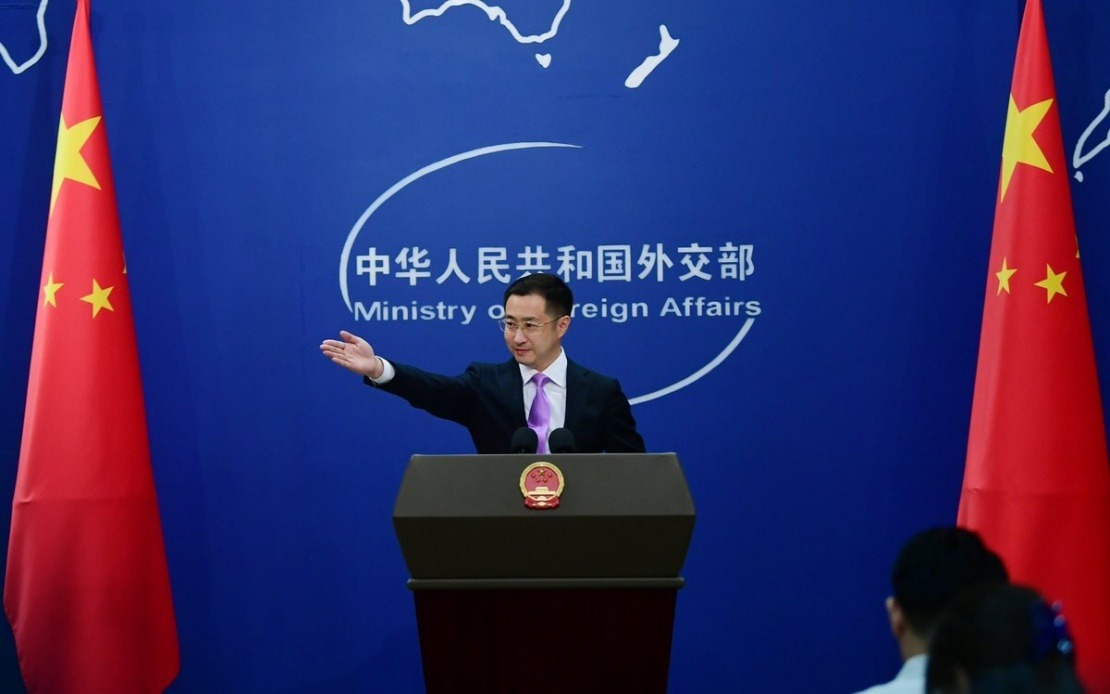
Chinese Foreign Ministry spokesperson Lin Jian elaborated on Beijing's position during a regular press briefing in Beijing on Wednesday, offering a more detailed articulation of why the one-China principle matters to Chinese officials. According to Lin, adherence to this principle aligns with what he characterised as popular sentiment and represents support for what is fundamentally right. This framing attempts to position China's reunification agenda not merely as a nationalist imperative but as a cause rooted in justice and democratic legitimacy. Lin further reinforced the official stance by reiterating that Taiwan remains an inseparable component of Chinese territory, with reunification representing an inevitable historical outcome that no force can arrest.
For Malaysia, the balance required in managing relations with both Beijing and Western powers has long presented diplomatic challenges. Anwar's public affirmation of the one-China principle demonstrates the government's approach to maintaining stable relations with China, a crucial economic partner and regional power. Malaysia's position on Taiwan has traditionally reflected this pragmatic balancing act—acknowledging Beijing's sovereignty claims while maintaining functional relationships with other regional and global actors. The Prime Minister's explicit statement to a major international news outlet signals clarity on this position, potentially reducing ambiguity that might otherwise invite Beijing's criticism.
The significance of this episode extends beyond bilateral Malaysia-China relations into the broader Asian geopolitical landscape. Taiwan's status remains one of the most sensitive issues in international affairs, with the United States providing implicit security guarantees through the Taiwan Relations Act while maintaining the fiction of formal diplomatic distance. ASEAN nations, including Malaysia, have historically preferred to avoid taking sides on the Taiwan question, instead emphasising regional stability and the peaceful resolution of disputes. Anwar's explicit statement therefore represents a subtle shift in Malaysia's public diplomacy on this matter, moving from neutral ambiguity toward clearer alignment with Beijing's preferred framing.
Beijing's formal acknowledgement of Anwar's remarks carries its own strategic implications. By publicly praising the Malaysian Prime Minister, Chinese officials are reinforcing a message to other regional actors about the benefits of alignment with China's core interests. Such public validation serves as a form of diplomatic dividend that rewards supportive statements and potentially encourages other nations to adopt similar positions. This technique has proven effective in Southeast Asia, where economic interdependence creates powerful incentives for accommodation with Beijing's preferences on sensitive matters.
The framing of reunification as an unstoppable historical trend, as articulated by Lin Jian and reflected in Chinese official statements, reflects Beijing's confidence and determination regarding the Taiwan question. Rather than presenting reunification as merely one policy option among others, Chinese officials describe it in deterministic language that brooks no compromise or alternative outcomes. This rhetorical strategy aims to influence international opinion and discourage support for Taiwan's de facto independence, while simultaneously reassuring domestic Chinese audiences that the government maintains unwavering commitment to this long-standing objective.
For Malaysian observers and policymakers, Anwar's statements require careful interpretation within the context of Malaysia's broader foreign policy objectives. While the government maintains economic and security relationships with multiple powers, China's growing importance to Malaysia's development agenda—particularly through initiatives like the Belt and Road Initiative and various infrastructure projects—creates natural incentives for accommodation on symbolic diplomatic matters. Anwar's remarks likely reflect both genuine policy positions and strategic calculations about Malaysia's long-term interests in maintaining cooperative relations with Beijing.
The international community's response to such statements varies considerably based on each nation's own strategic position and interests. Western nations and Taiwan itself may view Anwar's remarks as unhelpful to Taiwan's political autonomy and de facto sovereignty, while Beijing predictably celebrates any affirmation of its preferred narrative. This divergence reflects the fundamentally contested nature of the Taiwan question, where different actors operate from irreconcilable premises about the island's political status and future trajectory. Malaysia's explicit alignment with Beijing's position, as demonstrated through Anwar's Al Jazeera interview, therefore carries consequences that extend beyond the bilateral relationship.
Looking forward, Anwar's public affirmation of the one-China principle may establish a template for Malaysia's diplomatic communications on this sensitive topic. Having taken an explicit position, the government will face expectations to maintain consistency with this stated stance in international forums and bilateral discussions. This commitment could facilitate smoother relations with Beijing while potentially complicating Malaysia's ability to present itself as a non-aligned voice on contentious regional disputes. The balance between clarity and flexibility in diplomatic positioning remains a challenge for Malaysian policymakers navigating great power competition in Southeast Asia.

