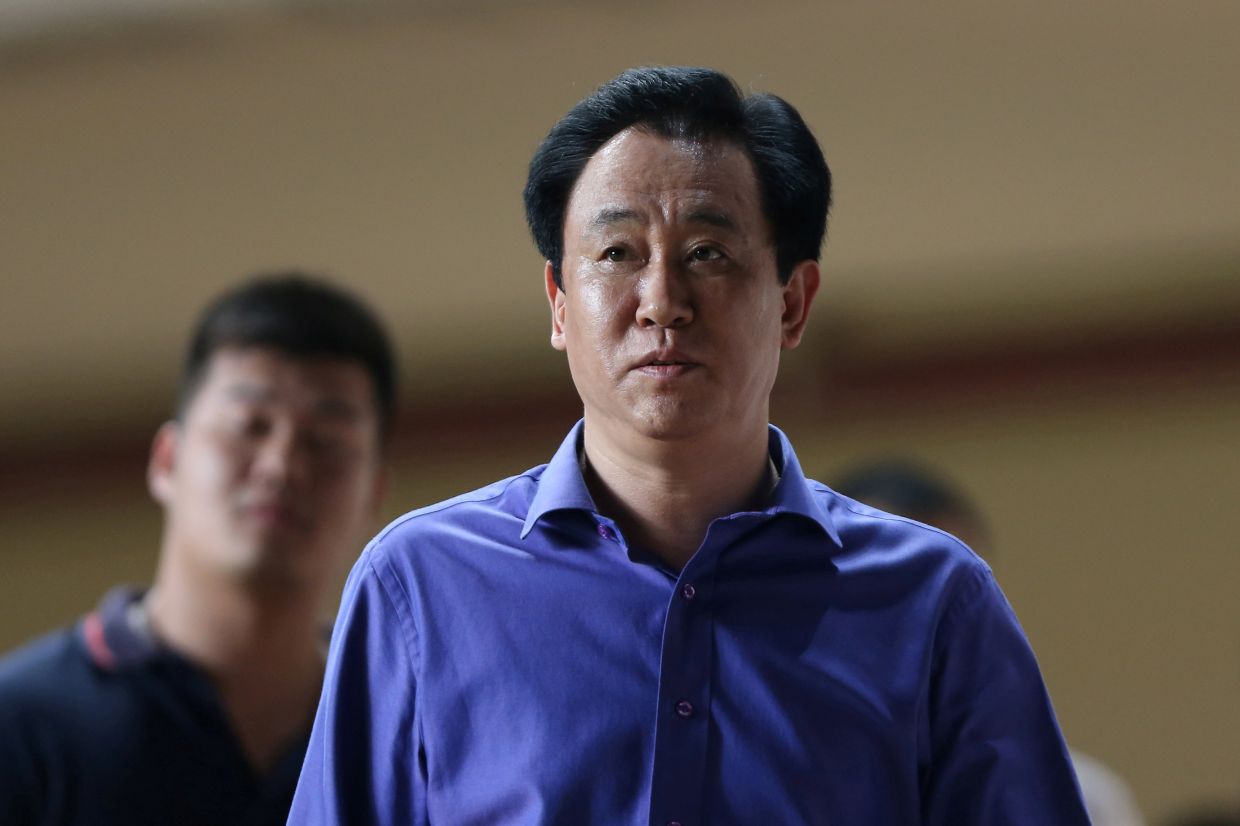
A Chinese court delivered a landmark verdict on Thursday by sentencing Xu Jiayin, the founder of Evergrande Group, to life imprisonment and imposing penalties totalling 15.82 billion yuan (US$2.4 billion) on the troubled developer and its real estate subsidiary. The Shenzhen Intermediate People's Court in Guangdong province concluded one of China's most closely watched financial trials, bringing formal closure to a saga that began with Evergrande's catastrophic default in 2021 and exposed fundamental weaknesses in the country's property sector oversight.
Xu's conviction represents a striking turnaround for a figure who once embodied the ambitions of China's real estate boom. The Cantonese-speaking billionaire, known internationally as Hui Ka Yan, built Evergrande into one of Asia's largest property developers through an aggressive expansion strategy that relied heavily on debt financing and increasingly aggressive accounting practices. As the court noted in its verdict, Xu deployed systematic methods to misrepresent the company's true financial position, inflating assets while concealing mounting liabilities between 2016 and 2021. The life sentence also includes permanent revocation of his political rights and total confiscation of personal assets, a particularly severe sanction reflecting the severity of the court's judgment.
The charges levelled against Xu extended well beyond simple financial mismanagement. The court found him guilty of large-scale financial fraud, embezzlement, and bribery offences, painting a picture of deliberate institutional corruption rather than mere business miscalculation. Most significantly, prosecutors established that Evergrande and Xu, acting in his capacity as chairman and controlling shareholder, utilised bribery mechanisms to gain influence over financial institutions, though authorities have not publicly named the specific institutions involved. This dimension of the case suggests that Evergrande's troubles were not isolated to the company itself but reflected attempts to manipulate the broader financial ecosystem through improper relationships with banks and other financial actors.
Evergrande's precipitous fall from grace underscores the hazards of an investment model built almost entirely on perpetually rising property values and access to cheap credit. For decades, the company rode China's property boom by offering home-ownership dreams to millions of middle-class aspirants, purchasing land at escalating prices and constructing residential complexes across the country. This expansion model worked brilliantly during China's sustained period of rapid urbanisation and credit abundance, but it left Evergrande desperately vulnerable to policy shifts. When the Chinese government tightened controls on excessive borrowing and property speculation starting in 2020, credit channels that Evergrande depended upon abruptly contracted, exposing the structural fragility underlying the developer's financial statements.
The implications of Evergrande's collapse extend far beyond the company itself and ripple across Asia's financial markets. As the region's property sector represents a crucial engine of economic growth and wealth creation, the Evergrande crisis demonstrated how concentrated risks in one major developer could threaten broader financial stability. Homebuyers who had paid deposits for properties that were never completed faced devastating losses, while creditors including banks, bondholders, and suppliers lost billions in outstanding claims. The unfolding crisis prompted soul-searching among policymakers across Asia regarding the sustainability of property-led development models.
Five additional senior executives at Evergrande received custodial sentences on Thursday, with prison terms ranging from six to 18 years for their roles in various fraud and embezzlement schemes. This broader indictment of the company's leadership structure indicates that fraudulent practices were not confined to the executive suite but were embedded throughout the organization's decision-making apparatus. These convictions signal that Chinese authorities intend to hold multiple layers of management accountable rather than treating the fraud as the work of a single rogue executive.
Xu's guilty plea in April to the charges against him may have influenced the sentencing outcome, though the life sentence underscores the court's determination to deliver severe punishment. The decision to pursue criminal prosecution rather than civil resolution reflects Beijing's hardening stance toward corporate malfeasance among major listed companies, particularly in strategically important sectors like real estate. Chinese authorities have increasingly signalled that regardless of a company's historical contributions to economic growth, fraudulent conduct will trigger stringent criminal consequences.
For Malaysian and Southeast Asian observers, the Evergrande saga offers cautionary lessons about the dangers of property-sector dependence and the importance of robust financial regulation. Malaysia's own real estate sector, which represents a substantial portion of domestic credit and investment activity, shares structural similarities with China's model, albeit typically with more conservative leverage ratios. The case reinforces the necessity of maintaining prudent lending standards, transparent accounting practices, and effective regulatory oversight even during periods of robust economic expansion.
The substantial fines imposed on Evergrande and its subsidiaries signal Beijing's intention to recover public funds where possible, though creditors holding claims against the company are unlikely to recover their full outstanding amounts through bankruptcy proceedings. The confiscation of Xu's personal assets may contribute modestly to compensation efforts, but the primary function of these financial penalties appears to be punitive rather than restorative. The verdict closes a significant chapter in what will likely be remembered as one of Asia's most consequential financial collapses, marking a definitive endpoint to the empire that Xu constructed over decades of aggressive expansion.

