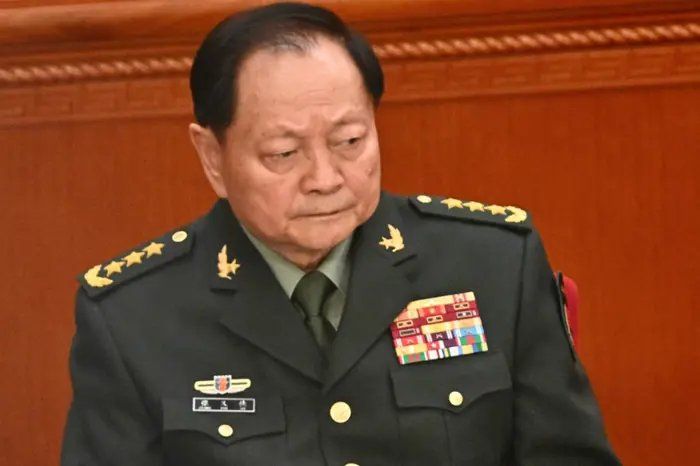
China's leadership has completed its removal of former general Zhang Youxia from the Central Military Commission, one of the country's most powerful military bodies, according to official announcements on Friday. The action represents the culmination of corruption allegations first made public in January, when authorities indicated that Zhang and fellow senior official Liu Zhenli faced investigation for "serious violations of discipline and the law"—terminology widely understood in Chinese governance as referring to corrupt conduct.
Zhang's departure marks a significant development in Beijing's ongoing anti-corruption campaign. His position as the more senior of two vice chairmen on the CMC had established him as China's highest-ranking military officer, a role that typically places its occupant among the country's most influential figures with substantial authority over defence policy and military operations. His seniority and apparent proximity to President Xi Jinping had made his investigation and removal particularly noteworthy to observers tracking Chinese political developments.
The formal removal was announced through official channels on Friday when China's parliamentary standing committee confirmed the decision to terminate Zhang's tenure. State news agency Xinhua reported the development as part of a routine parliamentary session agenda, maintaining the procedural formality that characterises such high-level personnel decisions in China's political system. The announcement provided no elaboration on the specific allegations or details surrounding the investigation, adhering to the opaque style typical of such announcements.
Simultaneously, the authorities removed Liu Zhenli, another prominent military figure who served as chief of staff of the CMC's joint staff department. This department holds significant responsibilities for combat planning and military strategy coordination, positioning Liu as an influential figure within China's defence establishment. The joint removal of both officials signals a comprehensive clearing operation within senior military leadership, suggesting that the investigation may have extended beyond individual wrongdoing to potentially implicate broader institutional networks or patronage systems.
Zhang's case exemplifies the pattern that has characterised Xi Jinping's tenure as China's paramount leader. Since assuming power more than a decade ago, Xi has weaponised anti-corruption investigations as a central element of his governance strategy, simultaneously removing perceived rivals, consolidating authority, and projecting an image of disciplined leadership. The scope of these investigations has encompassed civilian and military officials alike, reaching into every major institution and region of the country. Some analysts view these campaigns as integral to Xi's vision of transforming China's bureaucratic culture; others emphasise their role in centralising power around Xi himself.
What distinguishes Zhang's case within this broader context is the rarity of investigating such a senior military figure. The military hierarchy in China operates with particular opacity, and investigations targeting high-ranking generals have been comparatively infrequent. Zhang's prominence and perceived closeness to Xi had suggested a degree of insulation from such scrutiny, making his investigation a notable exception that surprised both domestic and international observers. This development suggests that no position, regardless of seniority or perceived political proximity, remains entirely protected from the anti-corruption machinery.
The seven-month interval between the announcement of Zhang's investigation and his formal removal from office reflects the deliberate pace at which such cases typically proceed in China. The extended timeline allows authorities to gather evidence, consolidate control over potential allies of the investigated official, and prepare the political groundwork for removal. This measured approach contrasts sharply with more sudden dismissals, suggesting that the authorities moved carefully to manage any potential fallout within military circles.
For Southeast Asian observers and regional security analysts, developments within China's military leadership carry implications for regional stability and defence policy trajectories. Personnel changes at this level can signal shifts in strategic priorities, military doctrine, or regional posture. The removal of senior military voices can sometimes presage changes in approaches to territorial disputes, maritime security, or relations with neighbouring countries. Understanding these internal Chinese political dynamics helps regional governments anticipate potential shifts in Beijing's external behaviour.
The investigation and removal also illustrate the tension inherent in Xi's centralisation strategy. While anti-corruption campaigns provide a mechanism for removing threats to his authority and addressing genuine institutional problems, they simultaneously create uncertainty within the military hierarchy. Officers aware that even the highest positions offer no absolute protection may adjust their risk calculations and policy advocacy accordingly. This dynamic can affect the robustness of institutional advice available to top decision-makers, potentially influencing the quality of strategic choices.
China's formal announcement of Zhang's removal completes a chapter in the country's recent military history while potentially opening questions about succession and the distribution of responsibilities within the CMC. The process by which his replacement is selected and integrated will offer further insights into current power distributions within China's defence establishment. Meanwhile, the investigation into Liu and any potential connected officials continues to unfold, with implications yet to be fully revealed.

