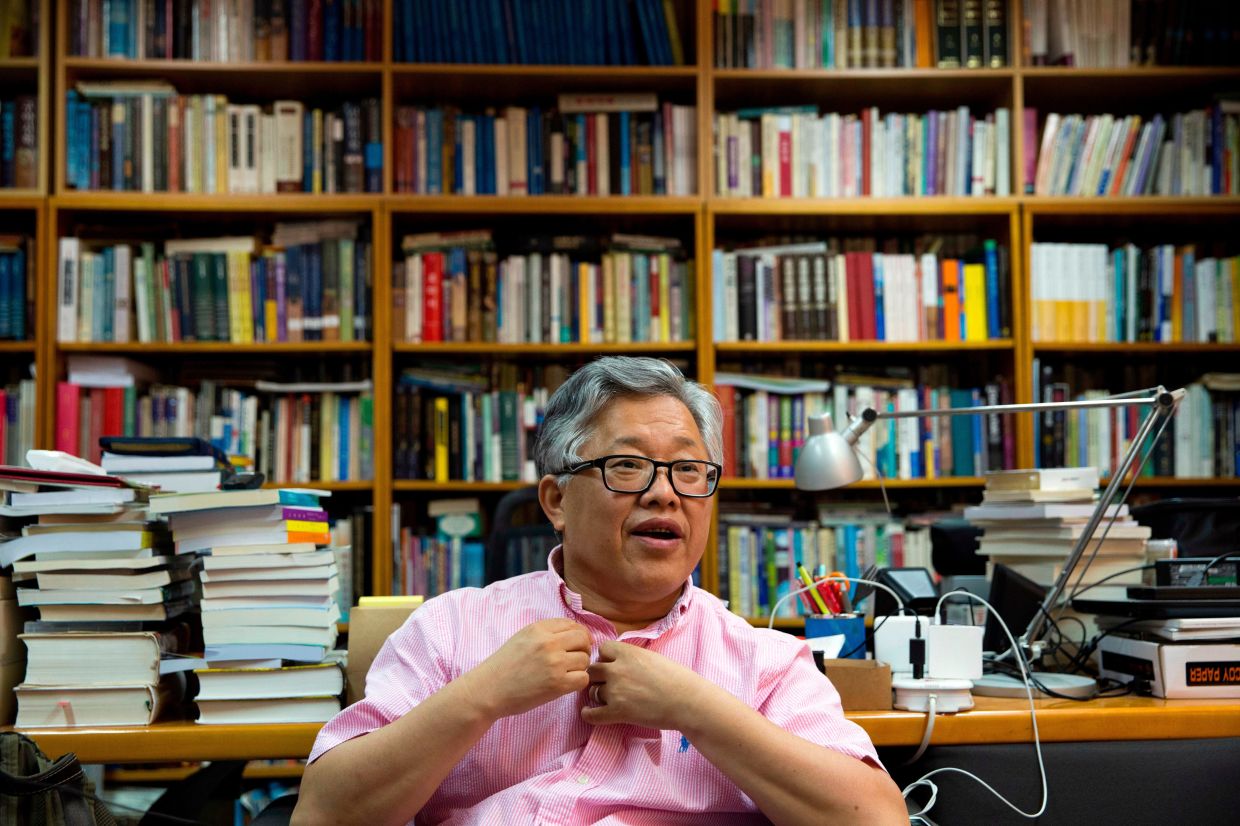
China has freed Ezra Jin, the founder of Zion Church, an underground Christian congregation that operates outside state control, following intervention by US President Donald Trump with Chinese counterpart Xi Jinping. Jin's family and church confirmed the release to international media on Sunday, marking the end of an eight-month detention that began in October when he was taken into custody along with other church members. The pastor arrived in Los Angeles after being released, with rights group ChinaAid announcing his freedom on Saturday. Chinese officials explicitly told Jin that his release resulted from discussions between the two presidents and was intended as a goodwill gesture coinciding with America's Independence Day celebrations.
Zion Church represents one of many unregistered Christian congregations across China that operate independently from the state-controlled religious framework. These churches exist in a precarious legal grey area, as China's Communist Party maintains strict oversight of all organised religious activity through official channels. Jin, who also goes by his Chinese name Mingri, founded Zion Church in Beijing in 2007, and the congregation grew to approximately 1,500 members before facing mounting pressure from authorities. The church was effectively shuttered in 2018 as part of a broader government crackdown on unofficial religious groups, though it subsequently maintained a digital presence that expanded significantly during the Covid-19 pandemic, reaching followers across 40 Chinese cities.
The detention charges against Jin centred on what authorities characterised as "illegal use of information networks", a vague formulation frequently employed by Chinese law enforcement to prosecute online religious activity and digital communication. When taken into custody on October 10, Jin was detained alongside other church members, though the circumstances and charges against his co-detainees remained opaque. His case gained international attention partly because his family had relocated overseas following the 2018 crackdown, yet Jin chose to return to China to maintain his pastoral role despite the personal cost. According to his daughter, he had not seen most of his family, including two young sons, for more than seven years, having been subject to a travel ban that effectively restricted his movements and isolation deepened his separation from loved ones abroad.
During Trump's May visit to meet with Xi, the US president explicitly raised Jin's detention and indicated that the Chinese leader had agreed to "strongly consider" releasing him. This diplomatic engagement represented a rare moment of priority assigned to religious freedom concerns within broader US-China relations, which typically focus on trade, technology, and geopolitical competition. The explicit acknowledgment by Chinese officials that the release resulted from presidential-level discussions underscores how religious liberty cases can become diplomatic bargaining chips between major powers. For Jin's family, the release carried profound emotional significance, with his daughter Grace expressing gratitude to both the Chinese leadership and Trump's administration, stating "We thank God for this tremendous miracle" and expressing hope that the development might signal improved treatment of people of faith across China.
However, Jin's release must be contextualised within the broader trajectory of religious restrictions under Xi Jinping's leadership, which has progressively tightened controls over all forms of organised religion deemed outside party authority. The Chinese government views unregistered churches with particular suspicion, regarding them as potential sources of independent social mobilisation that could challenge state authority. Over recent months, authorities have intensified crackdowns on multiple underground congregations, demonstrating that Jin's release does not reflect a fundamental policy shift toward religious tolerance. In June, authorities raided an Early Rain Covenant Church service in Sichuan province and detained two leaders, actions that followed earlier detentions of other Early Rain members in January. Simultaneously, officials in Zhejiang province scaffolded Yayang church and removed its cross, sending unmistakable signals about the regime's determination to suppress visible religious expression outside sanctioned channels.
The situation facing Zion Church members remaining in detention highlights the incomplete nature of Jin's release. Eight members of the church who were detained alongside Jin in October continue to be held without apparent resolution, their cases receiving minimal international attention compared to their pastor's high-profile release. This disparity raises questions about whether diplomatic pressure succeeds primarily for prominent figures with international connections and foreign family networks, while ordinary believers lack equivalent leverage or advocacy platforms. The remaining detainees face uncertain legal processes and ongoing restriction of their religious freedoms, illustrating how selective releases can obscure systemic persecution of faith communities.
For Southeast Asian observers, China's handling of religious minorities carries particular relevance given the region's own diverse faith communities and varying government approaches to religious expression. Malaysia, with its complex constitutional framework balancing Islam and other faiths, alongside nations like Indonesia and Thailand with their own religious tensions, can draw lessons from China's escalating restrictions. The case demonstrates how surveillance technology, vague legal frameworks criminalising online communication, and state monopolies over religious organisation create environments where believers face persistent vulnerability. Moreover, the diplomatic dimensions of Jin's release illustrate how international attention and high-level political engagement can occasionally provide protection, suggesting that regional governments and international organisations might prioritise systematic advocacy for persecuted religious communities as both a human rights imperative and a strategic foreign policy consideration.
Jin's seven-year separation from his family underscores the personal human cost extracted by religious persecution beyond abstract concerns about civil liberties. His case embodies the impossible choices confronting faith leaders in authoritarian contexts: abandon pastoral responsibilities to maintain family relationships, or remain committed to their communities while accepting prolonged separation from loved ones. The release offers Jin opportunity for family reunion and renewed life in diaspora, yet the broader Zion Church community remains fractured, with detained members still imprisoned and the congregation unable to worship openly in its homeland. The symbolic importance of his release as a "goodwill gesture" between Washington and Beijing illustrates how individual cases become instruments of great power diplomacy, sometimes advancing freedom for specific individuals while leaving systemic persecution intact.

