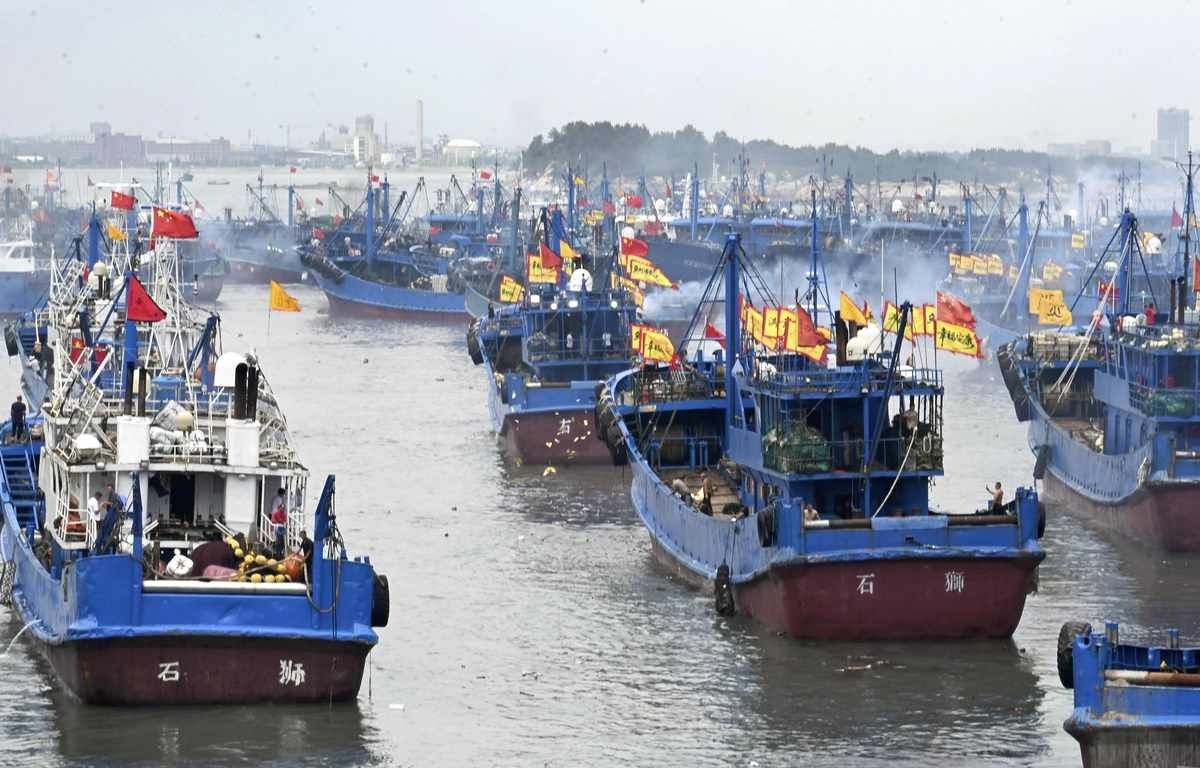
The termination of China's fishing restrictions in the East China Sea on August 15 has set off alarm bells in Tokyo, with Japan preparing to closely monitor activity around the contested Senkaku Islands as Beijing-Tokyo relations continue their downward trajectory. From ports across Fujian Province, fishing vessels began departing almost immediately upon the ban's expiration, marking the seasonal reopening of waters that have long served as a flashpoint for regional diplomatic friction. The Shishi port alone witnessed 654 boats set out on Sunday morning, August 16, a sight that underscores the scale of fishing operations set to resume in these sensitive maritime zones. Vessels decorated with Chinese national flags and symbolic red-and-yellow banners departed amid celebratory firecrackers, reflecting the economic importance of these fishing grounds to local communities throughout the province.
Historical patterns suggest reasons for Japan's vigilance. In August 2016, Chinese Coast Guard vessels and between 200 to 400 fishing boats converged around the Senkaku Islands in coordinated operations that Japanese authorities characterised as deliberately provocative. Those incursions breached Japanese territorial waters and prompted formal protests from Tokyo, which argued that Beijing was unilaterally escalating tensions in the region. Diplomatic analysts at the time suggested China's actions may have been calculated responses to Japan's calls for acceptance of The Hague's July 2016 arbitral ruling, which had rejected China's expansive sovereignty claims over the South China Sea. The coordination between state vessels and commercial fishing boats raised suspicions that what appeared to be routine fishing operations were in fact orchestrated pressure tactics designed to test Japanese resolve and advance Beijing's territorial ambitions.
In recent years, the situation has shifted markedly, though not necessarily toward genuine stability. Chinese local authorities began issuing instructions to fishermen directing them away from what were officially designated as "sensitive waters," a development observers attributed to Beijing's concern that any maritime accident could trigger a crisis that would further damage already fragile relations with Japan. This cautious approach produced measurable results. Data compiled by the Japan Coast Guard reveals a dramatic decline in warnings issued to Chinese fishing vessels entering Senkaku territorial waters: from 81 incidents in 2021, the number plummeted to just four in 2025. This statistical trend appeared to suggest an emerging de-escalation, with Chinese fishing operations voluntarily maintaining distance from the flashpoint zone.
Yet signs of potentially renewed pressure have begun emerging through subtle shifts in official Chinese policy language. Traditionally, Chinese authorities issue formal fishing guidelines around May each year, with previous notices explicitly warning against "cross-border fishing in sensitive waters such as those of South Korea, North Korea and Japan." This year's directive, issued on April 30, conspicuously altered that language. The updated guidance now prohibits "fishing operations in the interim measures area between China and South Korea" while notably omitting any reference to Japan. This linguistic shift, however minor it might appear on its surface, has prompted diplomatic observers to sound cautionary notes about what Beijing's changing tone might portend for future maritime conduct in the region.
The ambiguity extends to on-the-ground perspectives among fishermen themselves. A Shishi-based fishing operator in his 50s conveyed a notably nuanced position when discussing the prospects for operating around the Senkaku Islands. While acknowledging that these waters remain among East Asia's richest fishing grounds, he indicated that fishermen understand the delicate political situation surrounding their operations. His comments revealed the complex calculation facing local maritime communities: the economic incentive to fish in productive areas must be balanced against awareness that straying into genuinely disputed waters risks confrontation with Chinese authorities themselves, quite apart from potential clashes with Japanese vessels. "If we get too close to Japan, we'll be caught by Chinese authorities conducting surveillance," he explained, adding that while authorities have not issued explicit prohibitions against fishing near the Senkaku Islands, the implicit constraints remain.
This tacit constraint system appears increasingly unstable as wider geopolitical deterioration accelerates. Tokyo-Beijing relations have soured considerably since the period of relative restraint that followed 2016, with disputes ranging across territorial questions, trade frictions, and strategic competition extending far beyond maritime zones. The current environment of elevated mistrust means that even routine fishing activity in disputed waters carries heightened political significance. What might ordinarily be treated as a maritime management issue becomes freighted with larger questions about sovereignty, resolve, and national pride. Japan's decision to intensify monitoring of the Senkaku region reflects this broader anxiety about Beijing's intentions as China's seasonal fishing operations resume at scale.
The Quanzhou municipal authorities, which exercise jurisdiction over the Shishi port complex, attempted to maintain oversight by calling on August 7 for "strengthening surveillance of sensitive waters." This directive appears designed to serve dual purposes: reassuring Japan that Beijing intends to exercise self-restraint while simultaneously signalling to Chinese fishermen that they should limit their exposure in genuinely contentious zones. Whether such administrative guidance will prove sufficient to prevent the kind of large-scale fishing boat incursions that characterised 2016 remains an open question. The fishing lobby's economic interests and the practical difficulty of policing thousands of individual vessels operating across vast ocean expanses create inherent limitations on state capacity to enforce restraint.
For broader Southeast Asian and regional stakeholders, the situation encapsulates larger anxieties about maritime governance and great power competition in Asia. The East China Sea fishing ban cycle has become a recurring test of whether China and Japan can manage their overlapping jurisdictional claims through cooperative mechanisms or whether seasonal reopenings will consistently resurrect the threat of uncontrolled incidents. Malaysia, Vietnam, the Philippines, and other nations with their own contested maritime zones monitor Japan-China interactions closely for signals about how Beijing might conduct itself during periods of friction. The precedent established through China's handling of fishing resumption near the Senkaku Islands holds implications extending well beyond that specific bilateral relationship.
The deterioration of Tokyo-Beijing ties appears to have created a context in which even relatively routine maritime activities carry outsized diplomatic weight. Where fishing resumptions might once have been treated primarily as economic and environmental management questions, they now function as political messages. China's apparent decision to remove explicit mentions of Japan from its fishing guidance could signal either pragmatic de-escalation or the lifting of self-imposed constraints. Japan's heightened monitoring posture reflects genuine uncertainty about which interpretation proves accurate. The coming weeks and months will reveal whether the seasonal reopening of these waters leads to renewed confrontation or whether both capitals have genuinely committed to managing maritime competition within bounds that prevent crisis escalation.

