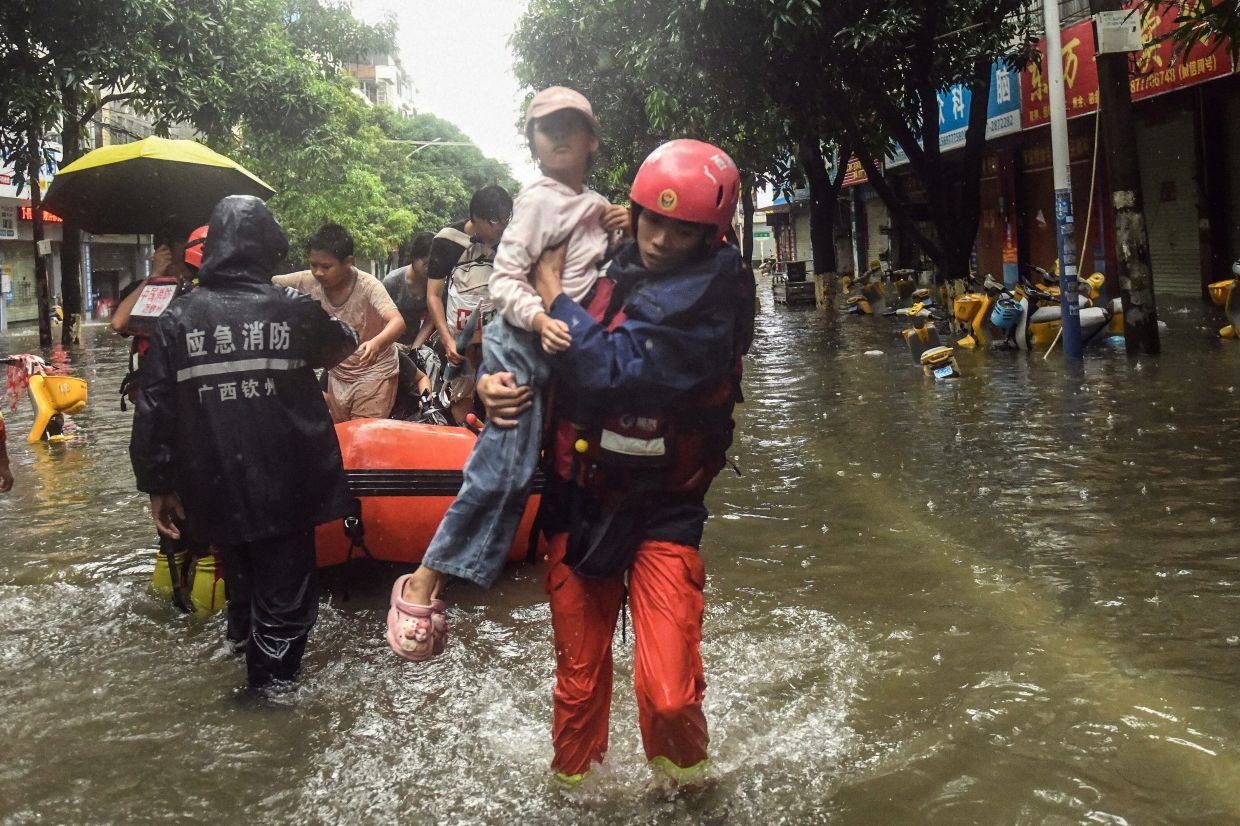
China is confronting a cascade of natural disasters that have claimed at least 17 lives and forced authorities to evacuate more than 100,000 people across several provinces. The most severe impact has struck the southern region of Guangxi, where Typhoon Maysak unleashed torrential downpours and severe flooding that continue to threaten the region as meteorologists predict persistent rainfall through Wednesday. Authorities warn that the threat remains acute, with water levels expected to surge significantly above safe limits and reservoir embankments facing mounting pressure from prolonged exposure to high-level floodwaters.
In Guangxi alone, the typhoon's passage has claimed six lives while displacing at least 130,000 residents from their homes. The scale of inundation has been extraordinary, with fast-moving muddy water breaching the banks of 40 rivers and waterways across the province. State broadcaster footage captured dramatic scenes of torrents of water crashing through a collapsed reservoir dam, with rescue personnel in life vests navigating inflatable boats through submerged areas. The agricultural toll has been substantial, with nearly 13,000 acres of farmland damaged or destroyed by the floodwaters, representing a significant blow to rural livelihoods in the region.
The Ministry of Water Resources has issued stark warnings about the weeks ahead. Minister Li Guoying cautioned that the Wuzhou Hydrological Station expects flood peaks to exceed safe warning levels by more than six metres early Thursday, a surge that will test the structural integrity of reservoirs and embankments still recovering from recent inundation. The combination of relentless rainfall and the slow recession of already-elevated water levels creates what officials characterise as a severe test of regional infrastructure resilience. Authorities have elevated emergency response protocols to the second-highest level for flood control, while deploying additional disaster relief supplies including food, raincoats and rubber boats to affected communities.
Beyond Guangxi, neighbouring Guangdong province faces similar meteorological threats, with forecasters warning that heavy rainfall will persist there as well through midweek. This dual-province impact reflects the unusual breadth of Typhoon Maysak's influence, affecting a far wider geographic area than typical tropical cyclones. The coordination required across provincial boundaries to manage the joint response has tested China's disaster management apparatus, though central authorities have mobilised resources rapidly to address the crisis.
The disaster extends beyond flooding. Thunderstorms and gale-force winds across the central province of Hubei have proven particularly deadly, killing 11 people and injuring 331 others, with one person still missing. The violent weather has destroyed nearly 4,800 houses in the province and completely collapsed 22 more, displacing thousands of additional residents and compounding the humanitarian challenge facing regional administrators. Tornadoes were separately reported in other parts of the country late Monday, adding another dimension to the meteorological crisis unfolding across multiple provinces.
Simultaneously, northwestern China's Gansu province is dealing with a separate catastrophe. A landslide that struck Rencang village in Dangchang County early Tuesday morning has claimed 21 lives, according to announcements made Wednesday by local authorities. The initial reports had suggested 33 people were buried by the debris, making the final death toll a slight improvement on early estimates, though authorities have not yet provided clarity on the status of the remaining missing persons. Search and rescue operations at the landslide site have now concluded, though the investigation into what triggered the ground collapse remains ongoing.
The provincial government has responded by allocating 30 million yuan, equivalent to approximately US$4.4 million, toward reconstruction and recovery efforts in the affected area. However, the focus remains on understanding the landslide's root cause, as determining whether it resulted from the unusual rainfall patterns sweeping China or from pre-existing geological vulnerabilities will inform future prevention strategies. The timing of the landslide, coinciding with the broader regional flooding crisis, suggests that heavy precipitation may have played a significant role in destabilising the slope.
These interlocking disasters underscore a persistent challenge for China's development model and climate resilience. Summer weather patterns across the country frequently produce extremes, with some regions experiencing torrential rainfall while others simultaneously endure drought and scorching heat. Infrastructure designed and built during earlier decades of rapid development has not uniformly kept pace with emerging climate volatility, leaving communities vulnerable to compounding hazards. The concentration of fatalities and displacement across three provinces within a single week reflects the scale of natural disaster risk that contemporary China faces.
Central authorities have responded to the crisis with characteristic urgency. President Xi Jinping directed rescuers on Tuesday to mobilise fully and commit all available resources to emergency operations, signalling the political priority attached to the response. State media coverage has been comprehensive, reflecting the government's intention to demonstrate competence and command of the situation. However, the simultaneous occurrence of distinct hazards across geographically dispersed regions has stretched disaster response capabilities, requiring coordination among multiple provincial administrations and rapid deployment of personnel and supplies across vast distances.
The incidents occurring across Guangxi, Guangdong, Hubei and Gansu provinces represent more than isolated meteorological events; they highlight structural vulnerabilities in regional infrastructure and planning that affect millions of people. As climate scientists debate whether tropical cyclone intensity is shifting in response to warming oceans, Chinese planners face the immediate challenge of strengthening defences against extreme weather while managing humanitarian responses to current crises. The recovery period will likely extend for weeks, testing both bureaucratic systems and financial reserves allocated for disaster relief.
For Southeast Asian neighbours, China's experience carries immediate relevance. Typhoon Maysak originated in tropical systems that can migrate southward and westward, while heavy rainfall patterns that produce flooding in southern China often reflect monsoon dynamics that also affect the region. The scale of Chinese preparations and resource mobilisation offer both lessons and cautionary examples for countries throughout Southeast Asia facing similar climatic pressures and infrastructure challenges in densely populated lowland areas vulnerable to both typhoons and inland flooding.

