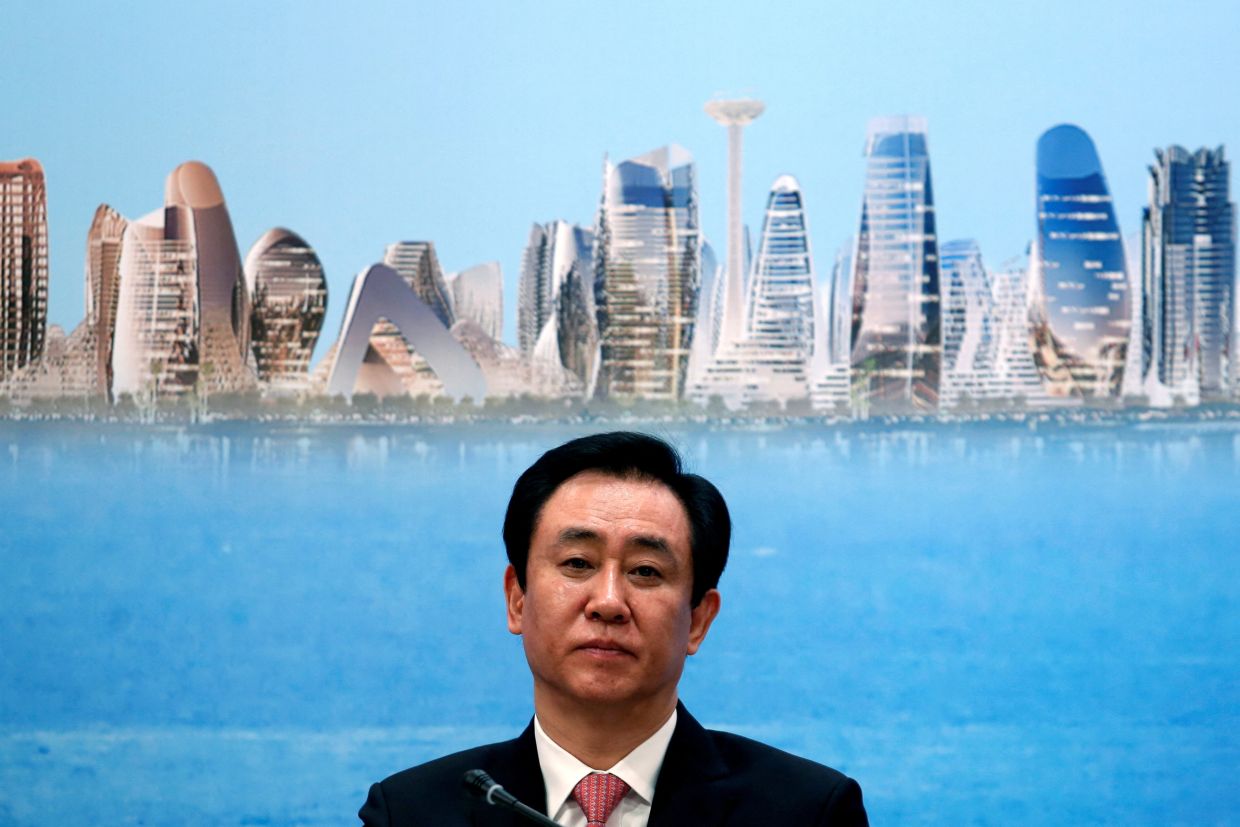
The dramatic fall from grace of Hui Ka Yan reached its conclusion in a Shenzhen courtroom on Thursday when the Evergrande founder received a life sentence for orchestrating one of China's largest financial frauds. Once celebrated as Asia's wealthiest individual with a net worth exceeding $45 billion in 2017, Hui now faces permanent imprisonment following his guilty pleas to eight serious charges spanning misuse of funds, fraudulent fundraising, illegally soliciting public deposits, unauthorised lending, securities fraud and bribery. The verdict represents far more than the fate of a single businessman; it crystallises the reckoning facing China's property sector after years of accumulating dysfunction that has constrained the nation's economic growth.
Evergrande's transformation from China's leading developer by contracted sales into a financial catastrophe symbolises the broader instability that has plagued the property market for half a decade. The company now stands as the world's most indebted real estate enterprise, having defaulted on substantially all of its approximately $300 billion liability obligations. These liabilities extend across domestic and international creditors—wealthy asset managers, retail investors, construction workers, and ordinary citizens who purchased unfinished apartments or held wealth-management products marketed through the developer's platforms. The scale of Hui's personal culpability in creating this disaster prompted the Shenzhen court to impose the maximum sentence while also confiscating all his personal property, signalling an uncompromising judicial approach.
Hui's journey from humble beginnings to billionaire status reads like a cautionary tale about the risks embedded in China's aggressive property expansion. Born to poverty in rural Henan province and raised by his grandmother following a family tragedy, Hui demonstrated remarkable business acumen in founding Evergrande during 1996 and steering it toward market dominance through debt-fuelled acquisitions and developments. However, the debt accumulation that powered his rise ultimately became the mechanism for Evergrande's catastrophic failure. The company's inability to service its obligations triggered cascading defaults that reverberated through China's financial system and exposed the fragility of wealth-management products dependent on property sector performance.
The judicial process surrounding Hui and Evergrande has unfolded with deliberate severity. Beyond the founder's life sentence, the court imposed a fine of 8.82 billion yuan ($1.31 billion USD) against Evergrande itself, while its primary subsidiary Hengda received a separate penalty of 7 billion yuan. Five additional senior executives received sentences ranging from six to eighteen years alongside financial penalties, whilst state media reported that 56 individuals associated with Evergrande faced criminal sentencing on the same day. This coordinated legal action demonstrates official determination to hold executives and senior managers accountable rather than limiting consequences to the founder alone.
The conviction carries profound implications for ordinary Chinese citizens who bore substantial losses from Evergrande's collapse. Homebuyers who had paid deposits for apartments that were never completed represent a particularly sympathetic constituency, as do lower-income retail investors who purchased wealth-management products marketed as secure investments. Social media commentary from affected homeowners captured the sense of abandonment many felt, with some suggesting that imprisonment may paradoxically offer Hui protection from public retribution. The emotional toll of losing life savings or purchasing prospects extends across millions of households, underscoring why property sector stability remains politically sensitive for Beijing authorities.
The liquidation proceedings initiated following Evergrande's formal collapse have proceeded with painful slowness, creating ongoing uncertainty for creditors. A Hong Kong court ordered formal liquidation during 2024, and the Hong Kong Stock Exchange subsequently delisted the company, providing official finality to its market status. However, the actual realisation of assets has lagged dramatically behind the scale of claims, with only approximately $255 million worth of property and other holdings sold as of August 2024 against total creditor claims exceeding $45 billion. This yawning gap between available assets and outstanding obligations means that most creditors face substantial losses regardless of any penalties imposed on management.
Evergrande's international dimensions complicate the recovery process and highlight how the property crisis extended beyond mainland China's borders. Liquidators have initiated court proceedings in offshore jurisdictions seeking to freeze assets held by Hui and his former spouse, pursuing recovery of approximately $6 billion in dividends and executive compensation that flowed to company leaders during the period before Evergrande's collapse. These efforts reflect recognition that meaningful creditor recovery requires pursuing funds that left China, a process that involves navigating multiple legal systems and faces resistance from defendants with sophisticated resources to mount legal defences.
Regulatory action against Evergrande has extended beyond criminal sentencing. China's securities regulator independently investigated the company's flagship unit and identified systematic earnings inflation and fraudulent securities disclosures. The regulator imposed a fine of 6.6 million yuan ($6.6 million USD) against Hui and imposed a lifetime ban from participation in China's securities markets, formalising his exclusion from the financial system. This administrative sanction complements rather than substitutes for criminal prosecution, reflecting a multi-track approach to accountability.
The Evergrande saga reflects deeper structural vulnerabilities within China's property market that extend well beyond this single developer. The sector's historical reliance on debt-financed expansion created perverse incentives for aggressive accounting, inadequate risk assessment, and competition that prioritised market share over prudent financial management. Multiple developers beyond Evergrande have defaulted on obligations, though Hui's company represents the most dramatic collapse. Policy initiatives to stabilise the sector have yielded limited results so far, leaving regional governments and financial institutions still absorbing losses accumulated over years of excess capacity and deteriorating credit quality.
For Southeast Asian observers and investors with exposure to Chinese property companies or their debt instruments, the Evergrande reckoning offers instructive lessons about counterparty risk and the persistence of financial stress within China's real estate ecosystem. Malaysian and regional investors who held Evergrande securities or participated in wealth-management products have suffered material losses that illustrate the international dimensions of China's domestic property troubles. The case reinforces the importance of rigorous due diligence when considering exposure to Chinese developers or property-related financial instruments, particularly when returns appear generous relative to underlying risk.
Looking forward, the criminal conviction of Hui Ka Yan and the sentencing of other Evergrande executives marks a symbolic conclusion to one chapter of China's property crisis, yet the underlying structural challenges remain unresolved. The glacial pace of liquidation proceedings suggests that creditor recoveries will extend across years rather than months, whilst uncertainty persists about broader property sector stabilisation. Whether regulatory action against individual executives will materially improve incentives for prudent management within the broader developer universe remains an open question, as does the adequacy of policy reforms to prevent recurrence of the debt accumulation patterns that characterised the pre-collapse period.

