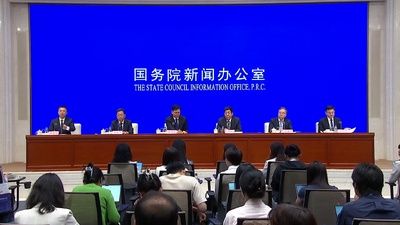
Beijing has categorically denied accusations of forced labour and coerced population transfers in the Xinjiang Uygur autonomous region, with senior government officials branding the allegations as lacking credibility. Chen Ruifeng, Minister of the National Ethnic Affairs Commission, made the emphatic rejection on Wednesday, stating that China's constitutional framework and domestic legislation explicitly prohibit all compulsory labour arrangements. His comments represent the latest in a series of robust defences against international criticism that has intensified scrutiny on labour practices across the western province.
The timing of Chen's remarks coincides with the imminent implementation of fresh legislation designed to strengthen worker protections. The Law on Promoting Ethnic Unity and Progress, which received approval on March 12, will take effect on July 1 and introduces comprehensive safeguards for employees engaging in cross-regional work. The statute specifically addresses rights protection and legal assistance mechanisms, underscoring Beijing's assertion that it maintains robust oversight of employment arrangements. These provisions effectively establish a legal framework that Chinese officials argue demonstrates commitment to protecting vulnerable workers rather than exploiting them.
According to Chen, individuals from Xinjiang who migrate for employment opportunities do so entirely of their own volition, motivated by personal aspirations to elevate household living standards and develop professional competencies. The official characterised international accusations of coercion as fundamentally misconceived, dismissing them as "extremely absurd and ridiculous." This language reflects the intensity of China's response to persistent international pressure, particularly from Western governments and human rights organisations that have documented patterns concerning workers' agency in the region.
Chinese authorities frame labour transfers from Xinjiang as part of a broader economic development strategy that respects individual preferences while expanding job availability and income prospects. The emphasis on voluntary participation suggests that Beijing views these programmes as mutually beneficial arrangements that address underemployment in rural areas whilst meeting labour demands in more developed urban centres and industrial zones. By positioning such transfers within a market-oriented framework, officials attempt to differentiate them from historical patterns of coerced migration in other contexts.
Economic indicators cited by the National Ethnic Affairs Commission provide the statistical foundation for Beijing's argument that Xinjiang's employment situation reflects prosperity rather than exploitation. Over the preceding five years, the region generated more than 2.39 million additional urban positions through diverse policy initiatives aimed at job creation. This expansion occurred alongside substantial agricultural worker mobility, with labourers making approximately 16.1 million work-related journeys beyond their natal communities. Such figures, if accurate, suggest significant internal labour market dynamism within Xinjiang.
Income growth metrics further support official claims of improving living standards across the province. Per capita disposable income in urban settings expanded at an average annual rate of 5.3 per cent, whilst rural household income increased at 8.1 per cent annually throughout the five-year measurement period. These growth trajectories, which exceed inflation rates in comparable regions, theoretically indicate that residents are capturing material benefits from economic activity and employment participation. For Malaysian observers monitoring regional development patterns, such income growth rates merit contextual assessment against broader Asia-Pacific economic trends.
The establishment of institutionalised fair employment policies and comprehensive labour rights protection mechanisms represents the centrepiece of China's rebuttal to forced labour allegations. According to Chen, Xinjiang has developed integrated systems designed to safeguard worker legal entitlements and ensure employment access for all able-bodied individuals seeking work. These structural arrangements theoretically eliminate the conditions that might otherwise facilitate coercive labour practices, though international observers remain sceptical regarding implementation effectiveness.
Chinese officials emphasise that their approach prioritises voluntary employment participation and dignified working conditions across all ethnic communities within Xinjiang. This framing positions labour mobility as an empowerment mechanism rather than administrative coercion, highlighting the agency of individual workers in deciding whether to pursue external employment opportunities. The rhetorical strategy attempts to recast labour transfers as a development tool benefiting workers themselves rather than serving primarily as a mechanism for resource extraction or demographic engineering.
For Southeast Asian readers and policymakers, the Xinjiang labour controversy carries significance beyond China's borders. Regional countries maintain complex economic and political relationships with Beijing whilst navigating international human rights expectations. Malaysia, in particular, has demonstrated measured diplomatic approaches when international tensions arise regarding labour practices and workers' rights, reflecting broader ASEAN principles of non-interference alongside growing concern for labour standards. The Chinese government's insistence that employment transfers remain voluntary and economically beneficial demonstrates how Beijing frames its governance of labour mobility, a pattern that Southeast Asian nations should monitor given increasing cross-border workforce movements throughout the region.
The persistent divergence between Chinese official accounts and international assessments of Xinjiang's labour situation reflects broader tensions between Beijing's sovereignty prerogatives and globalised human rights scrutiny. Whilst Chinese authorities emphasise constitutional protections and legislative frameworks, Western organisations and governments maintain that documentation reveals patterns inconsistent with genuine voluntariness. This gap between official rhetoric and external investigations suggests that resolving the dispute requires mechanisms transcending current diplomatic and media channels, potentially involving independent international verification that both sides might accept.

