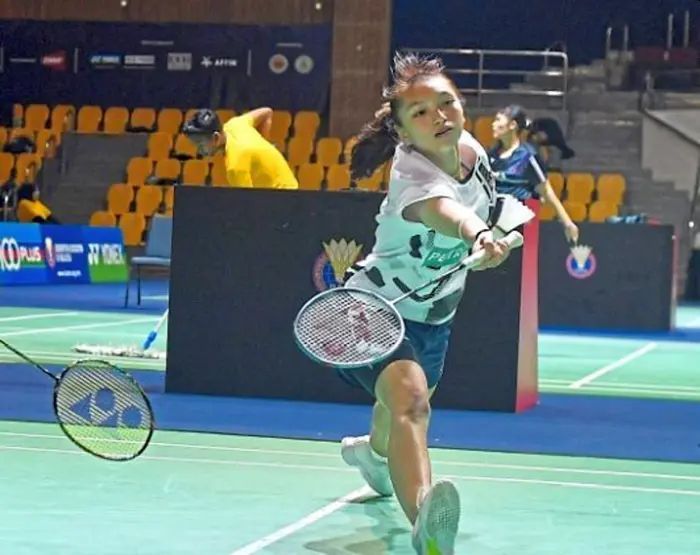
Nineteen-year-old Malaysian shuttler Noraqilah Maisarah Ramdan possesses the technical gifts that could propel her toward international stardom, yet her mixed doubles coach Nova Widianto cautions that raw talent alone will not guarantee a distinguished career. Speaking in Petaling Jaya, Widianto emphasised that the coaching team's primary focus extends well beyond refining strokes and court positioning—nurturing psychological fortitude and maintaining grounded temperament will prove equally crucial as Noraqilah navigates the pressures of professional badminton.
Having observed Noraqilah's development from her junior years, Widianto expressed confidence in her technical foundation while highlighting the often-overlooked dimension that separates good players from great ones. The coaching philosophy reflects a broader recognition within Malaysian badminton that talent abundance does not automatically translate into podium finishes or world rankings advancement. Widianto articulated concern that early success and surrounding praise can destabilise younger athletes mentally, potentially undermining their trajectory precisely when consolidation matters most. His commitment to managing this psychological dimension underscores a sophisticated understanding of athlete development that extends beyond conventional conditioning and training protocols.
Noraqilah has already demonstrated adaptability across multiple disciplines, a versatility increasingly rare in modern badminton's specialised environment. Her recent partnership with Ong Xin Yee produced a women's doubles title at the second leg of the Under-21 National Championship in Kuantan, showcasing her ability to perform effectively with different partners across varying match conditions. This flexibility has been particularly evident in her established pairing with Low Zi Yu, which reached the Australian Open quarter-finals and climbed to a career-best world ranking of No. 70 in women's doubles. Such achievements at the junior level carry genuine significance within Malaysian badminton circles, where the pathway from promising youth to sustainable elite performance remains notoriously unpredictable.
In the mixed doubles arena, Noraqilah's partnership with Loo Bing Kun has produced competitive results, reaching the second round at the Sydney tournament while occupying world No. 115. These parallel achievements across both women's and mixed doubles categories illustrate her technical range and competitive maturity, qualities that distinguish rising prospects from the broader cohort of talented players. The Malaysian badminton system has historically produced players capable of competing across multiple formats, yet maintaining world-class ranking points simultaneously in two disciplines increasingly requires elite-level dedication and training resources.
However, Widianto's assessment introduces a strategic tension that confronts many promising Malaysian shuttlers: the sustainability of competing across both women's and mixed doubles at the highest professional echelons. While he supports Noraqilah's current dual-competition approach during her younger years, when experimentation and exposure across formats builds comprehensive court awareness and tactical intelligence, he recognises that elite ambitions ultimately demand specialisation. This counsel reflects international badminton realities, where top-ranked players typically commit entirely to one discipline once their world ranking and tournament scheduling become sufficiently demanding.
The decision to eventually concentrate on either women's or mixed doubles will prove pivotal for Noraqilah's career trajectory. Widianto indicates that Olympic qualification aspirations—a logical goalpost for any athlete in her developmental phase—would necessitate focused dedication to a single event rather than energy distribution across categories. This distinction carries particular weight given Malaysia's strong historical performance in badminton at Olympic Games, where depth across multiple medal opportunities has defined national ambitions. Should Noraqilah harbour Olympic podium aspirations, the coaching staff's guidance suggests she will need to make this disciplinary choice within the coming years as tournament scheduling and training intensity escalate.
The Malaysian badminton ecosystem has traditionally excelled at identifying and developing junior talent, yet the conversion rate from promising youth player to sustained world-class performer remains modest. Widianto's emphasis on character building addresses this conversion challenge directly, suggesting that technical deficiencies rarely explain career stagnation so much as mental fragility and attitudinal inconsistency. His observation that Malaysia possesses numerous players with exceptional technical capacity implies that the limiting factor determining elite success increasingly resides in psychological resilience, maturity under pressure, and the capacity to maintain focus and composure across extended competitive campaigns.
The coaching philosophy articulated by Widianto reflects mature understanding of athlete development in contemporary badminton, where tournament schedules, media attention, and international competition intensity can overwhelm players lacking sufficient emotional stability. Noraqilah enters her prime competitive years during an era when Malaysian women's doubles remains globally competitive, yet male-female partnerships struggle to achieve consistent top-20 rankings. Her presence across both categories potentially positions her to contribute to either or both categories' results, depending on the choices the coaching staff and player eventually make collaboratively.
Looking forward, Noraqilah's career will likely turn less on her evident technical talents than on her capacity to absorb coaching guidance, process competitive setbacks constructively, and maintain perspective amid the provincial badminton world's tendency to elevate and subsequently abandon promising players. Widianto's mentoring approach, which prioritises foundational character development alongside incremental technical refinement, positions Noraqilah advantageously within Malaysia's coaching culture. Whether she ultimately becomes a women's doubles specialist, a mixed doubles competitor, or succeeds in maintaining viability across both formats, the psychological scaffolding now being constructed will substantially determine how sustainably she performs at elite international levels.

