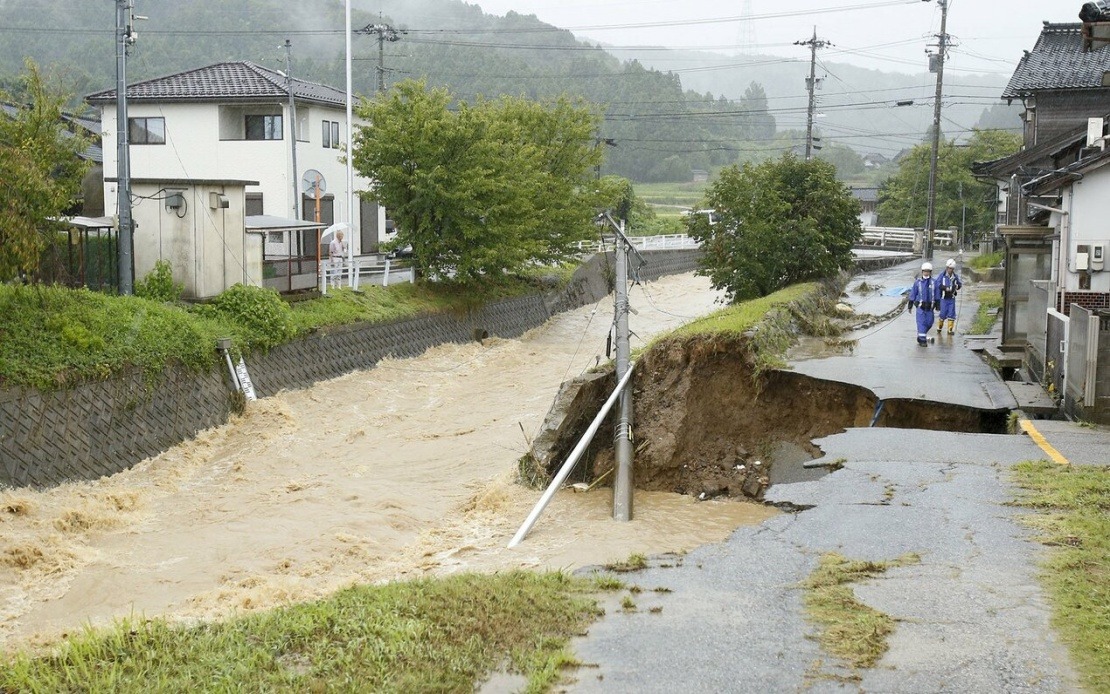
Japan's meteorological authorities activated their highest alert level on Thursday as relentless rainfall pounded central prefectures, unleashing a cascade of natural disasters across multiple municipalities. The Japan Meteorological Agency issued Level 5 warnings—signalling that calamity has either already struck or poses an imminent threat—for communities spanning Toyama and Ishikawa prefectures, triggering urgent evacuation directives affecting approximately 180,000 residents across five municipalities.
The affected areas included Himi in Toyama Prefecture and Hakui, Shika, Hodatsushimizu, and Nakanoto in Ishikawa Prefecture, each facing conditions described as potentially life-threatening. Local authorities urged residents to abandon their homes immediately and seek safer ground, whilst simultaneously warning of heightened risks from cascading earth movements. The decision to deploy the nation's most severe weather alert underscores the exceptional nature of the meteorological event unfolding across the region.
Intensity of the rainfall proved extraordinary by historical standards. Measurements recorded within a 12-hour window ending at 7.20 am documented precipitation exceeding 300 millimetres in both Himi and Hakui, whilst Hodatsushimizu received over 200 millimetres during the same period. These figures shattered previous records at each location, indicating a weather event of singular magnitude. The deluge transformed urban and rural landscapes alike, with reports from Himi describing rivers breaching their banks and numerous vehicles becoming immobilised beneath rising waters.
Emergency responders received numerous distress calls throughout the morning as motorists found themselves stranded in flooded areas. A firefighter based in Himi confirmed to news agencies that submerged vehicles dotted the landscape, creating multiple rescue scenarios simultaneously. The scale of inundation strained local emergency services, though authorities maintained coordination through established warning systems. Despite the widespread destruction and dangerous conditions, the Ishikawa prefectural government reported no confirmed fatalities at the time of initial assessments.
The meteorological conditions generating this crisis stem from an advancing atmospheric system originating from the Sea of Japan. A distinct weather front extended eastward through northern and eastern Japan, with forecasters predicting its southward progression through Friday. This movement coincided with the arrival of cold air masses and a trough of low pressure, creating an unstable atmospheric configuration. The Japan Meteorological Agency predicted that these conditions would persist, with projections indicating continued heavy precipitation throughout the affected region.
Rainfall forecasts through midday Friday suggested the crisis would intensify rather than diminish in the immediate term. Meteorologists anticipated up to 200 millimetres of additional rain in the Hokuriku region, whilst the Kanto-Koshin and Tokai areas could experience precipitation reaching 150 millimetres. These predictions meant that waterlogged terrain would face further saturation, compounding the risk of additional landslides as soil cohesion continued deteriorating. Neighbouring Niigata Prefecture also experienced heavy rainfall, expanding the geographic footprint of the weather emergency.
This catastrophe occurred just weeks after a similar Level 5 warning triggered devastation in Chiba Prefecture, located closer to Tokyo. That earlier event in August produced catastrophic flooding that claimed 13 lives across multiple municipalities. The flooding rendered approximately 2,500 vehicles inoperable at peak displacement, immobilising transportation networks and hampering rescue operations. The comparative recency of that disaster heightened public anxiety and government responsiveness as communities in central Japan faced comparable threats.
For Malaysian and Southeast Asian observers, Japan's crisis carries instructive significance regarding monsoon and tropical storm impacts. Whilst Malaysia experiences different precipitation patterns driven by Southwest and Northeast monsoons rather than Japan's frontal systems, the scale of infrastructure disruption and population displacement offers sobering context. The rapid transformation of Japanese urban areas into disaster zones—despite that nation's advanced warning systems and disaster preparedness infrastructure—illustrates the formidable power of extreme weather events. Malaysia's own vulnerability to flash flooding, particularly in urban Klang Valley and Johor regions, underscores the relevance of Japanese emergency management responses to Southeast Asian risk assessment.
The evacuation of 180,000 people from five municipalities represents a logistical undertaking of considerable complexity. Coordinating shelter provision, medical services, and supply chains for such populations tests governmental capacity even in developed nations possessing sophisticated emergency management frameworks. Japanese authorities' activation of multiple response layers—from local prefectural government to national meteorological coordination—demonstrates institutional mechanisms that regional governments might examine for adaptation to their own hazard profiles. The speed of decision-making in implementing maximum-level alerts reflects systems calibrated by decades of seismic and typhoon experience.
The economic implications of flooding across central Japan extend beyond immediate casualty concerns. Industrial disruption in prefectures containing manufacturing facilities and agricultural infrastructure represents significant economic exposure. Japanese supply chains, already under pressure from geopolitical factors and pandemic-related constraints, face potential further complications if transportation corridors remain impassable or if productive facilities require extended shutdown for recovery operations. For Malaysian businesses maintaining Japanese supply relationships or engaged in regional manufacturing networks, operational disruptions cascading from weather events in Japan represent tangible risk factors warranting contingency planning.
Looking forward, the continuation of forecast rainfall through Friday means that rescue and assessment operations face significant environmental obstacles. Rising water levels may inhibit search operations for missing persons whilst simultaneously creating new hazard zones. Local authorities emphasised that residents must comply with evacuation orders without delay, as conditions would likely worsen before improving. The compressed timeline between alert issuance and predicted peak rainfall intensity compressed reaction opportunities, highlighting the importance of pre-established evacuation protocols and public familiarity with emergency procedures—elements that Japanese communities possess through mandatory disaster preparedness training implemented across schools and workplaces.

