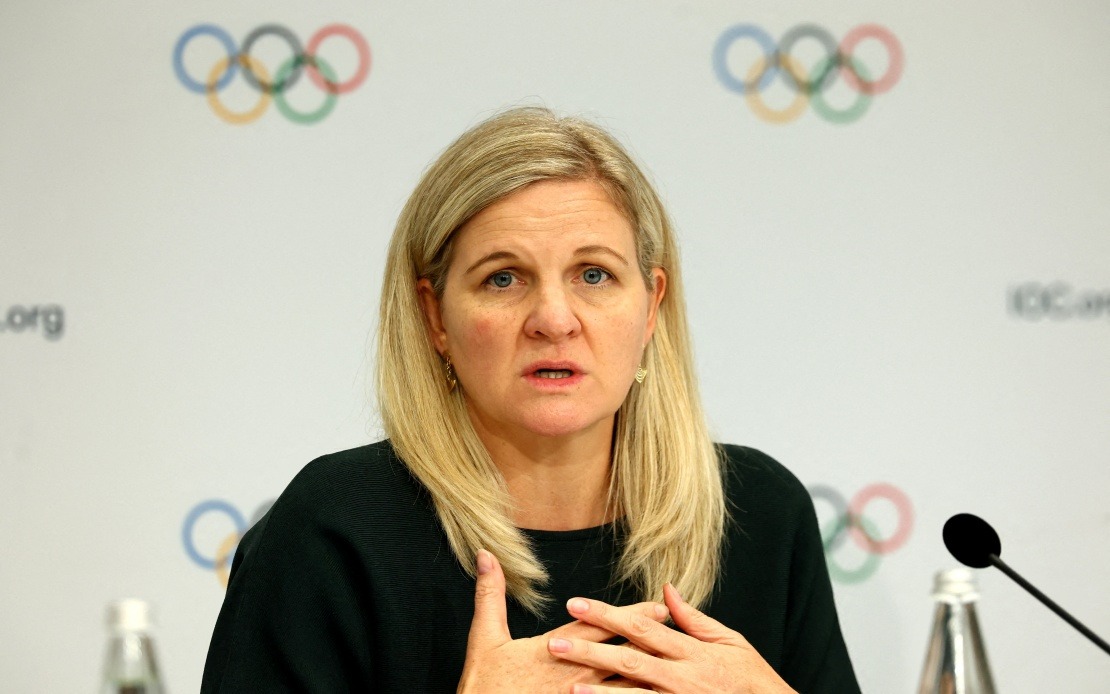
International Olympic Committee President Kirsty Coventry has confirmed that the organisation is prepared to address potential legal challenges should United States President Donald Trump attempt to influence the 2028 Los Angeles Olympic Games. Speaking at a press conference in Moscow on Tuesday, Coventry indicated that an ad hoc division of the Court of Arbitration for Sport would serve as the appropriate forum for resolving such disputes if they arise during the Games.
The IOC's proactive stance reflects growing concerns about political interference in international sporting events. Coventry's comments suggest that Olympic officials are taking precautions to insulate the Games from external political pressure, establishing clear institutional pathways for addressing complaints. The temporary judicial division she referenced operates specifically during competition periods, enabling rapid resolution of disputes that might otherwise disrupt the sporting programme or threaten the integrity of competition.
The remarks came in the context of a recent football controversy that has drawn international attention. On July 5, FIFA's disciplinary committee reversed a red card decision against United States national team player Folarin Balogun, clearing him to participate in a crucial Round of 16 World Cup match against Belgium. Trump subsequently confirmed that he had personally contacted FIFA after the initial suspension, expressing gratitude for what he characterised as the organisation's correction of "a great injustice."
The incident raised eyebrows among sports governance observers, as it illustrated how political figures at the highest level might seek to influence international sporting outcomes. Belgium formally protested the reversal, but the decision stood, and Balogun played in the match. The Americans ultimately lost the contest decisively, with Belgium securing a 4-1 victory, though the political dimensions of the dispute overshadowed the athletic result.
For Southeast Asian readers, the implications of this governance question are significant. The region hosts numerous international sporting competitions, and many nations participate in Olympic Games where the neutrality of adjudication remains essential. Malaysia, as part of the IOC family and a nation with growing soft power ambitions, has a vested interest in ensuring that Olympic integrity is protected from political manoeuvring. The establishment of robust institutional safeguards at the Games serves the interests of all participating nations, regardless of their geopolitical standing.
Coventry's confirmation of CAS readiness demonstrates that the Olympic movement has learned from historical instances where political considerations threatened sporting competitions. The Cold War era saw numerous examples of boycotts and politically motivated sanctions affecting Games, and modern Olympic leadership has moved toward fortifying the independence of competition and adjudication. The existence of a dedicated ad hoc division means that disputes can be addressed swiftly without requiring lengthy external litigation that might compromise the scheduling and conduct of competition.
The Court of Arbitration for Sport itself operates as an independent international institution, though its relationship with state power remains complex. By positioning CAS as the primary mechanism for resolving potential interference claims, the IOC creates a buffer between political pressure and Olympic operations. This institutional architecture reflects a broader trend in international sports governance toward establishing neutral arbitration systems that transcend national interests, even when those interests come from powerful states.
The football controversy involving Balogun highlighted tensions between FIFA's regulatory authority and presidential influence. Trump's direct intervention and subsequent public acknowledgment of that intervention set a precedent that concerned international sports administrators. The ability of a sitting head of state to reportedly influence disciplinary outcomes through personal contact raises fundamental questions about the autonomy of sports organisations and their resistance to political pressure.
Looking ahead to 2028, the Los Angeles Olympics will unfold in a domestic American context, which introduces distinctive considerations. Host nations naturally exercise substantial influence over competition venues, security arrangements, and operational logistics. However, the competitive and adjudicative elements must remain insulated from governmental control to maintain international confidence in the Games. Coventry's reassurance that CAS stands ready represents an attempt to draw that critical line.
For international sports governance more broadly, the establishment of clear institutional protocols for addressing interference claims represents a maturation of Olympic administration. Southeast Asian nations competing in Los Angeles can have confidence that disputes involving their athletes will be heard by independent arbitrators rather than subject to political pressure. This assurance becomes particularly important given the high stakes involved in Olympic competition and the potential for controversy to erupt during high-profile events.
The CAS ad hoc division typically addresses matters ranging from doping violations to eligibility disputes to disciplinary matters. Extending its purview to cover political interference represents a logical evolution of its mandate. The division's temporary nature during Games time ensures rapid turnaround on decisions without the delays that might accompany permanent court structures operating year-round.
Coventry's public acknowledgment of these safeguards also serves a signalling function to other state actors. By confirming that institutional mechanisms exist to address interference, the IOC discourages potential overreach and demonstrates the organisation's commitment to autonomy. This assertion of independence, backed by clear procedural frameworks, reinforces international norms around sporting competition free from political manipulation.
As the Olympic movement prepares for Los Angeles, the question of political interference remains relevant across multiple dimensions. From athlete eligibility to venue decisions to media access, political considerations can potentially affect competition in subtle and overt ways. The IOC's emphasis on CAS as the ultimate arbiter of disputes demonstrates confidence in international law and arbitration as tools for protecting Olympic integrity.

