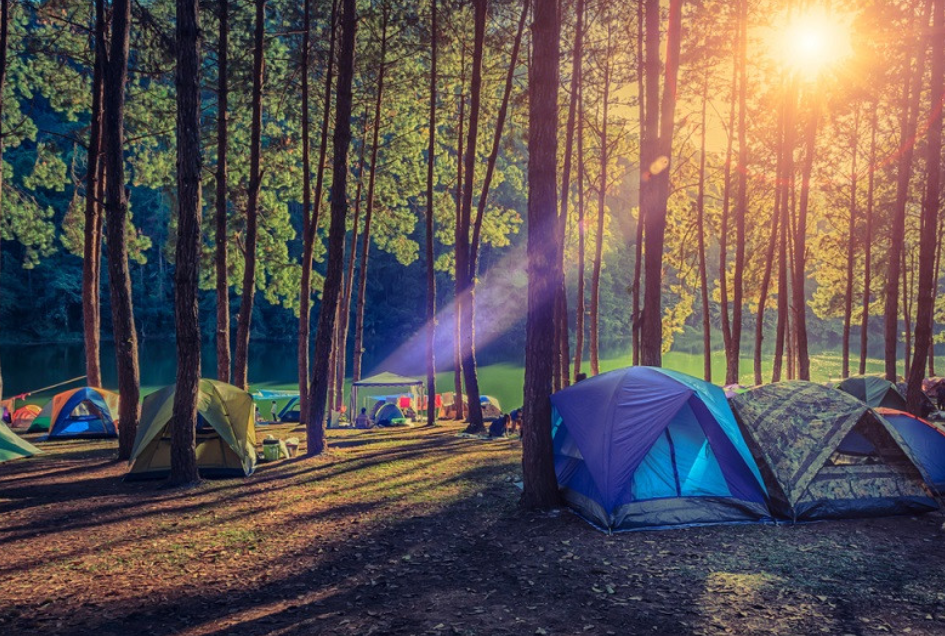
A family of four who died during a camping trip in Temanggung Regency, Central Java, lost their lives to carbon monoxide poisoning, according to investigators from the Central Java Police. The conclusion came after a comprehensive inquiry into the May 27 deaths of Muhamad Ali Munawar, 52, his wife Maghfirah, 43, and their sons Bagas Amar Hakiki, 21, and Alvino Evan Hakim, 16, whose bodies were discovered unresponsive inside their tent by a campground attendant who came to remind them of checkout procedures. The tragic incident sparked considerable public concern and debate across Indonesia, with widespread speculation about the circumstances and whether criminal involvement played a role.
Investigators ruled out multiple possible causes before arriving at their conclusion. Central Java Police Director of Criminal Investigation Sr. Comr. Muhammad Anwar Nasir explained that forensic teams tested all food the family had consumed, including prepared but uneaten breakfast items, and detected no toxic substances in any samples. Authorities also scrutinised the victims' mobile phones for any indication of suicide intentions, finding no messages, keywords, or digital evidence suggesting self-harm or premeditated harm toward one another. The absence of physical injuries on the bodies and the orderly state of the tent interior further convinced investigators that foul play could be excluded from consideration.
The critical breakthrough emerged from autopsy findings and laboratory analysis. Blood and urine samples from all four victims revealed significantly elevated concentrations of carbon monoxide, a colourless, odourless gas that proves exceptionally difficult to detect without specialised monitoring equipment. The gas is particularly dangerous in enclosed environments where it accumulates silently, as victims often remain unaware of their exposure until losing consciousness. Nasir confirmed that the family's deaths resulted from fatal asphyxiation triggered by carbon monoxide inhalation, concluding the investigation based on these forensic results.
Police determined that the lethal gas originated from charcoal briquettes burned inside a clay stove that the family brought into their tent. According to Temanggung Police Chief Senior Adjunct Commissioner Zamrul Aini, campground staff had explicitly warned the family against using the stove indoors due to fire hazard and respiratory dangers. Evidence recovered from the family's mobile phones, including photographs and videos, documented them using the stove inside the tent not only for warmth but also for roasting bananas. Investigators believe the family initially operated the stove outdoors for barbecuing, then transported it indoors while charcoal briquettes still smouldered, intending to use it as a heat source while sleeping in the sealed tent throughout the night.
To validate their hypothesis about how dangerous carbon monoxide levels could accumulate so rapidly, police conducted controlled experiments using identical equipment and tent configurations. In the first simulation, investigators positioned the stove on the tent's porch with the entrance partially open to permit some air circulation. Despite this ventilation, carbon monoxide concentrations inside the tent exceeded 200 parts per million within approximately one hour—already substantially higher than the World Health Organization guideline of approximately 26 ppm recommended for one-hour indoor exposure. The results demonstrated that even partial ventilation proved inadequate to prevent hazardous gas buildup.
A second experiment examined conditions more closely matching what occurred on the night of the family's deaths. When researchers placed the stove inside a completely sealed tent, carbon monoxide levels surged dramatically to roughly 2,000 ppm over the same timeframe. These experimental results provided compelling evidence that the family, occupying a fully enclosed tent overnight with a smouldering charcoal stove, would have been exposed to carbon monoxide concentrations far exceeding lethal thresholds. The invisible, odourless nature of the gas meant the victims likely experienced early symptoms such as headaches and dizziness while sleeping, progressing to unconsciousness before death, without any opportunity to recognise or respond to the danger.
The tragic incident has broader implications for public safety across Indonesia and Southeast Asia more widely. Carbon monoxide poisoning has claimed at least ten lives across Indonesia in recent weeks through various exposure routes, including improper use of diesel generators operated indoors for power and individuals sleeping inside vehicles with air conditioning systems running continuously. Many Malaysians and regional residents engage in similar camping and outdoor recreational activities, often under circumstances where makeshift heating or cooking arrangements might seem convenient but present serious hidden risks. The case serves as an urgent reminder that carbon monoxide dangers are not limited to industrial or urban settings but extend to recreational contexts where families and groups might lack awareness of proper safety protocols.
The victims' case underscores how rapidly and silently carbon monoxide can accumulate in enclosed spaces, even when a heat source appears modest and manageable. Charcoal burning represents a particularly deceptive hazard because the process generates minimal visible smoke, allowing occupants to believe conditions remain safe while toxic gas concentrations escalate undetected. In Malaysia, where monsoon seasons and cooler highland areas attract camping enthusiasts, similar incidents could occur if visitors or guides rely on improvised heating methods without understanding the chemical properties of carbon monoxide or the necessity for continuous air exchange in sleeping areas. Educational campaigns and safety guidelines specific to camping operations remain limited in the region, leaving many operators and recreational users vulnerable to unknowingly repeating this tragedy.
Authorities across Central Java and Indonesia have responded to the investigation's conclusions by emphasising the importance of proper campsite management and visitor safety briefings. The case demonstrates that even clear verbal warnings from staff may prove insufficient if visitors lack genuine understanding of the chemistry and lethality of carbon monoxide exposure. Future prevention efforts should incorporate visual hazard communications, concrete examples of dangerous scenarios, and standardised equipment that eliminates the possibility of indoor charcoal burning altogether. Southeast Asian tourism and recreational authorities would benefit from adopting enhanced safety standards and public education initiatives addressing carbon monoxide poisoning specifically, alongside traditional emphasis on fire prevention and first aid training.