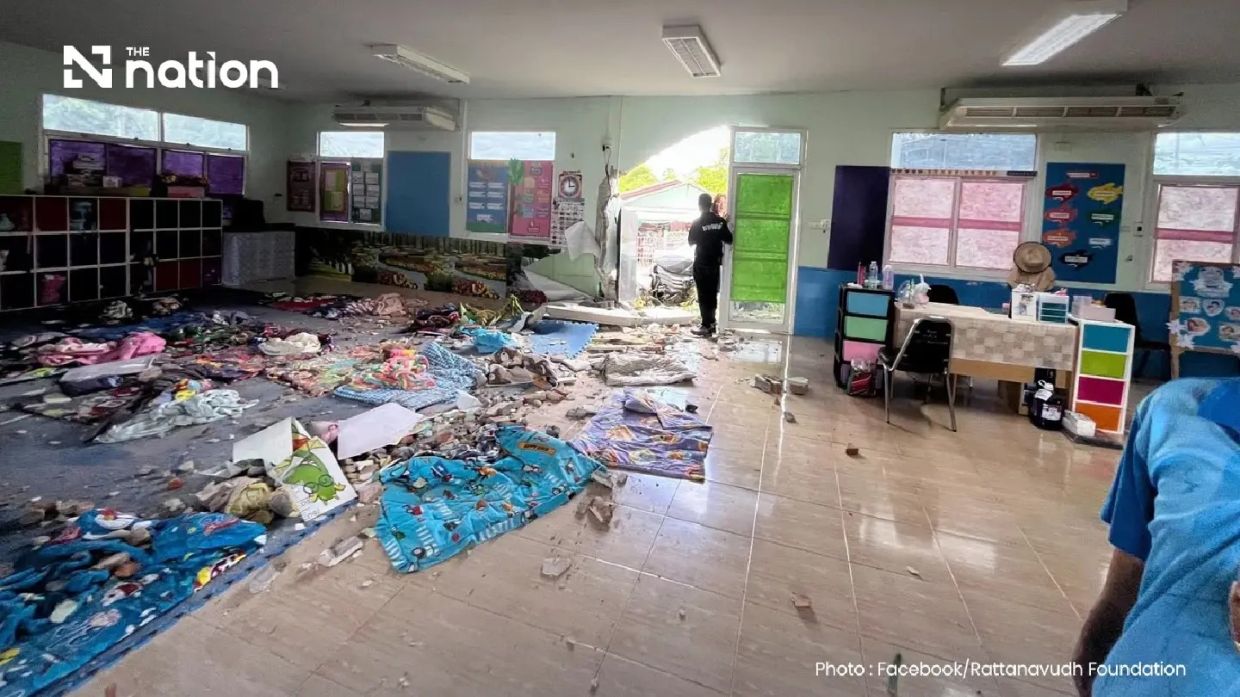
A harrowing accident unfolded in Kanchanaburi on Friday afternoon when a privately-owned saloon car suddenly lost control and ploughed into the Ban Nong Song Ton Child Development Centre, leaving 15 of the 34 children present with injuries ranging from head wounds to cuts from structural debris. The incident serves as a stark reminder of childcare safety vulnerabilities in the region and has prompted discussions about facility design and vehicle barriers in Thai schools and nurseries.
The collision occurred at a particularly vulnerable moment, as the vehicle struck directly into a classroom where young children were in the midst of their afternoon nap. Emergency responders arrived quickly at the scene in Mueang Kanchanaburi district, where personnel from the Rattanavudh Foundation and Phithak Kan Foundation immediately began assessing injuries and administering first aid to the affected children. The impact damaged the building's structural integrity and destroyed furnishings within the classroom, compounding the trauma for children who were roused from sleep by the violent intrusion.
Among the 34 children attending the centre that day, 19 remained uninjured and safely separated from the affected classroom. The 15 injured children sustained primarily head injuries and wounds inflicted by sharp fragments and debris scattered throughout the impact zone. While some children experienced severe physical trauma, psychological shock was evident across the group, as young pupils struggled to comprehend the terrifying event that had unfolded so suddenly during what should have been a routine rest period.
Emergency protocols were activated immediately, with rescue teams clearing pathways through Mueang Kanchanaburi district to expedite transport of the injured children to Phaholpolpayuhasaena Hospital. Local residents cooperated by making way for emergency vehicles, recognizing the critical nature of the situation. Medical personnel at the hospital conducted thorough examinations of all 15 injured children, who were subsequently confirmed to be in stable condition with no life-threatening injuries reported.
The incident raises significant questions about safety infrastructure at childcare facilities across Thailand and Southeast Asia more broadly. Many such centres operate in close proximity to roadways without adequate physical barriers to prevent vehicles from entering play and learning areas. The accident at Ban Nong Song Ton Child Development Centre demonstrates how quickly an out-of-control vehicle can penetrate what parents assume are secure environments for their youngest and most vulnerable children.
Investigations into the cause of the vehicle's loss of control remain ongoing, with authorities examining whether mechanical failure, driver error, or medical emergency behind the wheel contributed to the crash. Understanding the precise circumstances will be essential for implementing preventative measures at other facilities, as well as for informing national safety standards governing childcare centre design and operation throughout Thailand.
The rapid response of rescue organizations and hospital staff undoubtedly prevented what could have been a far more catastrophic outcome. The Rattanavudh Foundation's presence and swift action, combined with the Phithak Kan Foundation's support, exemplified the importance of well-coordinated emergency response networks in populated areas. However, the incident underscores that reactive emergency preparedness, while crucial, cannot substitute for proactive safety measures designed to prevent such accidents from occurring in the first place.
For parents and educators across Thailand and the wider Southeast Asian region, the Kanchanaburi incident serves as a troubling reminder of safety gaps in childcare infrastructure. Many facilities, particularly in smaller towns and provincial areas, lack the modern security features increasingly seen at international schools, such as reinforced perimeter barriers, bollards, or controlled vehicle access points. The financial constraints many non-profit and community-run childcare centres face often mean such safety upgrades are considered luxury additions rather than essential requirements.
The fortunate outcome in this case—with all children confirmed safe and no fatalities reported—must not obscure the serious safety questions it raises. Moving forward, Thai authorities and childcare operators should examine facility layouts, assess proximity to roadways, and consider implementing physical barriers and vehicle restriction measures. Regional education ministries may also need to revisit building codes and safety standards specific to early childhood development centres, ensuring they address vehicle intrusion risks alongside traditional concerns such as fire safety and emergency evacuation procedures.
For Malaysian readers, while the incident occurred across the border, it carries direct relevance to childcare safety standards in Malaysia. Similar facilities throughout Malaysian towns and cities may face comparable vulnerabilities, particularly those located near residential roads or in areas with limited traffic management infrastructure. The accident should prompt Malaysian parents to inquire about safety measures at their children's schools and centres, encouraging facility operators to conduct comprehensive safety audits and invest in appropriate protective infrastructure where needed.

