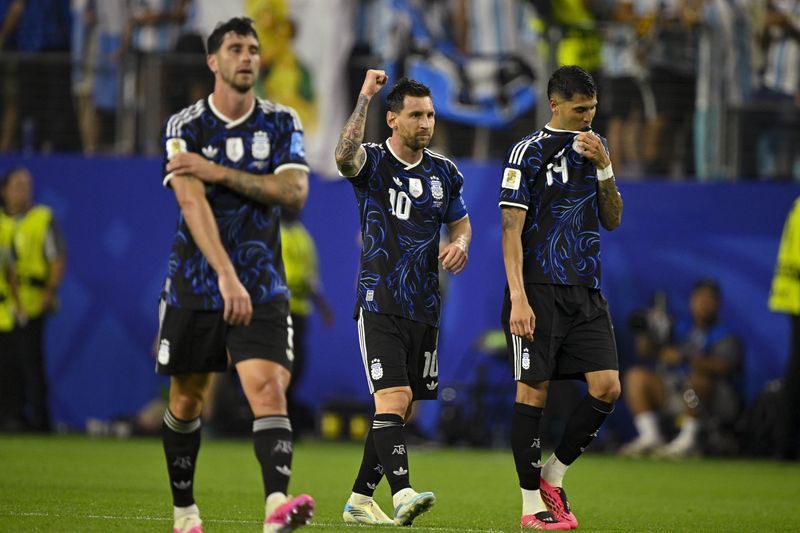
Cape Verde's unprecedented World Cup campaign has been built on an unwavering refusal to be intimidated by bigger names, and that philosophy will not waver when the African nation confronts Argentina in a knockout fixture on Friday. Coach Bubista reaffirmed his team's commitment to playing with courage and organisation, insisting that their qualification and progression to the knockout rounds vindicate their bold tactical approach in what amounts to a career-defining moment for the island nation's football programme.
The consistency of Bubista's messaging throughout the tournament has become a hallmark of Cape Verde's surprising run. Rather than adopting defensive caution typical of underdogs, the team has demonstrated attacking intent in each group-stage encounter. This philosophy bore fruit in draws against established footballing powers Spain and Uruguay, alongside a stalemate with Saudi Arabia—results that defied pre-tournament expectations and secured Cape Verde's advancement to the last 16 as runners-up in their group. For a nation ranked 67th in the FIFA world standings at the tournament's outset, these achievements represent a seismic shift in continental football dynamics and challenge conventional wisdom about the hierarchy of World Cup competition.
At a media briefing in Miami Stadium, Bubista articulated the singularity of purpose driving his preparation. The former centre-back emphasised that Cape Verde's primary focus remains qualification rather than any secondary objective. This clarity of vision extends to how the team approaches their Argentine opponents—not as an impossible barrier, but as the next challenge in a tournament they have earned the right to navigate on merit. The framing is significant; Bubista positioned the match not as a David-versus-Goliath narrative in which heroic underdog status suffices, but rather as a genuine competitive encounter where Cape Verde possesses legitimate aspirations for advancement.
The coach's insistence that his team deserves respect reflects a deeper principle embedded in Cape Verde's campaign. They did not stumble into the World Cup; their qualification was earned through rigorous competitive processes. That foundation provided psychological licence to perform without apology or diminished expectations during group play. Bubista's words suggest a team confident in their preparation and organisational capacity, unburdened by the inferiority complex that might paralyse lesser sides confronting world-ranked opponents. This mindset represents a significant evolution in how smaller football nations approach tournament football, moving beyond mere participation toward genuine ambition.
Regarding Lionel Messi specifically, Bubista elected not to construct tactical plans around neutralising the Argentine superstar in isolation. Instead, he pivoted toward a systems-based philosophy that respects Argentina's collective threat while maintaining Cape Verde's defensive and structural integrity. This approach demonstrates tactical sophistication; rather than committing excessive resources to shadowing one player, the team will attempt to deny space and passing options across the pitch. The strategy acknowledges that Argentina's potency stems not from Messi alone but from a well-balanced squad orchestrated by coach Lionel Scaloni, whose rebuilding project has restored the team's competitive standing on the world stage.
Cape Verde's journey to this moment carries particular significance for African football. The continent's representation at World Cups has historically been limited, and those teams that do qualify often find themselves in preliminary rounds or struggling against elite opposition. Cape Verde's performance, however modest the ultimate outcome may be, provides inspiration to smaller nations within the confederation and demonstrates that size, population, and historical pedigree need not determine tournament outcomes. The team's willingness to compete with intensity against Spain and Uruguay sends a message throughout African football that organised, disciplined approaches can yield results against presumed superiors.
Bubista's emphasis on maintaining team identity while adapting to opponents reflects a nuanced understanding of tactical football. Rather than wholesale changes designed to nullify Argentina, Cape Verde will attempt to impose their pattern of play while remaining responsive to what unfolds on the pitch. This balanced approach—neither abandoning core principles nor ignoring opposition strengths—suggests a coaching mind comfortable with ambiguity and complexity. For Malaysian readers accustomed to regional tournament football, this model offers parallels to how Southeast Asian sides approach qualification campaigns, where resourcefulness and organisational discipline frequently compensate for technical limitations.
The broader implications of Cape Verde's campaign extend beyond the immediate match. Should they prevail or draw against Argentina, it would further disrupt established hierarchies within international football and raise uncomfortable questions about the gap between ranked elite sides and rising competitors. Conversely, an Argentine victory would likely be celebrated as restoration of natural order rather than recognition of Argentina's superior quality. This asymmetry in how results are interpreted reveals enduring assumptions about which nations deserve respect in World Cup competition. Cape Verde's entire campaign has been an exercise in challenging those assumptions through performance rather than rhetoric.
Bubista's repeated invocation of humility alongside ambition strikes a careful balance in team messaging. The coach is neither diminishing Cape Verde's prospects nor suggesting they are inevitable victors. Instead, he is positioning his team as legitimate competitors who have proven their ability to function at World Cup level. This framing protects against overconfidence that might breed complacency while simultaneously rejecting defeatist narratives that would undermine team confidence. For a player group competing in only their second World Cup appearance, such psychological management becomes crucial to sustaining performance across matches of this magnitude.
The match represents a watershed moment not only for Cape Verde but for broader conversations about football development and talent distribution globally. If the team can exit the tournament having secured scalps against elite opposition, it validates investment in coaching infrastructure and player development pathways. African federations and emerging football nations watching Cape Verde's progress will draw tactical and philosophical lessons about competing without accepting predetermined outcomes. The precedent being set, regardless of Friday's result, will influence how smaller nations approach major tournaments for years to come, potentially reshaping competitive dynamics within international football.

