Cape Verde's remarkable World Cup journey reaches a critical juncture on Friday when the African island nation faces Argentina in the Round of 32, a matchup that on paper appears brutally one-sided yet has galvanised the squad with genuine belief in their capacity to achieve an improbable victory. The team's progression from their opening match against Spain and subsequent encounter with Uruguay, culminating in qualification despite being one of the tournament's smallest participating nations, has fundamentally shifted perceptions about what the squad can accomplish when competing against the world's elite.
Assistant coach Humberto Bettencourt articulated the team's mindset during a media briefing at their Tampa training facility, dismissing statistical analysis as irrelevant to their ambitions. The Cape Verdean coaching staff has internally rejected the narrative of inevitable defeat, instead emphasising that football outcomes depend entirely on execution within the match itself rather than pre-match probability calculations. Bettencourt's statements reflect a strategic approach that prioritises psychological resilience and tactical discipline over acknowledging the perceived gulf in quality between the two sides.
The magnitude of Cape Verde's underdog status cannot be overstated. As the least densely populated nation ever to reach the knockout rounds of a World Cup, their presence in the later stages represents a genuine disruption to traditional tournament narratives dominated by established powerhouses. The achievement has transcended sporting significance for the island nation, elevating global awareness of Cape Verde and generating unprecedented domestic pride that extends far beyond football enthusiasts to encompass the broader population.
Cape Verde's squad composition reflects the diaspora patterns that have characterised the nation's modern history. The team includes players born across multiple continents—the Netherlands, Portugal, France, the United States, and Ireland—a demographic reality that underscores the complex relationship between national identity and international football representation. Notably, a substantial player contingent was born in Argentina itself, creating an intriguing layer of personal connection between the competing sides that complicates the straightforward narrative of continental rivals.
Bettencourt's tactical philosophy regarding Argentina's most dangerous asset, Lionel Messi, demonstrates sophistication beyond crude man-marking schemes. Rather than deploying resources to shadow Messi individually, Cape Verde intends to maintain structural integrity and collective organisation, monitoring the combinations and spatial patterns that Argentina typically employs to create attacking opportunities. This approach suggests technical awareness of how Messi operates within Argentina's overall system rather than treating him as an isolated threat requiring dedicated defensive assignment.
The Cape Verdean coaching staff has explicitly rejected any suggestion of fundamentally altering their established playing style to neutralise Argentina. Bettencourt indicated that consistency in approach remains preferable to desperate tactical gambles, reflecting confidence that their familiar patterns and principles can generate competitive moments against even the tournament's reigning champions. This commitment to stylistic continuity may indicate either strategic conviction or perhaps necessary pragmatism given the limited preparation time available.
Injury concerns present a complication to Cape Verde's team selection. Telmo Arcanjo, a midfielder whose technical abilities have contributed significantly to the team's cohesion and ball retention, remains uncertain for the Argentina fixture owing to a leg injury that prevented full participation in recent training sessions. The potential absence of such a key creative player would represent a meaningful loss given his functional importance to Cape Verde's attacking structure and build-up play.
Conversely, the return to availability of left back Sidny Lopes Cabral provides positive team news. Cabral completes his suspension following yellow card accumulation during the group stage matches against Spain and Uruguay, meaning Cape Verde will have full squad depth restored for this knockout encounter. The reintegration of a combative defensive player with established tournament experience offers marginal tactical flexibility and resilience in defensive moments.
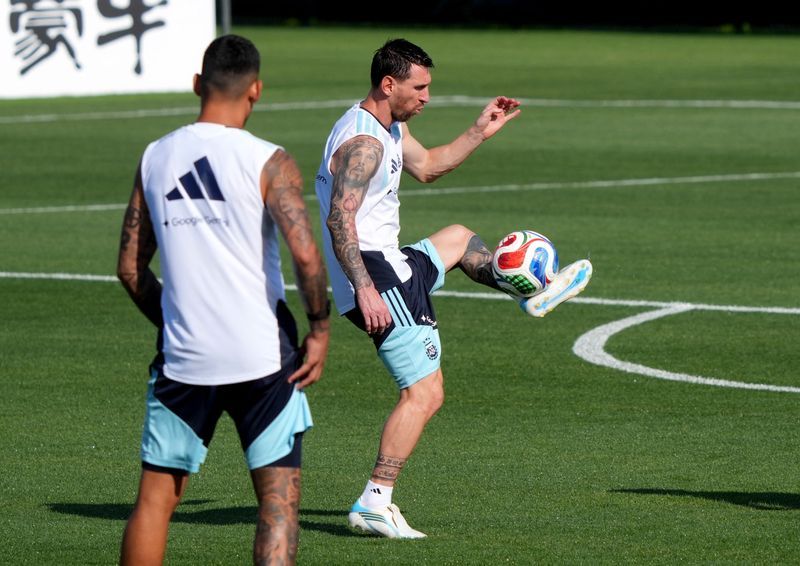
Argentina enters the knockout stage as the tournament's only undefeated team, having maintained a perfect three-win record throughout their group-stage campaign. Coach Lionel Scaloni has signalled his intention to restore Lionel Messi to the starting eleven after deploying him as a substitute in the final group match against Jordan. Messi's impact off the bench proved decisive, with the Argentine superstar scoring his sixth tournament goal during Argentina's 3-1 victory, demonstrating his capacity to change matches even when entering late.
Scaloni faces meaningful selection decisions beyond Messi's positioning, given Argentina's depth of attacking talent and the requirement to construct a formation specifically designed to penetrate Cape Verde's defensive shape. The coaching staff must identify which personnel combinations best suit the tactical demands of breaking down a compact defensive unit while simultaneously avoiding complacency against opponents that, despite their underpowered reputation, have already demonstrated an ability to extract valuable results against significantly higher-ranked opponents.
The broader context of this encounter extends beyond the immediate match result. For Cape Verde, any positive outcome or even competitive display against Argentina would reinforce the legitimacy of their tournament presence and validate the pathway they have followed to reach this stage. For Argentina, anything less than a convincing victory risks becoming a cautionary tale about underestimation, particularly given the tournament's demonstrated capacity to produce shocking upsets that fundamentally reshape tournament narratives and standings.

