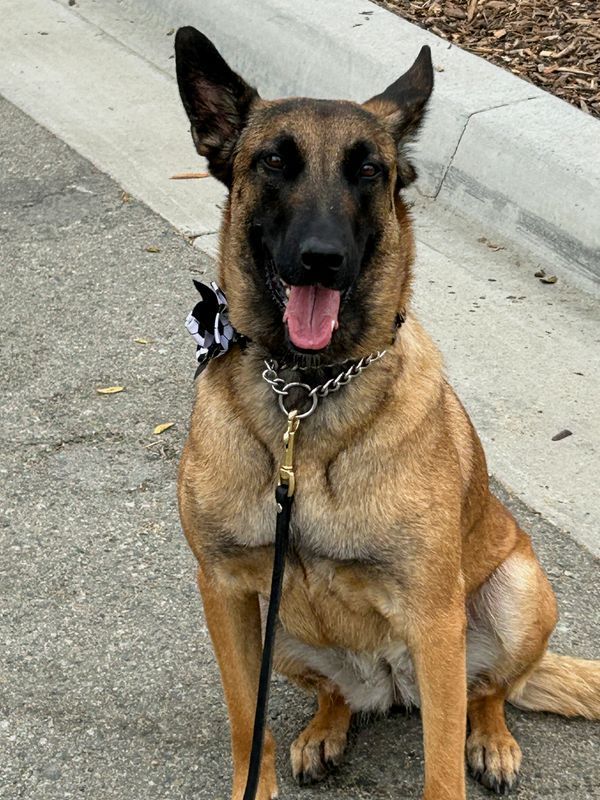
Security personnel and their canine partners have become the frontline defence at World Cup stadiums across North America, with detection dogs positioned at entrances and checkpoints throughout the tri-nation tournament. Kali, a five-year-old Labrador Retriever stationed at Los Angeles Stadium, exemplifies the quiet but critical role these animals play in preventing dangerous items from entering venues. Trained to detect explosives, firearms, and other contraband, these dogs provide both practical security screening and a visible deterrent to would-be threats, operating as the first of multiple security layers protecting millions of fans attending matches.
The scale of the World Cup co-hosted by the United States, Canada, and Mexico has required an unprecedented mobilisation of canine resources across the three nations. With matches staged at 16 different stadiums, security operations have extended far beyond the playing grounds themselves to encompass training facilities, team hotels, transportation routes, and vast perimeters surrounding each venue. This geographic dispersion, spanning multiple countries and time zones, has created logistical challenges unlike any previous sporting event. Allied Universal Enhanced Protection Services, which provides the largest contingent of private detection dogs in the United States, has deployed approximately 300 of its 1,000 dog teams to World Cup venues alone, supplemented by federal, state, and local law enforcement canines.
The geopolitical context surrounding this tournament has intensified security concerns substantially. The tournament occurred during a period of elevated tensions between the United States and Iran, with Iran's national team competing in group stage matches held on American soil at Los Angeles Stadium. Beyond bilateral tensions, the Trump administration had strained diplomatic relations with numerous countries participating in the tournament, creating multiple potential flashpoints. Beyond international relations, security planners also contended with known inter-country animosities between competing teams and regional instability in the host nations themselves, including cartel violence in Mexico that had flared months before the tournament commenced. Large-scale political protests materialised outside stadium entrances during Iran's matches, adding another layer of complexity to the threat assessment.
Glen Kucera, president of Allied Universal Enhanced Protection Services, articulated how such geopolitical dimensions fundamentally alter security calculations. The presence of politically contentious matchups and large organised protests substantially elevates threat levels for event organisers, requiring enhanced protocols and increased personnel deployment. Security planners must anticipate not merely criminal or terrorist threats but also the possibility of politically motivated disruptions or violence. The Iran matches presented particularly acute challenges, with the Iranian national team required to remain based in Mexico, flying into the United States only shortly before matches and departing immediately afterward. This compressed schedule created constant scheduling adjustments throughout the tournament and necessitated coordinated security responses across multiple jurisdictions and international borders.
The detection dogs themselves represent a carefully considered strategic choice in balancing security effectiveness with public perception. Security organisers deliberately selected friendly, approachable breeds like Labrador Retrievers rather than more intimidating varieties such as German Shepherds. This decision reflects awareness that security dogs can evoke fear or distrust in visitors from regions where dogs are not commonly kept as household pets or where canine security forces carry associations with oppressive state surveillance and control. By deploying predominantly gentle-natured Labradors, organisers sought to signal that intensive security measures were present without conveying an atmosphere of danger or state aggression. Kucera emphasised that approximately 95 percent of canine security effectiveness stems from visual deterrence rather than actual apprehension of threats, meaning that public perception and comfort directly influence the dogs' operational value.
The nature of threats these dogs must detect extends beyond terrorism to encompass behaviour common among well-intentioned sporting fans. Throughout the world, supporters traditionally celebrate goals and victories with fireworks and similar celebratory items, creating a genuine security challenge when such materials must be prevented from entering enclosed stadiums. Security officials implemented comprehensive screening protocols to intercept fireworks and similar items before fans could enter venues, with detection dogs playing a central role in these operations. Every person entering a stadium necessarily passed within close proximity to at least one detection dog, ensuring that the threat of discovery created a powerful preventative effect against anyone attempting to bring prohibited items through legitimate entrances.
Different host cities and jurisdictions adopted varied approaches to canine security integration. In Guadalajara, Mexico, security planners supplemented traditional detection dogs with robotic canine units capable of identifying explosive threats, demonstrating technological evolution in security operations. Vancouver developed a comprehensive multi-layered security strategy that positioned detection dogs as a core component within broader defensive systems. These regional variations reflected both local capacity and different threat assessments, with security planners tailoring their approach to specific venues and the communities surrounding them. The North American context provided opportunities to draw upon diverse law enforcement and private security expertise, from federal agencies like the Bureau of Alcohol, Tobacco, Firearms and Explosives to local county sheriffs' departments, each contributing their own trained animals and handlers.
Kali and her canine colleagues working throughout the tournament represented dogs trained by the Federal Bureau of Alcohol, Tobacco, Firearms and Explosives, specialising in explosive detection, alongside animals from local sheriff's departments such as Buck, who worked with handler Anthony Meyers in the Los Angeles area. The distribution of canines across multiple agencies reflected the reality that no single organisation possessed sufficient resources to secure all venues independently. This distributed approach, while requiring careful coordination to ensure consistent standards and prevent gaps in coverage, leveraged the training and expertise that different agencies had developed for their specific operational contexts. The cooperation between federal, state, local, and private security entities represented a significant logistical achievement in itself, requiring agreement on protocols, communication standards, and response procedures across jurisdictional boundaries.
The operational reality of providing security for such a vast, geographically dispersed event has stretched available resources across North America. The decision to employ detection dogs from so many different sources—federal agencies, state and county law enforcement, and major private security contractors—reflected both the scale of the challenge and the necessity of marshalling every available qualified animal and handler. The perimeter screening at parking areas and entrances created the visible security presence that provided psychological reassurance to millions of attendees while simultaneously creating a credible deterrent to any individual contemplating bringing prohibited items or weapons into venues. This multifaceted approach to security attempted to address the fundamental tension between creating a welcoming atmosphere for a global sporting celebration and implementing sufficiently robust protective measures to manage genuine risks.
Security planners consciously navigated the delicate balance between providing tangible protective measures and avoiding an oppressive or dystopian security environment that might diminish the spectatorial experience or communicate excessive fear to attendees. The predominant use of friendly Labrador Retrievers, the explicit emphasis on visual deterrence rather than aggressive security postures, and the integration of dogs within broader but unobtrusive security frameworks all reflected this calculus. Organisers recognised that fans from diverse cultural backgrounds would interpret security measures through different lenses shaped by their own national experiences and media environments. By emphasising the approachable nature of the detection dogs and their role within a comprehensive but measured security architecture, planners attempted to convey competent professionalism rather than militarisation.
The deployment of detection dogs across the North American World Cup represented both continuity and evolution in major event security. Large-scale sporting events have long relied upon canine security resources, but the combination of multiple host nations, 16 geographically dispersed venues, significant geopolitical tensions, and the sheer scale of attendance created unprecedented logistical demands. The coordination required across international borders, between federal and local authorities, and between law enforcement and private security contractors demonstrated sophisticated security infrastructure development. The near-universal cooperation and absence of notable security incidents at canine screening points suggested that this integrated approach effectively achieved its dual objectives of threat detection and public acceptance. For Malaysia and Southeast Asian observers, the World Cup security model illustrates both the capabilities of advanced security systems and the complex interplay between effective threat prevention and cultural sensitivity in pluralistic, diverse populations attending major public events.

