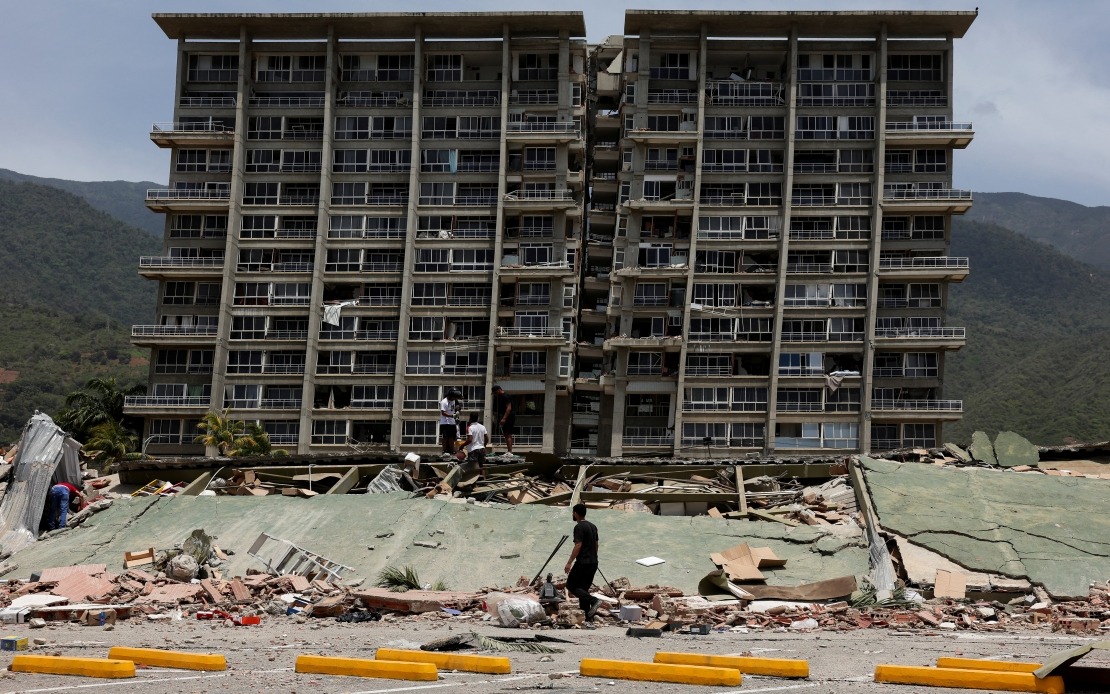
Canada is mobilising US$5 million in immediate humanitarian support to assist Venezuela in the aftermath of catastrophic earthquakes that have left large swathes of the country struggling with acute shortages of essential services. Foreign Minister Anita Anand announced the allocation on Thursday, emphasising that the scale of destruction represents a significant humanitarian emergency requiring urgent international response. The decision reflects Canada's commitment to supporting vulnerable populations facing natural disasters, particularly in the Western Hemisphere where geopolitical tensions have already strained access to resources and external assistance.
The earthquakes have inflicted severe human and material costs across Venezuela, with preliminary assessments indicating that the full extent of casualties and infrastructure damage remains unclear. Canadian officials warn that the disaster has potentially affected hundreds of thousands of people, many of whom are already living in precarious conditions due to the country's ongoing economic and political crisis. The combination of natural disaster and pre-existing humanitarian challenges creates a compounding emergency, where populations lack adequate resilience and recovery mechanisms to absorb additional shocks.
Canadian Foreign Minister Anand framed the assistance as a moral imperative, noting that families have lost relatives and entire communities have been fractured by the disaster. Her statement underscores how natural disasters transcend political boundaries and demand collaborative international responses grounded in humanitarian principles rather than geopolitical calculations. For Malaysia and other Southeast Asian nations observing this situation, Canada's approach demonstrates how middle powers can exercise diplomatic influence by positioning humanitarian aid as a priority distinct from broader foreign policy contests.
The US$5 million allocation will be distributed through experienced humanitarian partner organisations already operating on the ground in Venezuela. These funds will support the delivery of critical emergency services including food supplies, clean water systems, sanitation infrastructure, and medical care to affected populations. Beyond these immediate needs, the funding will also support protection services for vulnerable groups such as children and displaced persons, as well as logistical operations that enable the efficient movement of relief supplies through Venezuela's deteriorating infrastructure networks.
This latest commitment builds upon Canada's earlier humanitarian investment in Venezuela this year, bringing total Canadian support to approximately US$9.5 million. The incremental approach to aid deployment reflects a pragmatic strategy wherein initial commitments establish operational frameworks and partnerships, with subsequent tranches deployed as situational assessments become more comprehensive. This staged funding model allows donor nations to calibrate their responses based on verified ground conditions rather than preliminary reports that may overestimate or underestimate actual needs.
Venezuela's existing humanitarian crisis creates a complex backdrop for this earthquake response. The country has experienced severe economic contraction, currency devaluation, and widespread shortages of medicines, food, and fuel in recent years, leaving its population and infrastructure particularly vulnerable to additional shocks. When natural disasters strike nations already facing systemic challenges, the cascading effects can be exponentially more severe than in contexts where institutional capacity and resource availability remain intact. Venezuela's healthcare system, already strained before the earthquakes, faces additional pressure from injury-related cases and disease risks associated with disrupted water and sanitation systems.
Canadian officials remain actively engaged with regional partners and humanitarian organisations to coordinate response efforts and prevent duplication. This collaborative approach recognises that effective disaster response requires information-sharing and complementary actions among multiple actors rather than siloed national responses. Regional organisations, neighbouring countries, and international humanitarian bodies all have roles to play in ensuring that aid reaches those most vulnerable and that recovery processes begin laying groundwork for longer-term reconstruction rather than perpetuating short-term relief cycles.
The Canadian Foreign Ministry indicated that additional details regarding the specific allocation of the new US$5 million funding will be provided in coming days as humanitarian partners submit updated assessments and implementation proposals. This transparent communication approach helps civil society organisations and other stakeholders understand how Canadian resources are being deployed and enables independent monitoring of effectiveness. For Venezuelan civil society and diaspora communities observing from abroad, such transparency provides some assurance that funds will reach intended beneficiaries rather than disappearing into corrupt bureaucratic channels.
The earthquake disaster arrives at a particularly sensitive moment for Venezuela, where international engagement has been complicated by competing geopolitical interests and sanctions regimes. By framing its response in purely humanitarian terms and working through established partner organisations rather than directly engaging Venezuelan state structures, Canada navigates the complex political landscape while ensuring that assistance reaches vulnerable populations. This approach offers lessons for Southeast Asian nations considering humanitarian interventions in politically contested environments, demonstrating how donors can maintain principles of impartiality and neutrality even when broader diplomatic relations remain strained.
For Malaysia and the broader ASEAN region, Venezuela's earthquake and the international humanitarian response underscore several important realities. First, natural disasters recognise no political boundaries and demand coordinated responses transcending traditional diplomatic divisions. Second, countries with pre-existing vulnerabilities face disproportionate impacts from environmental shocks, a principle directly relevant to Southeast Asia's own exposure to earthquakes, typhoons, and flooding. Third, humanitarian aid operates most effectively when channelled through independent organisations with established operational capacity rather than relying exclusively on state institutions. As ASEAN nations continue developing disaster response protocols and humanitarian assistance frameworks, the Venezuelan case provides a useful reference point for balancing political neutrality with effective aid delivery.

