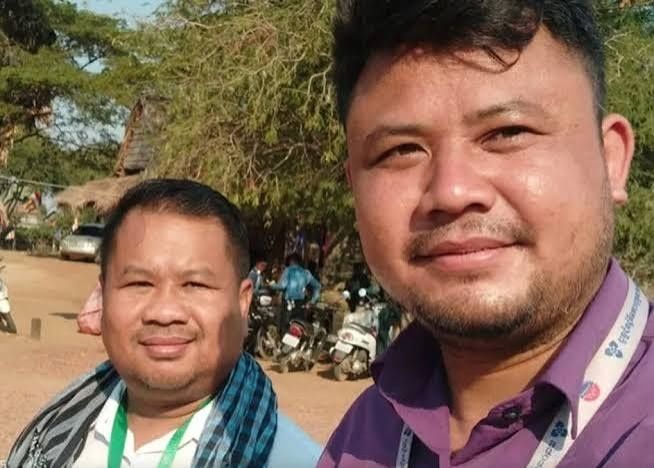
Cambodia's Supreme Court was poised to deliver a verdict on the treason appeal of two journalists on Thursday, in a closely watched case that has become emblematic of broader concerns about judicial independence in the Southeast Asian nation. The decision carries significant implications not only for Phorn Sopheap of Battambang Post TV Online and Pheap Pheara of TSP 68 TV Online, who face 14-year prison sentences, but also for media freedom and the rule of law across the region.
The pair were arrested in July last year after returning from assignment at the Cambodian-Thai border, where they had documented military operations during clashes between the two countries. Authorities alleged they had illegally posted photographs taken within a restricted military zone to social media platforms, specifically Facebook. The journalists have consistently maintained their innocence, asserting that they possessed proper authorisation to access the area where they conducted their reporting work.
The controversy intensified when one photograph depicting land mines circulated widely through Thai media channels, lending credibility to Thailand's assertions that Cambodia had deployed fresh anti-personnel mines along their shared frontier, injuries that resulted in harm to Thai patrol personnel. This diplomatic and security dimension transformed what might have been treated as a routine national security concern into a high-stakes matter affecting bilateral relations. Cambodia's government categorically denied laying new mines, citing international treaties it had ratified that prohibit such weapons and suggesting that any mines discovered were remnants from the prolonged civil conflict of preceding decades.
The border dispute itself resulted in tragic human costs during July and December confrontations last year, with fighting displacing hundreds of thousands of residents on both sides of the frontier and claiming approximately 100 military and civilian lives. A ceasefire implemented in December has held thus far, though the underlying tensions that precipitated the conflict remain palpable. The journalistic documentation of military operations, therefore, occurred against a backdrop of genuine conflict and loss.
The Siem Reap Provincial Court delivered guilty verdicts in December, characterising the journalists' actions as supplying intelligence to a foreign state in violation of Cambodia's national defence interests. An appellate court subsequently upheld these convictions in March, prompting intervention from international media watchdogs. More than a dozen organisations representing journalists globally issued coordinated correspondence urging the government to abandon its prosecution, viewing the case as antithetical to press freedom principles.
The timing of the Supreme Court hearing underscores broader patterns of legal action against voices critical of Cambodia's ruling structures. Just days earlier, the same court had sustained a conviction against Rong Chhun, a 56-year-old opposition figure, on incitement charges following his advocacy work with communities displaced by state-sponsored development initiatives. International observers, particularly Human Rights Watch, have characterised such prosecutions as evidence of judicial systems lacking genuine autonomy from political direction, a charge the Cambodian government has rejected as unfounded.
The trajectory of Cambodia's governance institutions under current Prime Minister Hun Manet, who assumed office in August 2023 after his father Hun Sen's departure following nearly four decades in power, has disappointed those anticipating substantive reform. Although Hun Manet received Western education and initially signalled potential for liberalisation, the government has maintained restrictive approaches to political expression and media operations. The older Hun Sen era witnessed systematic documented human rights violations encompassing suppression of dissent and curtailment of fundamental freedoms, patterns that have proven remarkably persistent despite leadership transition.
The Committee to Protect Journalists, headquartered in New York, has directly accused Cambodian authorities of exploiting ambiguous national security legislation as a mechanism to criminalise conventional journalistic practice. This weaponisation of vague statutory language represents a particularly troubling development for press freedom advocates, as it allows prosecutions to proceed without clearly defined parameters governing what constitutes legitimate versus unlawful reporting. The journalists' case exemplifies how broadly construed security laws create chilling effects on necessary investigative work.
Cambodia's performance in international press freedom assessments reflects these systemic challenges starkly. The 2025 Reporters Without Borders World Press Freedom Index positioned Cambodia at 161st among 180 countries and territories surveyed, categorising it within the most problematic global jurisdictions for journalistic operations. This substantial decline relative to global standards underscores the consequences of sustained institutional pressure on media independence.
For Malaysian and Southeast Asian readers, the Cambodia case carries instructive weight regarding how governments can instrumentalise national security frameworks to suppress legitimate reporting, particularly regarding cross-border military matters where the public possesses legitimate informational interests. The case demonstrates the fragility of institutional checks on executive power in the region and the corresponding vulnerability of journalists operating in security-sensitive environments. The appeals court's decision to uphold convictions despite international pressure indicates limited responsiveness to external advocacy focused on press freedom, suggesting that meaningful reform must originate from domestic constituencies willing to challenge such practices directly.

