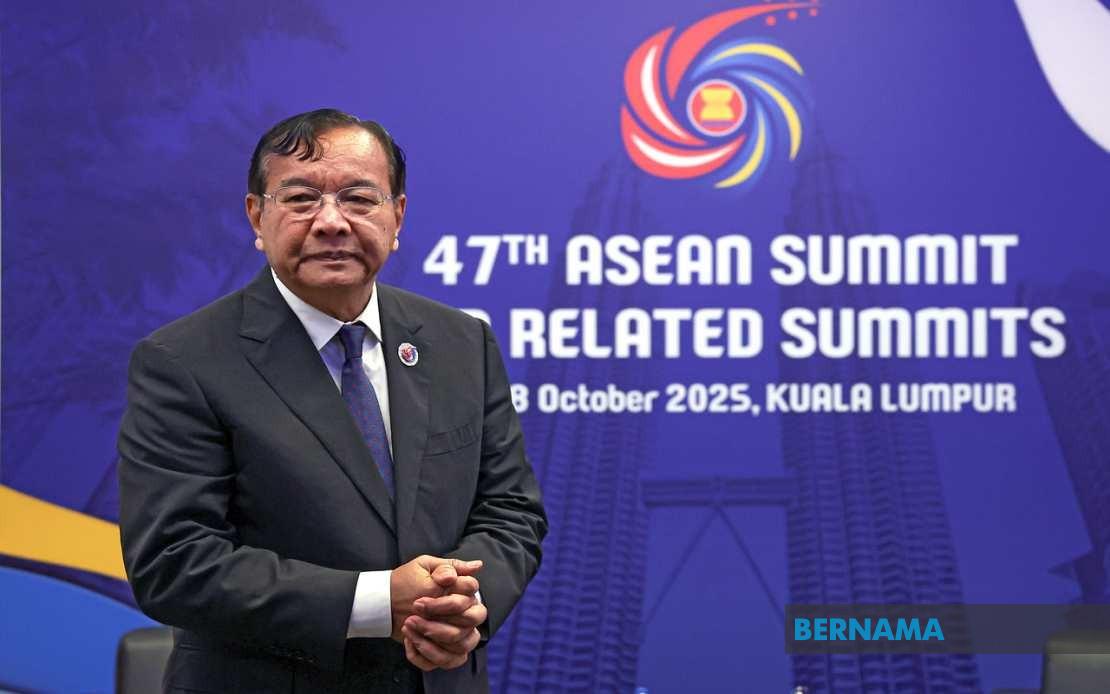
Cambodian Deputy Prime Minister and Foreign Minister Prak Sokhonn has arrived in Malaysia for a two-day official visit that marks a significant diplomatic milestone: the resumption of the Malaysia-Cambodia Joint Commission for Bilateral Cooperation, a mechanism that has lain dormant for two decades. The third session of this commission will be co-chaired by Prak Sokhonn and Malaysia's Foreign Minister Datuk Seri Mohamad Hasan on Tuesday in Kuala Lumpur, signalling renewed political commitment from both nations to deepen their relationship ahead of a major anniversary.
The timing of this high-level engagement is deliberate. Malaysia and Cambodia will mark the 70th anniversary of their diplomatic ties in 2027, and this visit serves as a platform to rejuvenate bilateral cooperation before that milestone. The last meeting of the joint commission took place in Siem Reap in 2006, meaning the resumption represents a substantial thaw in what had become a largely dormant formal mechanism despite ongoing trade and investment ties between the two nations. The Foreign Ministry's statement underscores that both governments view this as an opportunity to catalyse deeper engagement across multiple sectors.
During his Monday visit to the Prime Minister's office, Prak Sokhonn will meet with Datuk Seri Anwar Ibrahim to reaffirm the long-standing bilateral relationship and discuss matters of mutual concern. This courtesy call is a traditional diplomatic protocol but carries substantive weight, allowing senior leaders to align on strategic priorities and regional issues. Such engagements typically set the tone for what will be discussed and agreed upon in the formal joint commission meeting, ensuring that outcomes reflect leadership consensus rather than merely technical coordination.
The joint commission mechanism itself serves a critical function in bilateral relations. By establishing a formal framework for dialogue, both countries create structured channels through which government ministries can identify cooperation opportunities, resolve friction points, and coordinate on international matters. The Agreed Minutes to be signed at the conclusion of Tuesday's meeting will codify the key results of these discussions, providing a roadmap for implementation and serving as a benchmark for measuring progress over the coming years. This formality, while sometimes appearing ceremonial, gives political backing to bureaucratic cooperation.
Economic ties already demonstrate substantial momentum between Malaysia and Cambodia, even before this diplomatic reset. In 2025, bilateral trade surged 27.4 per cent year-on-year, reaching RM5 billion in total volume. Malaysian exports to Cambodia accounted for RM4.13 billion of this, while Cambodian shipments to Malaysia totalled RM880 million. These figures reflect the complementary nature of the two economies, with Malaysia serving as a significant market for Cambodian goods and a key source of manufactured imports and technology-intensive products. The strong export performance suggests that Malaysian companies have established meaningful commercial relationships in Cambodia's growing economy.
Beyond trade flows, Malaysia has become a major source of foreign investment for Cambodia. As of 2024, Malaysian investors had deployed US$3.20 billion across 162 registered projects, positioning Malaysia as Cambodia's third-largest foreign investor after China and Vietnam. This cumulative investment represents significant confidence in Cambodia's business environment and underscores the depth of economic integration between the two nations. Manufacturing, real estate, and infrastructure are among the key sectors attracting Malaysian capital, reflecting strategic long-term positioning in the Cambodian market. The resumption of the joint commission is likely to explore mechanisms for further facilitating such investments and addressing regulatory or procedural obstacles.
For Malaysia, Cambodia represents an important strategic partner within ASEAN and a gateway to deeper engagement in mainland Southeast Asia. The revival of the joint commission reflects a broader Malaysian foreign policy emphasis on reinvigorating bilateral mechanisms across the region, particularly with countries where diplomatic engagement may have plateaued. Cambodia, as a lower-middle-income country with a rapidly developing economy and a central location in the Mekong region, offers opportunities for Malaysian businesses in sectors ranging from finance and technology to manufacturing and tourism. The formal diplomatic reset signals that Kuala Lumpur intends to prioritise this relationship more actively.
Cambodian Foreign Minister Prak Sokhonn's willingness to undertake this visit at the senior level reflects the importance Phnom Penh attaches to the Malaysian relationship. Cambodia's own economic development strategy increasingly emphasises attracting foreign direct investment and deepening regional trade ties. Malaysia, with its established capital markets, advanced financial infrastructure, and proven track record of investing in developing economies, represents a valuable partner for Cambodia's growth objectives. The joint commission will likely explore new sectoral partnerships and mechanisms to streamline business-to-business connections between the two countries.
The hiatus in the joint commission since 2006 likely resulted from shifting priorities and the press of other bilateral matters, but the two-decade gap also reflects the sometimes episodic nature of Southeast Asian diplomacy, where personal relationships between leaders, evolving regional geopolitics, and domestic political transitions can reshape engagement patterns. The return to formal mechanism-based cooperation signals stability and institutionalisation of the bilateral relationship, reducing its dependence on personality-driven diplomacy or reactive crisis management. Such institutional frameworks help ensure continuity across government transitions and provide consistent forums for dialogue regardless of which officials hold office at any given time.
From a broader regional perspective, this resumption occurs amid intensified great power competition in Southeast Asia. Malaysia and Cambodia, as ASEAN members navigating the complex geopolitical environment shaped by Chinese economic influence and American strategic interests, have incentives to deepen intra-ASEAN cooperation. Stronger Malaysia-Cambodia ties contribute to regional cohesion and demonstrate that Southeast Asian nations remain committed to building on their foundation of bilateral relationships independent of external pressures. The joint commission thus carries symbolic significance beyond the immediate commercial and diplomatic outcomes it will produce.
The agreement and signing of the meeting minutes will establish concrete deliverables and timelines for cooperation, likely covering areas such as trade facilitation, investment promotion, education and cultural exchange, and coordination on regional and international issues. Both countries may announce enhanced visa arrangements, workforce mobility agreements, or sectoral cooperation frameworks. The formal nature of these agreements, backed by ministerial signature, ensures that they carry the weight of government commitment and can be monitored for implementation progress by both governments and the broader business community.
As Malaysia and Cambodia enter this renewed phase of diplomatic engagement, the outcomes of this visit will establish the foundation for bilateral relations over the coming years. With trade already growing robustly and investment flowing at substantial levels, the formal mechanisms being reactivated will help harness and direct these economic currents more strategically. The joint commission, once revived, will require ongoing attention and periodic meetings to remain effective; the challenge for both governments will be maintaining momentum beyond this initial diplomatic reset and ensuring that the mechanism generates tangible benefits for businesses, investors, and citizens in both nations.

