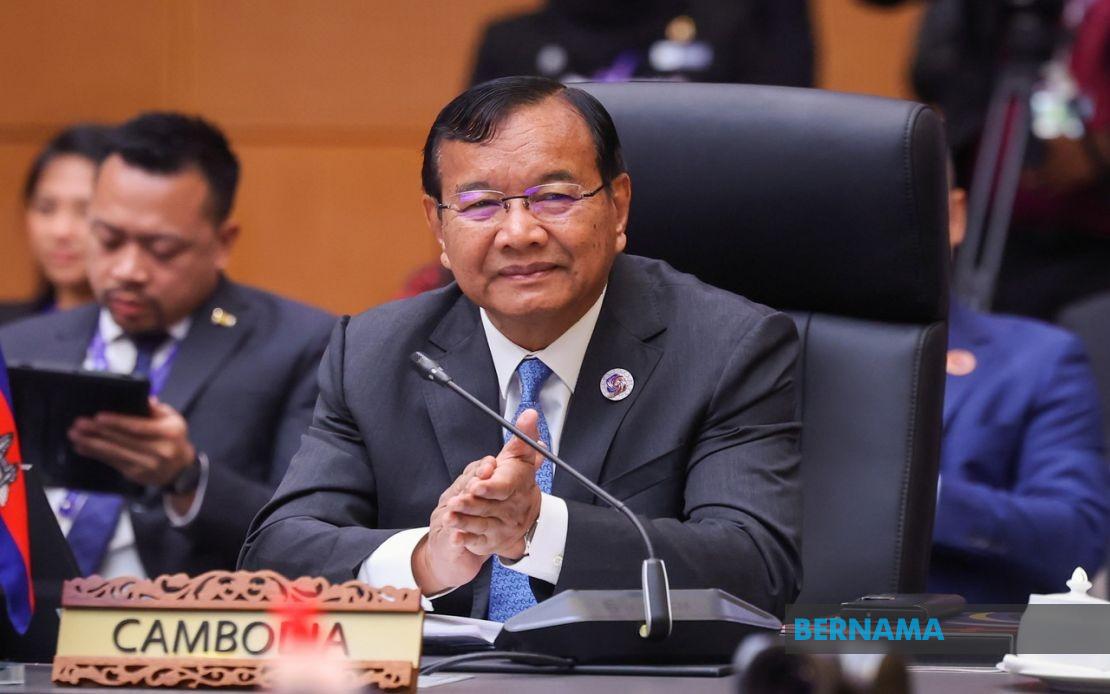
Cambodian Deputy Prime Minister and Minister of Foreign Affairs and International Cooperation Prak Sokhonn touched down in Malaysia on August 3, embarking on a two-day official visit designed to invigorate the strengthening partnership between the Southeast Asian neighbours. His arrival at Kuala Lumpur International Airport Terminal 1 at 1.48 pm marked the beginning of what both governments anticipate will be a significant engagement in their bilateral relationship, with officials from both sides present to receive the high-ranking delegation.
The visit underscores the depth of Malaysia-Cambodia relations at a time when regional cooperation mechanisms are increasingly central to Southeast Asian stability and prosperity. Sokhonn's trip comes as the two nations continue to deepen institutional frameworks for managing their expanding ties across multiple sectors. The presence of Cambodian Ambassador to Malaysia Ouk Chandara and Malaysian Government chief ceremony officer Datuk Rozainor Ramli at the airport reception reflected the formal importance accorded to this engagement by both governments.
Sokhonn is scheduled to meet with Prime Minister Datuk Seri Anwar Ibrahim early in his visit, a courtesy call that typically precedes more substantive bilateral discussions. This meeting will likely touch on broader strategic considerations affecting the region, particularly given Malaysia's role as a key economic and political player in Southeast Asia and Cambodia's growing significance within ASEAN. Such high-level audiences often set the tone for deeper conversations at the technical and ministerial levels that follow.
The centrepiece of the visit is the third meeting of the Cambodia-Malaysia Joint Commission for Bilateral Cooperation, scheduled for August 4 in Kuala Lumpur. This forum will serve as the principal venue for assessing how effectively both nations have implemented agreed outcomes from their second JCBC gathering and reviewing the status of previously concluded bilateral agreements. Joint commissions of this type function as crucial institutional mechanisms for maintaining momentum on shared commitments and identifying new areas for cooperation.
During his stay, Sokhonn will also engage in bilateral talks with Malaysian Foreign Minister Datuk Seri Mohamad Hasan. These ministerial-level discussions typically address the full spectrum of bilateral relations, from political and security matters to economic collaboration and people-to-people exchanges. The foreign affairs portfolio provides an ideal platform for both officials to align positions on regional issues and discuss how Malaysia-Cambodia cooperation can contribute to broader ASEAN objectives.
The economic dimension of Malaysia-Cambodia ties has demonstrated remarkable dynamism in recent years. Trade between the two countries surged 27.4 per cent year-on-year in 2025 to reach RM5 billion, equivalent to USD1.17 billion, indicating robust commercial momentum. This growth reflects both the resilience of established trade relationships and the emergence of new business opportunities as both economies navigate post-pandemic adjustments and regional supply chain reconfiguration.
Malaysia's investment footprint in Cambodia remains particularly substantial. As of 2024, Malaysia had accumulated USD3.20 billion, or approximately RM13.07 billion, in cumulative investments across 162 registered projects throughout Cambodia. This positions Malaysia as the third-largest foreign investor in the Kingdom, a ranking that speaks to the confidence Malaysian businesses have demonstrated in Cambodia's market and investment climate. Such capital flows typically generate employment, technology transfer, and economic diversification across multiple sectors in the recipient economy.
The scale and nature of Malaysian investment in Cambodia reflects several structural factors. Malaysian companies have leveraged their experience in sectors ranging from manufacturing to services, often bringing regional expertise and networks that benefit Cambodian partners. The investment concentration also suggests that both governments have successfully created institutional frameworks and bilateral agreements that facilitate cross-border business activity and provide necessary certainty for investors.
This visit occurs in a period of relative stability in the Cambodia-Malaysia relationship, though both nations maintain awareness of transnational issues that require ongoing management. The JCBC mechanism provides an institutionalised channel for addressing potential points of friction before they escalate and for channelling cooperation opportunities into concrete outcomes. Regular high-level exchanges such as Sokhonn's visit help maintain the political relationships that underpin economic and social partnerships.
For Malaysian policymakers and business interests, strengthening ties with Cambodia holds strategic importance. Cambodia serves as both a market for Malaysian goods and services and as a source of investment opportunities for Malaysian capital. The nation's geographic position, growing middle class, and integration into ASEAN regional value chains make it increasingly significant to Malaysian economic and political strategy. Similarly, Cambodia benefits from Malaysia's experience in developing economic institutions and infrastructure that can be adapted to Cambodian circumstances.
The timing of this visit also reflects ASEAN's emphasis on maintaining cohesion and regular dialogue at all levels. As the regional bloc navigates complex geopolitical currents and manages diverse interests among its ten members, bilateral relationships that function smoothly and demonstrate tangible progress become exemplars of regional cooperation. The Malaysia-Cambodia relationship, particularly when manifested through structured forums like the JCBC, contributes to the broader narrative of ASEAN unity and effectiveness.
Looking forward, observers will monitor whether this visit generates new agreements or announcements that further expand the Malaysia-Cambodia partnership. Potential areas for enhanced cooperation could include digital economy collaboration, human resources development, regional infrastructure initiatives, and security cooperation. The outcomes of the JCBC meeting will provide clear indication of how both governments envision their partnership evolving over the medium term and which specific initiatives warrant prioritisation.

