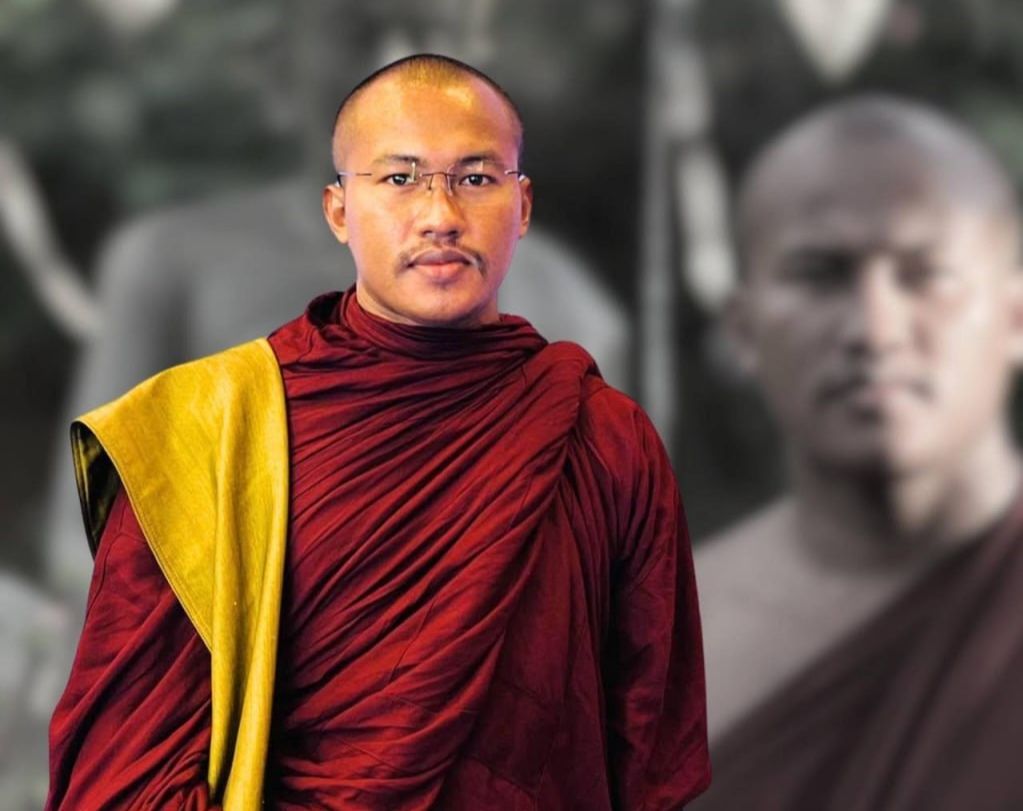
A broad coalition of fifty Cambodian civil society organisations, workers' unions and community networks has launched a coordinated appeal for the immediate release of Chea Vuthy, a 27-year-old former Buddhist monk and citizen journalist, following his conviction on incitement charges stemming from comments made within a private online group chat. The Phnom Penh Municipal Court sentenced Vuthy to 18 months imprisonment and a fine of two million riel (approximately $500) on August 19, sparking immediate concern among regional human rights advocates who view the case as emblematic of tightening restrictions on expression across Southeast Asia.
At the heart of the controversy lies a fundamental question about the boundaries of free speech in the digital age: whether remarks confined to a closed conversation among roughly twenty people can legitimately constitute criminal incitement under national law. Vuthy's conviction under Articles 494 and 495 of Cambodia's Criminal Code centres on a comment he posted to a private Messenger group in August 2025 regarding provincial territories and the displacement of civilians affected by fighting along the Cambodia-Thailand border. The defendant acknowledged crafting the message but explicitly denied making it publicly available, distinguishing his conduct from deliberate efforts to incite masses through open channels.
The collaborative statement, coordinated by the Cambodian League for the Promotion and Defense of Human Rights (LICADHO) and released on August 20, explicitly challenges the proportionality of the sentence relative to the alleged transgression. The signatory organisations contend that confining a remark to a small private circle fundamentally limits its reach and capacity to influence public opinion or incite harmful action, rendering criminal prosecution—particularly a prison term spanning eighteen months—fundamentally unreasonable under accepted international human rights doctrine. This argument reflects growing international jurisprudence suggesting that digital communications merit contextual analysis rather than blanket application of incitement statutes originally conceived for mass media and public gathering.
The groups argue persuasively that Vuthy's conviction violates Cambodia's explicit commitments under Article 19 of the International Covenant on Civil and Political Rights (ICCPR), a treaty to which Cambodia is a state party. Article 19 permits restrictions on expression only when they are prescribed by law, pursue a legitimate aim, and satisfy strict tests of necessity and proportionality. The signatory organisations suggest Cambodia's incitement statutes, as applied in this instance, fail the proportionality analysis; legitimate concerns about national security or public order cannot justify criminalising private speech among a tiny circle of acquaintances. The conviction equally contradicts Cambodia's constitutional protections for freedom of expression and commitments arising from the country's fourth Universal Periodic Review submission to the UN Human Rights Council, placing Phnom Penh in potential violation of its international obligations.
Vuthy's profile as a civil society activist amplifies the case's significance within Southeast Asian media circles. Prior to his detention, the young journalist regularly documented and commented upon environmental degradation, illegal logging and human rights abuses—work that positioned him as a watchdog over powerful interests. His arrest in April at Wat Por Veal pagoda in Battambang province, carried out by plainclothes provincial police, was accompanied by forcible defrocking, a symbolically charged move that signalled official displeasure extending beyond legal channels into religious and cultural domains. He has since remained detained at Phnom Penh's Police Judicial Prison (PJ), and in June the Phnom Penh Appeal Court denied his bail request, effectively denying him pre-trial freedom throughout the proceedings.
The case does not emerge in isolation but forms part of a discernible pattern of prosecutions leveraging border-dispute sensitivity to suppress critical commentary. LICADHO has documented multiple individuals convicted or charged with incitement for social media posts addressing the Cambodia-Thailand border conflict, including a culinary professional sentenced to eighteen months in May and an educational administrator given a two-year prison term in June. These parallel convictions suggest a coordinated or at least consistent approach by authorities to weaponise incitement laws against any commentary touching upon territorial claims or border-related civilian suffering, regardless of the intended audience or actual public impact. The clustering of such cases within a compressed timeframe indicates systemic use of criminal statutes to narrow the bounds of permissible public discourse.
Vuthy's legal representation has mounted a vigorous challenge to the verdict's foundation. His attorney, Em Chantha, announced immediately after the August 19 judgment that an appeal would be pursued on the grounds that evidence presented at trial fell short of the legal threshold necessary to establish incitement. Chantha disputes whether private Messenger exchanges, even those addressing sensitive topics such as border tensions, can satisfy statutory requirements for incitement—a position grounded in both textual statutory interpretation and the practical inability of small-group private communications to mobilise mass action. This appellate strategy addresses the conviction at its root rather than merely seeking leniency, fundamentally contesting whether the conduct should have been prosecuted under incitement law at all.
The Ministry of Information responded to the civil society outcry with assertions of judicial independence and procedural rectitude. Spokesperson Tep Asnarith stated that the ministry, as part of the executive branch, abstains from interference in judicial determinations, characterising Cambodia's courts as exercising autonomous authority over their rulings and procedures. This position implies that criticism of the verdict constitutes inappropriate second-guessing of judicial findings. Asnarith simultaneously invoked Vuthy's right to legal representation and appeal, suggesting that available procedural remedies render external advocacy premature. He also urged civil society organisations to assess such cases with balance and accuracy, a rhetorical move that frames rights groups' concerns as potentially partisan or insufficiently rigorous rather than engaging substantively with their legal arguments.
The signatory coalition represents remarkable breadth across Cambodia's civil society landscape, encompassing specialised human rights monitors, media freedom advocates, labour organisations and grassroots community networks. Beyond LICADHO, endorsers included the Cambodian Center for Human Rights (CCHR), Cambodian Human Rights and Development Association (ADHOC), Cambodian Center for Independent Media (CCIM), Cambodian Journalists Alliance Association (CamboJA), Overseas Press Club of Cambodia (OPCC), Center for Alliance of Labor and Human Rights (CENTRAL), Committee for Free and Fair Elections in Cambodia (COMFREL), Equitable Cambodia and the Prey Lang Community Network. This organisational breadth suggests the case has transcended narrow constituencies to become a rallying point for those concerned about the trajectory of civic space in Cambodia.
For regional observers monitoring press freedom and human rights trajectories across Southeast Asia, the Vuthy case exemplifies a troubling convergence of technological opacity with repressive intent. Authorities in multiple countries increasingly invoke ambiguous provisions governing incitement, sedition or national security to prosecute individuals whose only transgression consists of expressing dissenting or questioning views through digital channels ostensibly private in nature. The Cambodian authorities' decision to impose an 18-month sentence for a remark confined to a closed group—and their evident lack of concern at international criticism—signals confidence that regional and international pressure will prove insufficient to reverse the trajectory. As Southeast Asian governments navigate questions about digital regulation, surveillance capability and political control, the treatment of figures like Vuthy will increasingly define whether authentic space for critical civil society engagement can persist.

