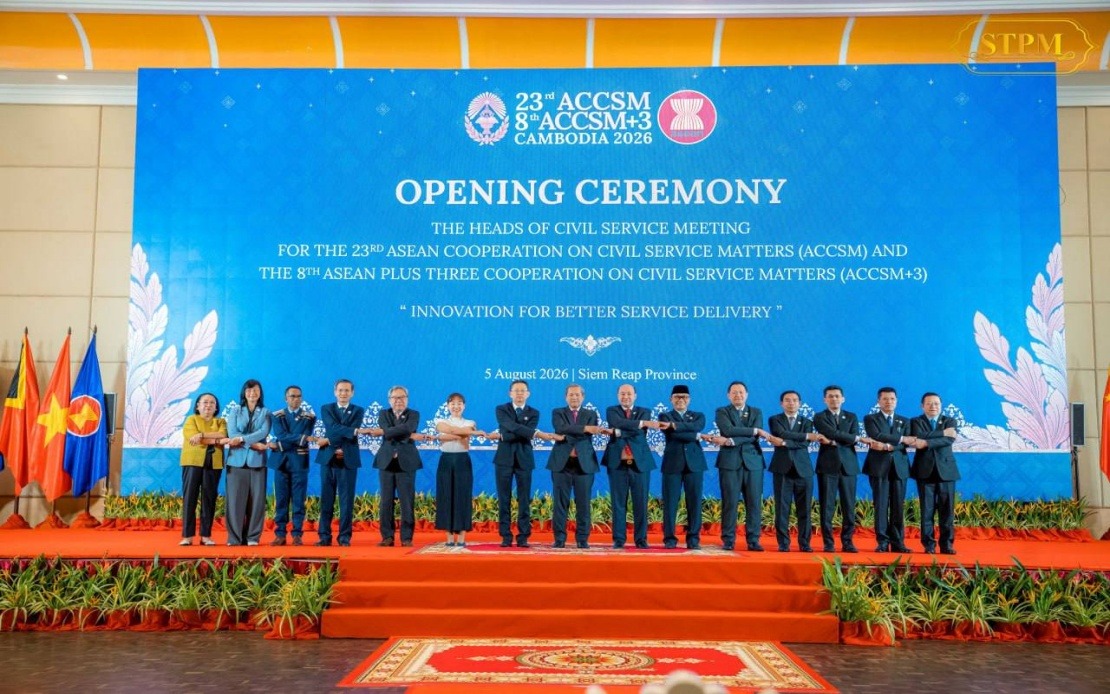
Cambodian Prime Minister Hun Manet has made a compelling case for ASEAN to embrace artificial intelligence and digital innovation as tools for delivering superior public services, with a fundamental emphasis on improving living standards and bridging the widening development chasm that characterises the ten-nation bloc. Speaking at a high-level civil service conference in Siem Reap this week, Hun Manet articulated a vision that moves beyond the mere acquisition of cutting-edge technology, instead grounding digital transformation in the practical realities of what citizens across the region actually need.
The Cambodian leader's intervention reflects growing recognition within ASEAN that the rush to modernise government administration risks leaving behind less developed member states and creating new fault lines in an already stratified region. His emphasis on "people-centred" innovation signals a deliberate shift away from technocratic approaches that prioritise efficiency metrics over tangible improvements in the lives of ordinary citizens. This framing carries particular resonance for Southeast Asia, where rapid digitalisation efforts in wealthy city-states like Singapore contrast sharply with the slower technological adoption in rural Cambodia, Myanmar, and parts of Laos.
Hun Manet underscored a critical precondition for successful digital transformation: robust institutional capacity and skilled human resources. Without these foundational elements, he cautioned, simply importing AI systems risks creating sophisticated but hollow infrastructure that cannot be meaningfully sustained or adapted to local contexts. This insight addresses a genuine vulnerability in developing economies, where technical expertise remains scarce and training pipelines inadequate. The warning resonates particularly for Malaysia and other middle-income ASEAN nations that must balance rapid deployment with the slower work of building homegrown capability.
The prime minister explicitly acknowledged ASEAN's heterogeneous development landscape, rejecting any one-size-fits-all template for technological adoption. Instead, he called for each country to navigate its own pathway toward AI integration at a sustainable pace—a diplomatic formulation that reflects genuine structural differences. Cambodia, Vietnam, and Myanmar cannot reasonably be expected to deploy artificial intelligence across their civil services at the speed of more developed neighbours. This differentiated approach, if genuinely implemented, could become a model for how developing regions manage the global digital transition without amplifying existing inequalities.
Hun Manet's remarks were delivered at the 23rd ASEAN Cooperation on Civil Service Matters conference, a venue specifically designed to facilitate dialogue among government administrators and policymakers across the bloc. The inclusion of China, Japan, and South Korea in the expanded ACCSM+3 format adds an external dimension, bringing potential technological partnerships and expertise-sharing arrangements into the discussion. For Malaysian observers, the involvement of these economic powerhouses underscores the competitive dynamics shaping ASEAN's digital future and the pressure to avoid falling further behind more advanced Asian economies.
Beyond administrative modernisation, Hun Manet positioned innovation as essential to building collective resilience across ASEAN in the face of mounting transnational challenges. Climate-related disasters, uneven economic development, and persistent poverty represent problems that transcend borders and defy solutions from isolated national efforts. Digital tools and data-sharing platforms, when properly harnessed, could theoretically enhance regional coordination on everything from disaster response to poverty alleviation programmes. This framing elevates the conversation from technical bureaucratic reform to strategic regional cooperation.
The Cambodian Prime Minister advocated for transforming ASEAN's civil service cooperation mechanism into a genuine platform for mutual learning rather than a ceremonial gathering. He specifically called for harmonisation of policies across member states and collaborative development of shared capacity to tackle common challenges. For Malaysia, which has invested significantly in digital government initiatives, such harmonisation could unlock economies of scale and create markets for locally developed solutions. Conversely, insufficient coordination risks fragmentation, with each ASEAN nation developing incompatible systems that cannot easily share data or best practices.
Hun Manet's emphasis on knowledge-sharing and mutual support reflects an implicit critique of competitive nationalisation of digital infrastructure within ASEAN. Rather than each country racing to build proprietary AI systems behind national firewalls, he suggested a collaborative model where innovations developed in one jurisdiction could be studied, adapted, and implemented elsewhere. This represents a departure from the customary national sovereignty concerns that often constrain deeper ASEAN integration. Whether member states will embrace such openness remains an open question, particularly when advanced digital capabilities increasingly confer strategic advantages.
The conference's explicit focus on "innovation for better service delivery" grounds the discussion in practical outcomes rather than technological abstraction. Government legitimacy ultimately depends on citizens' tangible experiences with public services—whether tax collection is responsive, permit processing is efficient, or healthcare information is accessible. Digital tools matter only insofar as they demonstrably improve these interactions. Hun Manet's framing keeps this fundamental principle front and centre, cautioning against technology investments that generate impressive dashboards but fail to ease ordinary Cambodians' dealings with their government.
For Malaysia, Hun Manet's intervention offers useful perspective as the nation pursues its own ambitious digital government agenda. The emphasis on institutional capacity and human resource development echoes challenges Malaysia itself faces in recruiting and retaining tech-savvy civil servants. The call for inclusive, sustainable adoption resonates with concerns that rapid digitalisation could inadvertently marginalise rural populations and older citizens less comfortable with technology. Malaysian policymakers would do well to heed the warning that innovation for its own sake risks creating sophisticated infrastructure disconnected from citizen needs.
Looking forward, whether ASEAN can genuinely translate Hun Manet's vision into concrete cooperative frameworks remains uncertain. The bloc has struggled historically to move beyond consensus-building rhetoric toward binding commitments that require member states to surrender autonomy. Civil service cooperation, being less geopolitically sensitive than defence or territorial matters, theoretically offers fertile ground for collaboration. Yet vested interests—bureaucratic turf wars, vendor relationships, and national pride in homegrown systems—often obstruct such cooperation. The coming months will reveal whether this conference catalyses genuine institutional change or represents another iteration of ASEAN's characteristic pattern of ambitious declarations followed by minimal implementation.

