Cambodia is placing renewed emphasis on girls' education as a cornerstone of its economic development strategy, with Prime Minister Hun Manet arguing that educational access for young women is essential to building the human capital needed to propel the nation forward. Speaking at the 39th World Conference of the World Association of Girl Guides and Girl Scouts in June, Manet articulated a vision in which educated girls represent not merely beneficiaries of social progress but active architects of national development, capable of transforming their own circumstances and those of their families, communities and country.
The push reflects a broader shift in how Cambodia views the role of women in society. Traditional stereotypes that cast Cambodian women as passive economic and social participants have become increasingly untenable, as the reality on the ground reveals a far more dynamic picture. Young women are now establishing themselves as entrepreneurs, holding senior corporate positions, driving innovation, influencing policy decisions and contributing to peace-building efforts at multiple levels. This transition from economic margins to central participation in nation-building represents a fundamental recalibration of Cambodia's social and economic landscape.
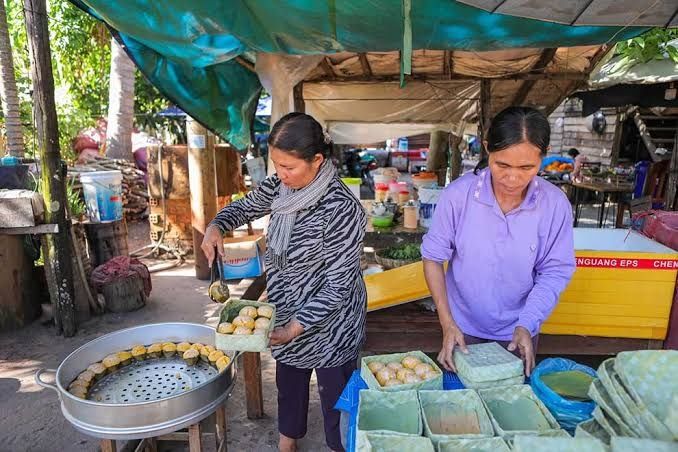
The statistics underscore just how extensively women have woven themselves into Cambodia's economic fabric. Female literacy rates have surpassed 80 per cent according to World Bank data, and girls' school enrolment reached 100 per cent in 2021, suggesting that access barriers have been significantly reduced in recent years. More remarkably, women own approximately 60 per cent of the country's micro, small and medium enterprises, positioning them as the primary drivers of private sector dynamism. This entrepreneurial presence spans diverse sectors, from food production and agricultural exports to hospitality and retail operations.
At the corporate level, women have successfully established themselves in professional services and specialised industries. They operate and manage accounting firms, legal practices, private medical centres, dental clinics and educational institutions across the Kingdom. These roles require sustained education, professional credentials and access to capital and networks, indicating that barriers to women's advancement in formal sectors have become increasingly permeable. The visibility of women in these roles carries significance beyond mere statistics, as such positions influence hiring practices, corporate culture and the normalisation of female professional authority.
The garment, textile and footwear sector illustrates women's contribution at scale. More than 700,000 women work within this industry, which generates approximately US$16 billion annually for the Cambodian economy. This single sector demonstrates how women's labour underpins one of Cambodia's most important sources of foreign exchange and employment. The sheer volume of female workers in export-oriented manufacturing highlights both Cambodia's integration into global supply chains and the economic dependence on female participation that has developed.
Despite this undeniable progress, substantial challenges persist in converting formal rights into lived reality. Civil society organisations have documented how social and cultural barriers continue to constrain girls' educational trajectories. Early marriage remains a significant problem, with young women withdrawing from school to assume household and reproductive roles. Gender-based violence and safety concerns—including harassment within and around educational institutions—deter girls from continuing their studies. These obstacles are not merely individual or familial matters; they reflect structural inequalities embedded in cultural norms, institutional practices and resource allocation.
The early school dropout rate among girls represents one of the most pressing concerns, as it truncates educational and economic opportunities before they fully materialise. Girls who leave school prematurely face constrained employment prospects, reduced earning potential and diminished bargaining power within their families and communities. The persistence of these barriers despite women's visible success in entrepreneurship and corporate sectors suggests a bifurcated system in which opportunities remain unevenly distributed across socioeconomic strata, geographic regions and age cohorts.
Prime Minister Manet has committed the Royal Government to intensifying investment in gender equality and women's empowerment programmes, framing this not as a charitable gesture but as essential infrastructure for economic growth. By supporting women's decision-making rights, reducing exposure to gender-based violence and strengthening intergenerational relationships, Cambodia aims to unlock what policymakers term the gender dividend—the economic benefits that emerge when women participate fully in productive sectors. This framing treats gender equality as instrumental to development rather than merely intrinsically valuable, though both dimensions matter.
Cambodia's development trajectory through 2030 lends urgency to these education priorities. The government has set ambitious targets: graduation from Least Developed Country status by 2029 and achievement of upper-middle-income status by 2030. These objectives require sustained economic growth, productivity improvements and workforce development across multiple sectors. Women's participation in education, entrepreneurship and professional employment directly contributes to human capital accumulation, innovation capacity and the domestic demand that fuels consumption-driven growth in emerging economies.
For the Southeast Asian region, Cambodia's experience reflects broader patterns in which women's economic participation has outpaced formal recognition of their contributions and formal removal of institutional barriers to advancement. Countries across the region face similar dynamics: women generating substantial economic value while remaining underrepresented in decision-making roles and over-represented in vulnerable employment. Cambodia's explicit focus on girls' education as a development priority, articulated by national leadership, offers a potential model for how other states might integrate gender equity into economic strategy.
The challenge ahead lies in translating stated commitments into sustained institutional change and resource allocation. Prioritising girls' education requires not only increased budgetary investment in schools but also cultural advocacy, improved teacher training, enhanced safety protocols, and policies that address the opportunity costs families bear when daughters remain in school. It demands engagement with traditional authorities and community leaders who shape perceptions of girls' appropriate roles. Without such comprehensive approaches, the gap between Cambodia's formal commitment to education equity and the lived experiences of girls in rural areas and lower-income households may persist.